
There are albums you don’t simply listen to. You move through them. The sixth record by The Twilight Sad belongs to that rare, uncomfortable category, and, precisely because of that, an essential one.
It’s The Long Goodbye emerges from a gap that feels too long to be called a hiatus. These are seven years that hold within them an entire life rearranged. The loss of James Graham’s mother to dementia. The birth of his children. An emotional collapse that interrupted tours and imposed silence. And, in the middle of all that, the attempt to turn experience into language.

What comes out of it is not an album about grief in any conventional sense. It is a record of living alongside disappearance in real time. There are no metaphors strong enough when someone you love begins to dissolve in front of you. And perhaps that is why this is the band’s most direct, most exposed, most brutal work.
From the very first seconds, there is no effort to soften the impact. The music moves forward as if it carries physical weight, as if every layer of guitars and synths had been built to hold something that no longer fits inside the body. Andy MacFarlane’s production abandons polish in favor of density. It is a sound that presses down, but also holds things together, as if chaos needed structure to avoid complete collapse.
At the center of it all is Graham’s voice, which has never sounded this vulnerable and, at the same time, this steady. There are moments where he nearly fractures within his own lines. In others, he finds a strange, almost involuntary strength that seems to come from exhaustion itself. The result is not beautiful in the traditional sense. But it is deeply true.
The presence of Robert Smith, frontman of The Cure, does not feel like a guest appearance. It feels like continuity. There is a quiet symmetry between this album and Songs of a Lost World, released by Smith’s band in 2024, which also circled around familial loss. Smith does not just play on a few tracks — he inhabits the record. He is in the textures, in the spaces, in the way certain songs seem to expand and disappear at the same time.
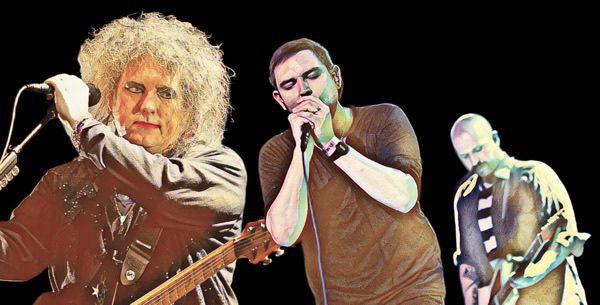
What is most striking, though, is that It’s The Long Goodbye refuses easy catharsis. It resolves nothing. It does not organize grief into understandable stages. Instead, it insists on confusion. On repetition. In the sense that endings are never clean, but fragmented into countless small goodbyes.
Some songs seem to ask for relief, but it never fully arrives. Even when the intensity pulls back, a quiet tension remains, as if silence itself carried noise. This is an album that understands that suffering is not linear. And that, often, what weighs the most is exactly what cannot be said.
One could argue that it lacks tonal variation, that it sustains a single emotional frequency for too long. But that reading misses the point. This is not an album built to balance itself. It is an album that needed to exist exactly as it is. Without concessions. Without calculated relief.
What The Twilight Sad achieves here is to turn an intimate experience into something shareable without smoothing its edges. And that is rare. Many artists write about pain. Very few manage to keep it intact inside the music.
In the end, It’s The Long Goodbye that does not ask for company. But for those willing to step inside, it offers something rare. An emotional mirror that does not distort, does not soften, and does not try to console.
Descubra mais sobre
Assine para receber nossas notícias mais recentes por e-mail.
 miscelana.com