
There comes a moment in cinema when the narrative, no matter how well constructed, approaches a limit. The characters have already said everything, silence has already taken its place, and still something is missing. What’s missing is a language capable of holding what cannot be resolved. It is at this point that poems enter.
Not as a decorative quotation, but as emotional borrowing. As if the film recognizes that someone, in another time, has already found the words it now needs.
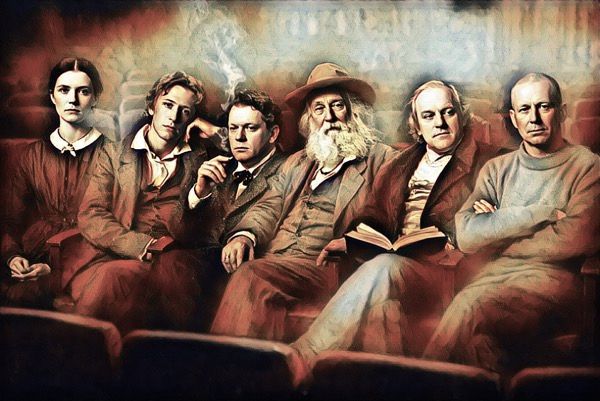
Death Is Nothing At All, by Henry Scott Holland
In narratives of farewell, this poem has become one of the most recognizable ways of trying to organize absence. “Death is nothing at all. I have only slipped away into the next room.” The line presents itself as consolation, yet it carries a deep contradiction, because it attempts to soften a rupture that cannot be undone. Cinema turns to this kind of text precisely when it needs to sustain the idea of continuity in the face of loss, as if it were still possible to preserve the bond despite the absence.
Death is nothing at all.
I have only slipped away to the next room.
I am I and you are you.
Whatever we were to each other,
That, we still are
In the series Love Story, as it recreates the memory of Carolyn Bessette, this gesture takes on even greater weight. The decision to keep the actual text read by her mother not only anchors the scene in reality but also reveals something audiovisual storytelling has long understood: when grief exceeds everyday language, it is poetry, or something close to it, that takes on the task of saying what cannot otherwise be said.
Funeral Blues, de W. H. Auden
In Four Weddings and a Funeral, the presence of death arrives almost as an unexpected rupture within a narrative that had been built on encounters, misencounters, and irony. When it comes, there is no possible preparation, and what settles in is a kind of grief that refuses to organize itself.
It is at this moment that Funeral Blues enters. Originally written by Auden in the 1930s as a satirical theatrical piece, the poem was later revised by the author and transformed into one of the most devastating texts ever associated with mourning. That trajectory matters because it reveals how a text can acquire new weight when displaced from its context, exactly as happens in cinema.
He was my North, my South, my East and West,
My working week and my Sunday rest,
My noon, my midnight, my talk, my song;
I thought that love would last forever: I was wrong.
“Stop all the clocks, cut off the telephone.” There is no consolation here, only the realization that the world has lost its logic. The poem does not attempt to soften loss; it amplifies it. Everything must stop, everything must reorganize itself around absence.
In the film, this choice completely transforms the tone of the story. What was once light becomes irreversible, and the viewer is taken to a place where there is no mediation for grief. It is one of those sequences that does not rely on excess, because it finds in the precise word the weight that the image alone could not reach.
Do Not Go Gentle into That Good Night, de Dylan Thomas
In Interstellar, the poem becomes a thematic axis. “Rage, rage against the dying of the light.” There is no acceptance, only resistance. The text enters when the narrative still refuses to admit the end, and that energy runs through the relationships between the characters, turning farewell into struggle.
Written in 1951, near the end of Dylan Thomas’s life, the poem emerges from a deeply personal circumstance. His father was dying, gradually losing his sight and vitality, and the text appears as a response to that process, almost like a direct, intimate plea that he should not surrender. The form Thomas chose, the villanelle, reinforces this movement. With its repetitive and circular structure, the poem insists on the same lines as if repetition itself could halt the advance of death.
Grave men, near death, who see with blinding sight
Blind eyes could blaze like meteors and be gay,
Rage, rage against the dying of the light.
This origin is essential to understanding why the text resonates so strongly in cinema. It is not a poem of contemplation, but of confrontation. It does not observe death from a distance; it faces it, almost challenges it. Each repetition carries the urgency of someone who knows they are losing, yet refuses to accept it.
In Interstellar, that tension shifts into another context, but retains its original force. The relationship between father and daughter, stretched across time and absence, finds in this poem a language that does not ask for serenity, but insists on the fight. What the film recognizes, in incorporating it, is that not every farewell is born from acceptance. Some are made of resistance, of insistence, of an almost irrational refusal to let go.
Soneto XVII, by Pablo Neruda
In Il Postino, Neruda’s poetry is not merely quoted, but structures the way love itself is understood. “I love you as certain dark things are to be loved, in secret, between the shadow and the soul.” The poem speaks of a love that already exists outside the visible, which is why cinema associates it with stories where loss is always near, even when unnamed.
Published in 1959, in Cien sonetos de amor, Sonnet XVII belongs to a phase in which Neruda had moved away from the more exuberant and declarative tone of his early poetry toward a more contained, almost subterranean language. Written for Matilde Urrutia, his companion, the poem does not describe love directly, but insists on defining it through what it is not. It is not about light, nor display, nor evident gestures. It is about something that exists at the margins, silent, deep, inseparable from the very experience of being.
I love you as one loves certain obscure things,
secretly, between the shadow and the soul.
This construction matters because it shifts love from the visible realm into that of absolute intimacy, where it does not need to be explained to exist. And that is precisely why cinema turns to this poem in narratives shaped by the awareness of loss. It is not a poem about farewell, but one that already carries within it the idea of finitude, as if love were more true precisely because it cannot be held.
In Il Postino, this movement gains an even more concrete dimension, because Neruda’s poetry becomes a mediator between language and feeling. What the film recognizes, in incorporating it, is that certain ways of loving can only be understood when displaced into this quieter territory, where farewell does not need to be announced to already be present.
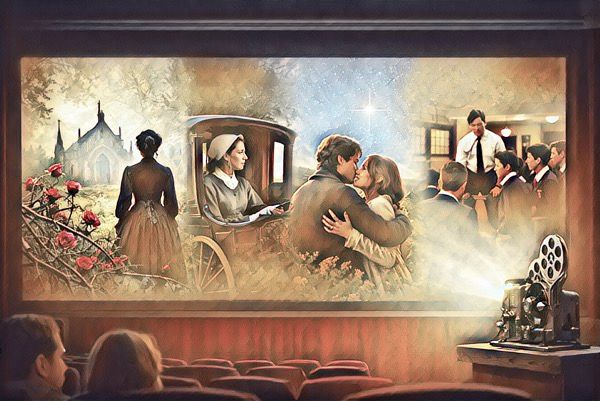
Remember, de Christina Rossetti
In Testament of Youth, the poem offers a delicate inflection. “Better by far you should forget and smile than that you should remember and be sad.” The gesture here is not one of holding on, but of release. Farewell is constructed as an act of generosity, allowing the other to move forward without the weight of memory.
Written in the 19th century and published in 1862, “Remember” belongs to a Victorian tradition deeply marked by a constant coexistence with death, but also by an attempt to reorganize it within an ethics of affection. Rossetti writes the poem as a sonnet of farewell, possibly linked to the idea of imminent death or definitive separation, yet what makes it singular is the turn that occurs in its final lines. The text begins as a request to be remembered, almost as an attempt to preserve the bond, but gradually transforms into something more generous and, in a sense, more radical.
Better by far you should forget and smile
Than that you should remember and be sad.
This shift completely alters the meaning of farewell. Instead of fixing the other in memory, the poem allows them to be freed from it. To love, in this context, also comes to mean not demanding permanence, not imposing on the one who remains the continuous weight of absence.
In Testament of Youth, this dimension gains even greater force by being placed within a narrative shaped by the devastation of the First World War, where loss is constant and inevitable. What the film recognizes, in dialogue with this kind of text, is that not every farewell needs to rely on continuous pain. Some find in delicacy a deeper form of love, one that accepts forgetting not as failure, but as a possibility for continuing to live.
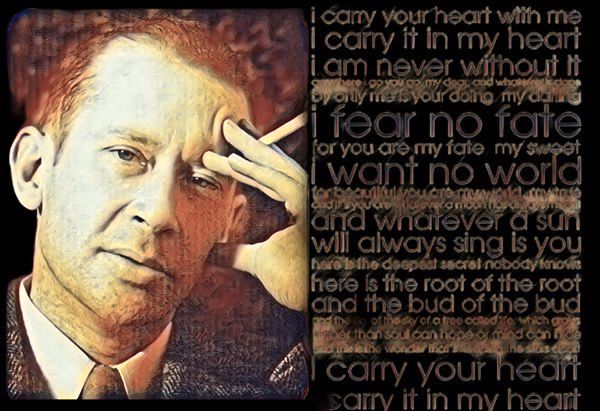
i carry your heart with me (i carry it in), de e. e. cummings
In In Her Shoes, the poem appears in one of the film’s most delicate moments, when language must cross not only grief, but also the attempt to rebuild a bond. “i carry your heart with me (i carry it in).” The line does not speak of farewell as rupture, but as continuity.
Published in 1952, the poem by e. e. cummings breaks with traditional structure both in form and language. The absence of capital letters, the fluidity of the lines, and the almost circular construction create a sense of absolute intimacy, as if the text were less a public declaration and more a thought organizing itself within the very act of existing. Love is not described as something external, but as something embodied, inseparable.
This origin matters because it completely shifts the idea of loss. It is not about denying absence, but about transforming it into internal presence. To love, in this context, means carrying the other in a way that no longer depends on physical proximity.
I carry your heart with me (I carry it in
my heart) I am never without it
(anywhere I go, you go, my dear;
and whatever is done by only me is your doing, my darling)
In In Her Shoes, this gesture takes on particular weight because it appears after deep emotional fractures. The poem does not enter as easy consolation, but as an attempt to say what remained unexpressed between the characters. What the film recognizes, in incorporating it, is that some relationships do not end, even when they seem lost. They simply change place.
And it is in that displacement that farewell ceases to be an ending and becomes a transformation.
The Garden of Love, by William Blake
In the final moments of Penny Dreadful, the poem takes on a weight that goes beyond individual farewell and approaches a broader existential dimension. “And binding with briars my joys & desires.” The line concentrates Blake’s central idea, that what should flourish is instead contained, regulated, and suffocated.
Published at the end of the 18th century in Songs of Experience, the poem emerges as a critique of moral and religious repression, transforming the symbolic space of the garden, traditionally associated with innocence and desire, into a place of prohibition and control. This inversion is essential to understanding its force.
I went to the Garden of Love,
And I saw it was filled with graves,
And tomb-stones where flowers should be:
And Priests in black gowns were walking their rounds,
And binding with briars, my joys & desires.
In Penny Dreadful, this logic finds a direct echo in the character’s trajectory, marked by guilt, by the impossibility of fully existing, and by the constant tension between desire and repression. The farewell here is not only from life, but from the possibility of having lived differently. The poem does not enter as consolation, but as diagnosis, expanding the tragedy by connecting death, identity, and what was denied.
Because I could not stop for Death, by Emily Dickinson
In A Quiet Passion, Emily Dickinson’s poetry does not appear as an isolated quotation, but as a direct extension of the way the character understands the world. “Because I could not stop for Death – He kindly stopped for me –.” The line completely shifts the experience of farewell.
Written in the 19th century, the poem presents death not as a violent rupture nor as something to be resisted, but as an inevitable, almost gentle presence that leads the subject through a silent passage. Dickinson constructs a singular relationship with the end, marked more by observation than confrontation.
Because I could not stop for Death –
He kindly stopped for me –
The Carriage held but just Ourselves –
And Immortality.
This origin is decisive in understanding its use in audiovisual storytelling. The text does not organize grief nor amplify despair. It creates a suspension, a space in which death can be thought without urgency or collapse. In A Quiet Passion, this approach merges with the character’s own subjectivity, transforming farewell into a gradual, almost contemplative awareness.
Within the broader set, the poem opens a third path. Between consolation and devastation, between resistance and refusal, it proposes a gaze that accepts without dramatizing, that observes without denying.
Bright Star, de John Keats
In Bright Star, the poem becomes, quite literally, a farewell in the form of love. “Bright star, would I were stedfast as thou art…” The line carries a desire for permanence that is already crossed by the awareness that it will not be possible.
Written by Keats in the early 19th century, at a time when the poet was already living under the shadow of the illness that would kill him a few years later, the text articulates love and finitude as inseparable. What is desired is not only to love, but to fix that love in time, to make it immune to change and loss.
To feel for ever its soft fall and swell,
Awake for ever in a sweet unrest,
Still, still to hear her tender-taken breath,
And so live ever—or else swoon to death.To feel for ever its soft fall and swell,
Awake for ever in a sweet unrest,
Still, still to hear her tender-taken breath,
And so live ever—or else swoon to death.
In the film, this tension materializes in the relationship between Keats and Fanny Brawne, marked by intensity and impossibility. The poem does not function as an idealized declaration, but as the expression of a love that already knows it will be interrupted. Farewell, here, is inscribed from the beginning, which makes every gesture more urgent and, at the same time, more fragile.

O Captain! My Captain!, by Walt Whitman
In Dead Poets Society, the poem becomes a collective gesture. “O Captain! my Captain! our fearful trip is done.” The text, originally written by Whitman as an elegy for the death of Abraham Lincoln, is displaced from its historical context and gains a new function.
Published in 1865, the poem articulates mourning and admiration, constructing the figure of the lost leader as someone whose absence completely reorganizes the meaning of lived experience. This public dimension of grief is essential to understanding its force.
In the film, this logic translates into a moment when language ceases to be individual and becomes shared. The students, by repeating the line, do not merely pay tribute but recognize loss as something that passes through them collectively. The poem ceases to be only literature and becomes action, presence, positioning.
O Captain! my Captain! our fearful trip is done,
The ship has weather’d every rack, the prize we sought is won,
The port is near, the bells I hear, the people all exulting,
While follow eyes the steady keel, the vessel grim and daring;
But O heart! heart! heart!
O the bleeding drops of red,
Where on the deck my Captain lies,
Fallen cold and dead.
What unites all these moments is not only the presence of poetry, but the recognition that certain experiences demand a language that already comes charged with the weight of the world. Cinema, in turning to these texts, does not relinquish its own power, but expands it, creating a space where image and word meet in an attempt to say what neither could fully express alone.
Descubra mais sobre
Assine para receber nossas notícias mais recentes por e-mail.
 miscelana.com