
The impact of a story like Netflix’s Radioactive Emergency, the Cesium-137 accident in Goiânia, tends to crystallize an almost inevitable perception: that we are dealing with something inherently destructive, a force that exists only to contaminate, harm, and kill. The Netflix series reactivates that imagery with precision, reconstructing the collective shock of a material that, once exposed, seemed impossible to contain.
But that is not the full story.

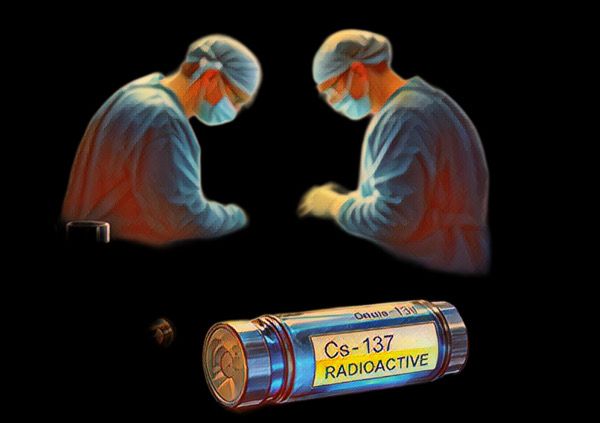
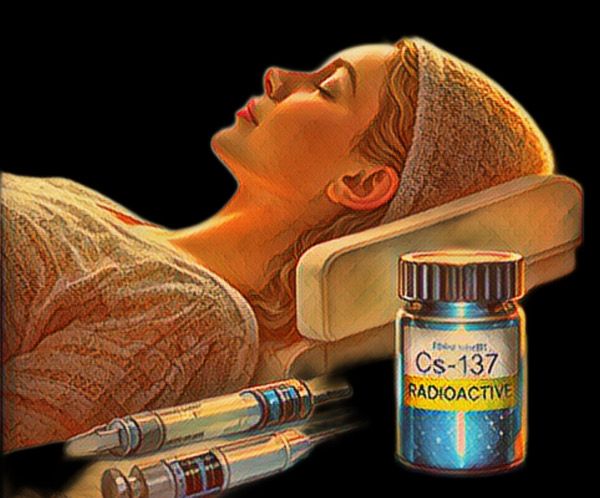
Before becoming the symbol of one of the most severe radiological accidents outside nuclear power plants, Cesium-137 occupied a quiet yet fundamental place inside hospitals. And, in some ways, it still does, even if today it shares that role with more advanced technologies. The same radiation that, when uncontrolled, caused contamination in Goiânia was, for decades, used in a controlled manner to treat tumors and save lives.
This duality is not a technical detail. It is the central point.
Cesium-137 is a radioactive material that emits gamma radiation, a form of energy capable of penetrating human tissue. It is precisely this ability that makes it useful in medicine. In cancer treatments, particularly in earlier forms of radiotherapy, this radiation was carefully directed to destroy tumor cells, preventing them from multiplying.
For a long time, it was used mainly in teletherapy machines and also in internal procedures such as brachytherapy, in which radioactive sources are placed near or inside the tumor. In these contexts, radiation is not dispersed chaotically. It is calculated, measured, and contained. There is strict control over dosage, exposure time, and the area being treated.
That is what separates treatment from tragedy.
The problem with Cesium-137 has never been its existence, but the way it can escape systems of control. In Goiânia, the material was inside abandoned equipment, without proper protection, outside any institutional oversight. What would have been a precision instrument in a hospital became an agent of contamination precisely because it had been removed from the environment that made it safe.
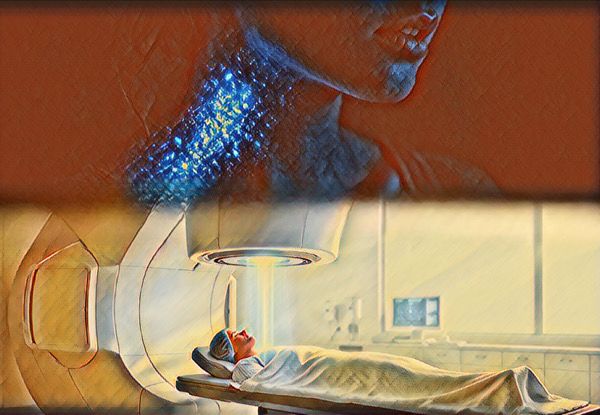
As technology advanced, the use of Cesium-137 in medicine was gradually replaced by other radioactive sources and more sophisticated equipment, such as linear accelerators. These systems do not rely on stored radioactive materials and allow for even greater control of the radiation applied, reducing operational risks.
Even so, the principle remains the same.
Radiotherapy continues to be one of the pillars of cancer treatment worldwide. And it is based on exactly this logic: using radiation as a therapeutic tool capable of destroying what grows uncontrollably within the body.
The series reignites the memory of a collective failure, of a chain of negligence that allowed a dangerous material to circulate without any containment. At the same time, however, it opens the door to a broader understanding.
Cesium is not only what happened in Goiânia. It is also part of a less visible story, one that unfolds every day in hospitals around the world, where radiation, when properly applied, is not a threat, but a treatment.
And it is in this contrast that the narrative gains depth. Because, in the end, what defines the fate of a material like this is not its nature, but how we choose to handle it.
Descubra mais sobre
Assine para receber nossas notícias mais recentes por e-mail.
 miscelana.com