
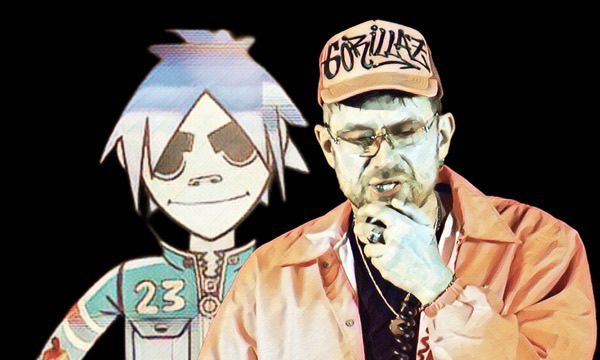
Following the evolution of Gorillaz, from a project that once seemed almost unassuming to one of the most iconic bands of the past 25 years, carries something rare. Seeing it live makes it even clearer just how much Damon Albarn is capable of reinventing himself, and how, at its core, everything began with a simple gesture.
When the idea felt like a joke and became a language
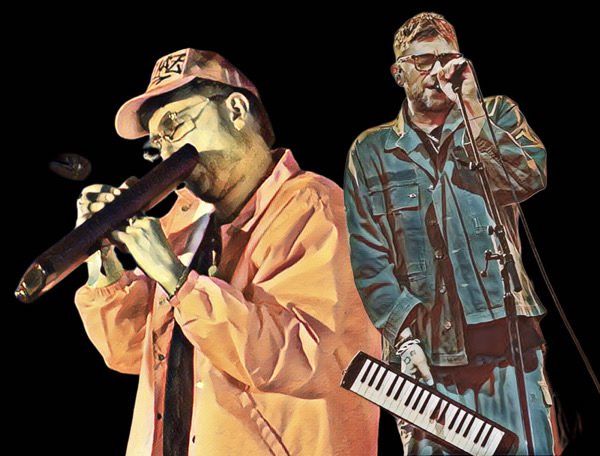
There is something deeply ironic in the fact that a band created as a response to the artificiality of pop has become one of the most sophisticated structures in music over the past 25 years. When Damon Albarn and Jamie Hewlett began sketching what would become Gorillaz in the late 1990s, the provocation was relatively simple. If the industry were manufacturing artists, why not embrace that fabrication openly and, more than that, turn it into a language?
What they perhaps did not anticipate was that this idea, almost a sarcastic gesture in response to the MTV of the time, would end up anticipating an entire logic of cultural consumption that now feels inevitable. Avatars, narrative worlds, fluid collaborations, fragmented identity. All of it was already there, long before we had the vocabulary to describe it.
The 2001 album and the right moment for rupture
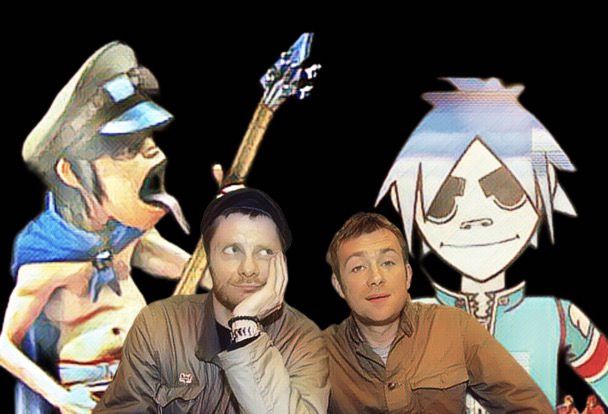
The release of Gorillaz in 2001 was not just successful. It arrived at the precise point of saturation of a certain kind of pop. Britpop had already lost its creative force, mainstream rap was beginning to repeat itself, and heavy rock was sinking into aesthetic excesses that aged quickly.
Within that context, the album sounded like an impossible collage that nevertheless worked with disarming naturalness. Hip hop, dub, electronic, trip hop, and fragmented Latin influences all coexist without any need to justify the mixture.
The impact of Clint Eastwood was immediate, but it says less about the essence of the project than it might seem. The truly radical gesture was in everything surrounding it. In the idea that a band could be, at once, a narrative, a visual experience, and a space for musical discovery.
The hidden pedagogy within pop
There is a less obvious layer, and perhaps a more interesting one, in the project from the very beginning. Gorillaz was never simply a sum of influences. It functioned as a portal.
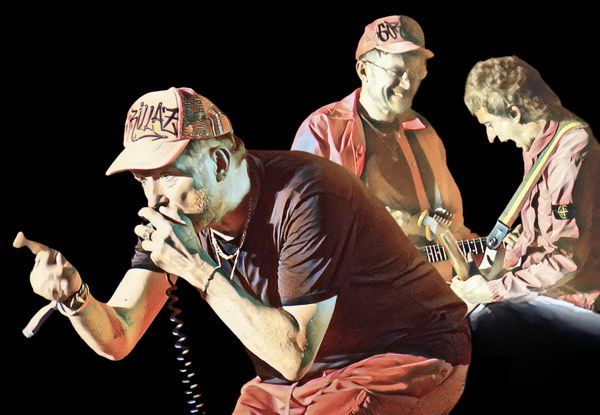
The logic was almost educational, even if it was never explicitly framed that way. The listener would arrive through an accessible track and, without quite realizing it, be exposed to references that did not belong to the dominant circuit. From Del the Funky Homosapien to Ibrahim Ferrer, moving through producers, artists, and aesthetics that required an active curiosity.
This dimension remains to this day. Even in more recent work, the structure continues to operate as a form of curation disguised as entertainment, something the project itself sustains as it keeps drawing new generations into worlds that would not naturally emerge from algorithmic playlists.
Before and after the idea of a “band.”
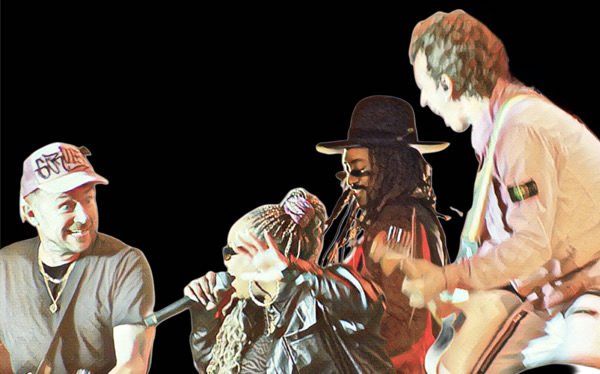
Perhaps the most enduring aspect of Gorillaz lies in the way it dismantles the very idea of authorship. The band has never been fixed, not in sound, not in formation, not in identity. And this is not a side effect. It is the core of the project.
Over these 25 years, the list of collaborations has become almost an alternative map of contemporary music. Established names and emerging artists coexist without rigid hierarchy, turning each album into both a portrait of its moment and a kind of living archive.
This elasticity explains why Gorillaz has been able to move across decades without becoming a nostalgic artifact. It does not depend on a single sound to exist.

The world before streaming and the intuition of what was coming
It is impossible to look back without recognizing how much Gorillaz anticipated what we now understand as digital culture. The idea of characters existing across multiple platforms, the expansion of narrative beyond music, and the dissolution between artist and project, all of this feels natural today, but in the early 2000s, it was a considerable risk.
The fan experience itself already pointed in that direction. Interactive websites, hidden content, a universe that extended beyond the records. It was an active, almost investigative relationship at a time when the internet had not yet become an automatic extension of musical experience.
What remains after 25 years
Celebrating 25 years of Gorillaz is not simply about revisiting an important album. It is about recognizing a quiet turning point.
What began as an ironic commentary on the state of pop ultimately became a possible model for creation in the 21st century. A model that embraces fragmentation, absorbs excess, transforms collaboration into identity, and understands that music alone is no longer enough.
Perhaps that is why the first album still feels so alive. Not because it belongs to a specific time, but because it seems to have been made for a time that had not yet fully arrived.
Descubra mais sobre
Assine para receber nossas notícias mais recentes por e-mail.
 miscelana.com