
The trajectory of Euphoria so far has been defined by intensity both on and off screen, but what is taking shape now suggests a deeper, almost structural shift. The newly released material, which confirms a premiere on April 12, does more than end a long period of uncertainty. It makes it clear that the series does not intend to pick up exactly where it left off, as if acknowledging that its original world can no longer fully contain its characters.
The second season ended in suspension, with Rue Bennett, played by Zendaya, narrating a period of sobriety that never presents itself as a definitive victory, but rather as a fragile interval. Around her, everything remained unresolved. Cassie Howard, portrayed by Sydney Sweeney, reached an emotional breaking point after publicly exposing her vulnerabilities, while Nate Jacobs, played by Jacob Elordi, continued to exist as a presence shaped by violence and control, unable to break from his own inheritance.

At the emotional center of this network was Fezco, portrayed by Angus Cloud, whose arc had found an unexpected path of tenderness within an otherwise brutal universe. The abrupt interruption of his storyline in the season’s closing police raid gained an even more painful dimension with Cloud’s death in 2023. From that moment on, the continuation of the series stopped being solely a narrative challenge and became an emotional recalibration of everything that had been built.
Behind the scenes, signs of strain were already present. The death of producer Kevin Turen, combined with recurring reports about the highly centralized creative process led by Sam Levinson, helped shape a scenario in which delays and reconfigurations became inevitable. Levinson’s involvement in The Idol, which faced strong critical backlash, intensified scrutiny around his methods and heightened expectations for Euphoria’s return.
At the same time, the cast itself underwent a significant transformation. Zendaya consolidated a rare position across television and film, Sydney Sweeney became one of the most talked-about names of her generation, often surrounded by controversies that amplify her visibility, and Jacob Elordi moved toward more auteur-driven projects. This individual expansion complicates the collective dynamic and contributes to the widening gap between seasons.
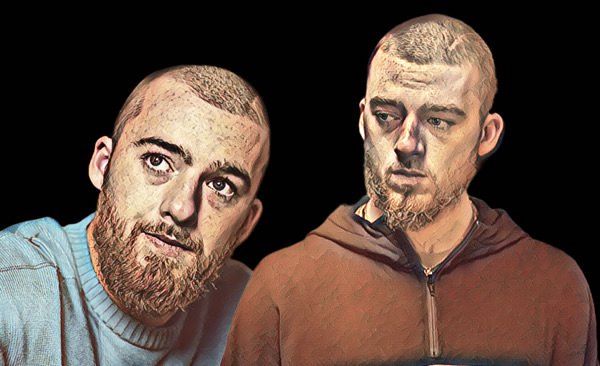

Within this context, season three emerges with a clear sense of displacement. The material released points to a time jump that removes the characters from the high school environment, allowing the narrative to explore not just the immediate impact of their choices but their accumulated consequences over time. The Rue who returns is no longer simply on the brink of collapse, but someone attempting to process what came after, which shifts the nature of the conflict the series is now interested in.
This shift extends to the other characters. Cassie appears to carry the aftermath of her emotional exposure in a quieter, more internalized way, while Nate is framed less as an immediate threat and more as someone confronted by the consequences of his own patterns. There is also a greater presence of adult characters, expanding the narrative scope and reinforcing the idea of transition.
Fezco’s absence is not treated as a minor detail but as something that will reshape emotional dynamics and relationships. If he once functioned as a point of balance within chaos, his absence is likely to intensify the sense of displacement that defines this new phase.

The aesthetic itself suggests recalibration. The visual language remains, but it appears less focused on immediate shock and more invested in building an atmosphere of consequence, as if the series is shifting away from impact toward what lingers after it. This tonal adjustment directly reflects everything that has happened off-screen, creating a continuity between reality and fiction that has always been part of Euphoria, but now becomes even more pronounced.
While there is no absolute confirmation on every level, the direction of the production suggests that this new season may function as a conclusion. The combination of creative fatigue, competing schedules, and the characters’ own maturation points toward a moment where ending the story feels more coherent than extending it.


The return of Euphoria, then, does not present itself as an attempt to recreate what it once was, but as an effort to translate what comes after excess, after rupture, after loss. And that, in itself, reshapes everything.
There is also an additional element that reinforces this sense of closure and reconfiguration of power within the narrative. The final appearance of Eric Dane as Cal Jacobs, Nate’s father, had already marked season two as a crucial breaking point, both for the character and for the family structure that sustained much of the show’s emotional violence. His exit is not merely narrative. It removes one of the most unsettling pillars of Euphoria, forcing Nate to exist without that direct reference point, which is likely to reverberate significantly in the new phase.
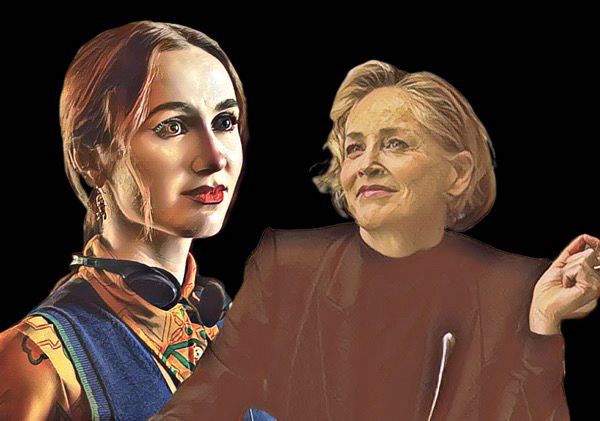
At the same time, the addition of Sharon Stone introduces an unexpected layer of weight and intrigue. Her involvement, still surrounded by limited concrete details, suggests an expansion of the show’s universe beyond its original core, bringing in a presence associated with complex and ambiguous characters. In a season already defined by transition, Stone’s inclusion points to an attempt to reposition Euphoria not only as a portrait of youth but as a broader narrative about consequences that extend across generations.
Descubra mais sobre
Assine para receber nossas notícias mais recentes por e-mail.
 miscelana.com