
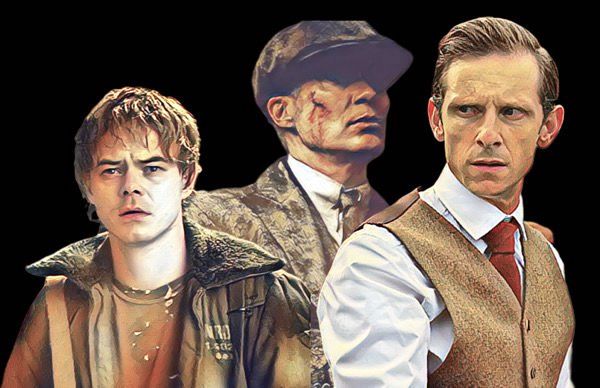
The announcement of a new chapter of Peaky Blinders — confirmed by first-look images of Jamie Bell as Duke Shelby — carries layers that go beyond the initial excitement of the reveal, and not all of them are exactly positive.
It is not simply about the casting, which is undeniably strong; what truly stands out is the fact that we are dealing with the third incarnation of a character who is supposed to represent the future of the story, yet still has not managed to establish himself as a compelling dramatic presence.
After appearing with Conrad Khan in the sixth season and gaining a different interpretation through Barry Keoghan in Peaky Blinders: The Immortal Man, Duke Shelby is once again being reshaped. While the ten-year time jump offers a reasonable technical justification, it does not entirely explain why Keoghan did not continue in the role.
The answer is unlikely to lie in a single cause, but rather in a combination of creative and strategic decisions that reveal a great deal about where the franchise currently stands.

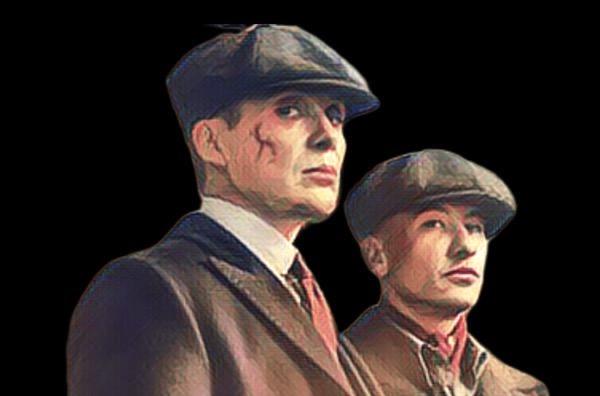
Why Barry Keoghan didn’t stay
There has been no official statement detailing Barry Keoghan’s departure from the role, which in itself suggests that this was not a dramatic fallout but a quiet repositioning. Still, when we look at the broader context, a few explanations begin to emerge with clarity.
The first is structural. The new series takes place a decade after the events of the film, placing Duke in a more mature, more established position within the criminal world and, crucially, at the center of the narrative. Transitions like this often come with recasting choices that reflect not only physical aging but also a shift in dramatic weight. Jamie Bell, whose career has been marked by intense and physically grounded performances, brings a kind of presence that aligns more predictably with a storyline that appears intent on positioning Duke as a leading force.
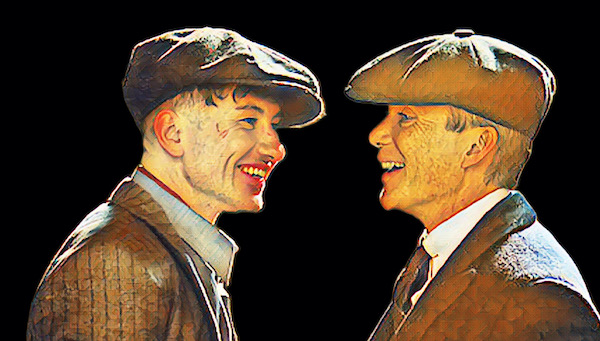
At the same time, there is an industrial dimension that cannot be ignored. Barry Keoghan is currently navigating a period of significant momentum in Hollywood, with high-profile projects and an increasingly demanding schedule, which naturally affects his availability for a long-term commitment such as a two-season series with global ambitions and a demanding production timeline. In practical terms, retaining him would have meant negotiating not only with the character, but with the trajectory of a rapidly ascending career.
There is also a third layer, perhaps the most delicate one, which concerns the reception of the character itself. Even with Keoghan’s magnetic screen presence in the film, Duke Shelby has not yet solidified as an emotionally indispensable figure for audiences. His introduction came late, his arc remains fragmented, and his connection to the legacy of Tommy Shelby still feels more stated than deeply experienced. In that context, a recast becomes easier to execute because the audience’s attachment to the character is still in formation.
The missing heir: what happened to Charles Shelby
That fragility becomes even more evident when we look at the direct legacy of Tommy Shelby and, more specifically, at how the series has handled his children.
There was a time when that emotional logic felt clear. His bond with Charles, the son he had with Grace Shelby, carried weight, tenderness, and a sense of continuity that grounded even his most ruthless decisions. Charles was not just a child in the background; he represented the part of Tommy that still allowed himself to feel, to project something resembling a future.
What the film does with that legacy is, at best, dismissive.
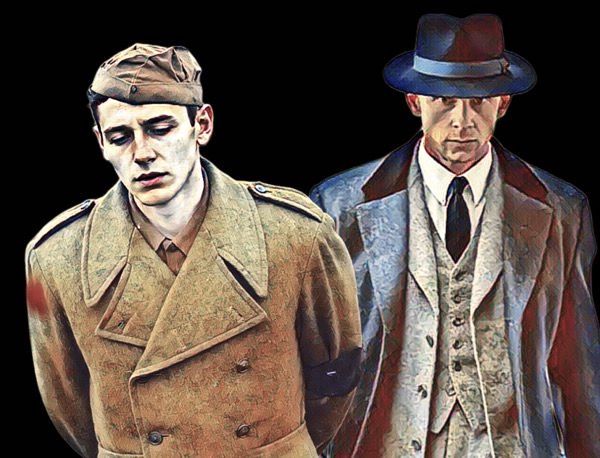
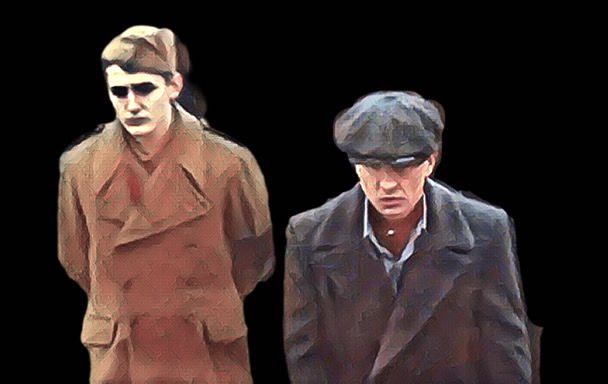
Charles is reduced to a fleeting presence, barely acknowledged, almost erased from the narrative to the point that it took attentive fans to even locate him, silent, at Tommy’s funeral. For a character who should embody the most emotionally coherent line of succession, this absence is not just noticeable, it is structurally damaging.
At the same time, Duke is elevated into the position of heir without having shared that same emotional history, without having lived within the family long enough to carry its contradictions, its loyalties, or its wounds. The series asks us to accept him as central while sidelining the one character who had, from the beginning, a legitimate claim to that space.
And this is where the imbalance becomes impossible to ignore.
Because the issue is no longer simply about who takes over, but about how that inheritance is constructed, and more importantly, how it is disregarded.
Between ambition and misalignment
The expansion of the franchise, now bringing in names like Charlie Heaton and Lashana Lynch alongside a post-war setting, makes it clear that the intention is not to scale back. On the contrary, the goal is to grow, to widen the scope, to transform Peaky Blinders into something larger than its original form.
But expansion does not automatically translate into cohesion.
Replacing Barry Keoghan with Jamie Bell could have been just a production detail, a natural adjustment within a story that spans different time periods. However, when this change is viewed alongside narrative decisions such as the sidelining of Finn Shelby and the increasingly uneven handling of Tommy’s legacy, it begins to feel less like an isolated choice and more like part of a broader pattern.
And that pattern points to something deeper.
The question that remains
In the end, the issue is not whether Jamie Bell will deliver a compelling Duke Shelby, because all signs suggest that he will. The real question is whether the series still knows exactly who Duke is supposed to be.
Because without that clarity, any actor stepping into the role will inevitably be playing a character that keeps changing before it ever fully takes shape.
And perhaps that is what makes this third recast feel less like a reset and more like a sign that, in trying to move forward, Peaky Blinders is beginning to drift away from what once made it so sharply defined.
Descubra mais sobre
Assine para receber nossas notícias mais recentes por e-mail.
 miscelana.com