
Before prestige, a focus on the unseen
I have been a fan of Anne Nikitin for years. I have collected film scores for as long as I can remember, and music determines — for me — which films I seek out based solely on the composer. Growing up, it was John Barry, Michel Legrand, John Williams, Ennio Morricone, Henry Mancini, and James Horner who shaped my listening. Later came Craig Armstrong, Patrick Doyle, Hans Zimmer, Clint Mansell, Dario Marianelli, and Stephen Warbeck, paving the way for a new generation in which Anne Nikitin clearly stands out.
Within the wave of female composers, she is one of the most versatile and impactful — and I have been writing about her since 2022. Nikitin does not emerge from the most obvious circuit of scoring for major films and series. Her training is solid, almost classical on the surface, but her career develops in less predictable territories, where music cannot rely on formulas.
The daughter of Polish and Romanian immigrants, born in Canada and trained in England, she studied with Dario Marianelli and Gabriel Yared, and worked as an assistant to George Fenton — a formidable trio within film composition. Nearly twenty years ago, in 2006, she won the BBC award for new composers, a beginning that could have led to a more conventional path within traditional cinema.
Instead, her first major impact came from elsewhere.
With The Imposter, directed by Bart Layton, she entered a type of narrative in which truth is constructed, dismantled, and reenacted. The score does not guide, it questions. That point establishes a constant: Nikitin is consistently more interested in psychological tension than in spectacle.
Between documentaries and series, the shaping of a voice
Before broader recognition, her career developed steadily through projects that demanded emotional precision. Works such as American Animals reinforce her relationship with hybrid narratives, where reality and fiction blur. There, the music sustains instability without resolving it.
That same logic appears in Little Birds, where desire, colonialism, and identity intersect, requiring a score that engages not only with the drama but with its cultural and symbolic layers.
By the time she reaches The Dropout, the shift in language is evident, yet the underlying principle remains. The synthesizers are not merely an aesthetic choice, but a way of translating a world obsessed with control, innovation, and the narrative of success. The music follows Elizabeth Holmes’s rise and fall without ever becoming explanatory.

Dangerous Liaisons and sophistication as disguise
In Dangerous Liaisons, adapted from the novel by Pierre Choderlos de Laclos, her approach meets material that demands absolute precision. The series operates within a universe structured by manipulation, desire, and power, where every gesture is calculated.
What could have been an ornamental score becomes a system of tension. The orchestra is present, but it does not provide comfort. Instead, it introduces instability. Subtle variations, unexpected pauses, and harmonic shifts create the persistent sense that something is about to break.
The decision to compose an opera within the series, drawing on references such as Wolfgang Amadeus Mozart, is revealing not because of its formal ambition, but because of how it integrates tradition into the dramatic game. The music itself becomes an act of manipulation.

After Dangerous Liaisons: expansion and contrast
The period following Dangerous Liaisons does not represent a rupture, but an expansion — and, above all, contrast.
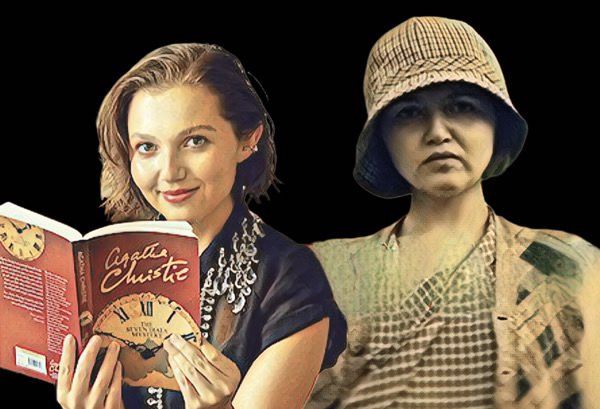
In Agatha Christie’s Seven Dials Mystery, Nikitin moves into a world where rhythm, irony, and precision are essential. The score must sustain mystery without losing its sense of play, creating a tension that is not only dramatic, but structural.
In Four Letters of Love, adapted from the novel by Niall Williams, the axis shifts entirely. The story revolves around destiny, spirituality, and connection, requiring a more lyrical approach. Even so, Nikitin avoids easy sentimentality. Even when the music opens up, it maintains a certain distance, as if refusing to fully resolve the emotional experience.
Between these projects, what changes is not only language, but dramatic orientation. Control and game on one side, destiny and surrender on the other. In both, the same resistance to obvious solutions remains.
The Age of Innocence and the weight of the canon
The new project involving The Age of Innocence marks a point of inflection. The Netflix adaptation, created by Emma Frost and initially directed by Shannon Murphy, does not simply revisit a classic, but repositions it.
Filmed in Prague, with a cast including Ben Radcliffe, Camila Morrone, Kristine Froseth, and Margo Martindale, the project clearly aims to speak to a new generation, foregrounding desire, identity, and internal conflict. It is, admittedly, a worrying proposition — but one worth watching.
What is far less concerning is Nikitin’s involvement. Here, the score moves beyond atmosphere and becomes interpretation.
The comparison with the film by Martin Scorsese, scored by Elmer Bernstein, is inevitable. Bernstein created a composition that translates repression through formal elegance, as if the music itself obeyed the rules of that world.
Nikitin has the opportunity to shift that logic. Her music may not break from tradition, but it tends to expose its fractures. Rather than reflecting restraint, it can make audible the tension it produces.

A composer of what refuses to resolve
Looking at Anne Nikitin’s trajectory, what emerges is not a pursuit of musical prominence, but of dramatic precision. Her music does not attempt to resolve a scene or impose a single emotional reading.
It operates precisely at the point where the narrative opens, where meaning has not yet been fixed.
That is why her work grows over time. Not through immediate impact, but through the way it settles into memory.
Nikitin does not write to be remembered in isolation. She writes so that the experience never fully closes.
Descubra mais sobre
Assine para receber nossas notícias mais recentes por e-mail.
 miscelana.com