
The original context and its contradiction
When Charlie’s Angels premiered in 1976, its impact did not come only from placing three women at the center of an action narrative. It also came from how that was done. The project emerged from a very clear industrial logic that relied on the visibility of the female body as an audience strategy.
Beauty was not simply a trait of the characters, but a casting criterion, a language, and a mechanism of attraction. The camera operated through it, the costumes reinforced it, and the narrative itself often revolved around that exposure.
And yet, something felt slightly out of place.
Because while it responded to that logic, the series also belonged to a historical moment shaped by second-wave feminism. Women were actively claiming space, rights, and representation, and the presence of three female leads in primetime carried a symbolic weight that could not be ignored. The series did not resolve that tension. It functioned within it.
What “jiggle TV” was, and why it matters today
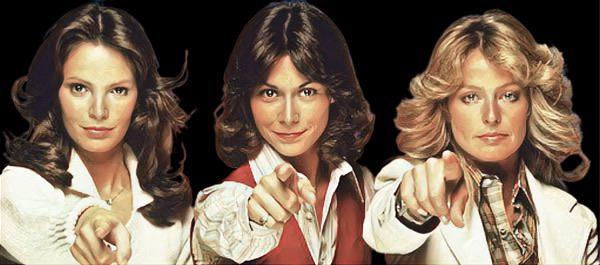
The term “jiggle TV” emerged in that same context to describe a strategy in 1970s American television. It was not a theoretical framework, but a blunt market observation. Shows leaned on the sexualization of their female leads as a way to capture attention.
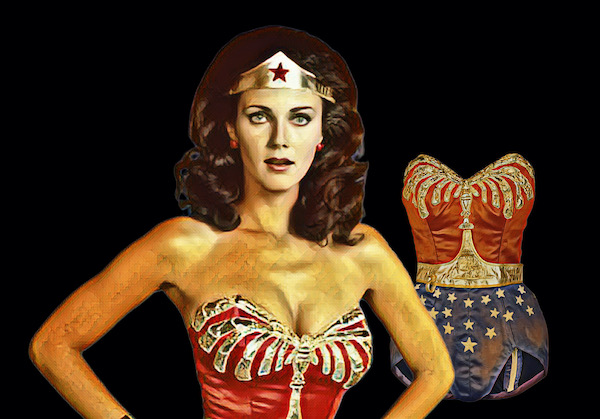
Alongside Charlie’s Angels, titles such as Three’s Company and Wonder Woman were often grouped under this label, even if they operated differently. What they shared was the centrality of the female body as a visual hook.
In the case of Charlie’s Angels, this approach became particularly visible. The characters frequently went undercover using seductive disguises, while the staging insisted on framing that reinforced that gaze.
What makes this discussion still relevant is that it anticipated a debate that has not been resolved. The difference is that, at the time, this tension was barely named. Today, it sits at the center of the conversation.
Female archetypes and the construction of identity
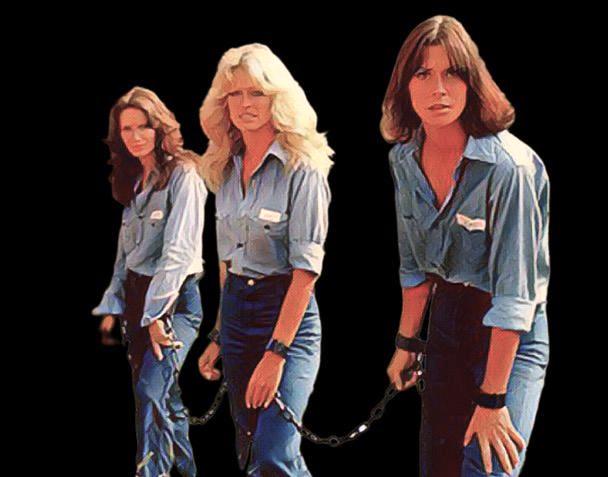
Part of the show’s strength came from how clearly it defined its protagonists. They were not simply three characters, but three narrative functions that complemented one another and made audience identification almost immediate.
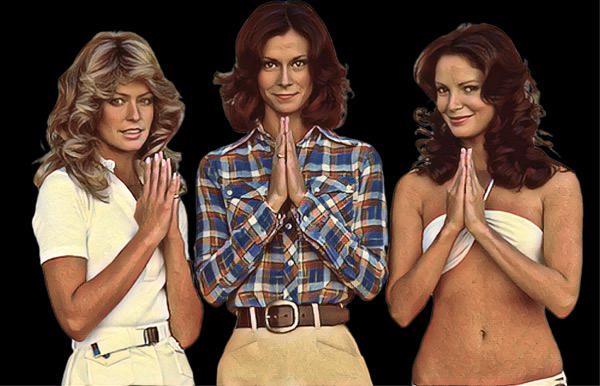
Kate Jackson embodied strategic intelligence, the figure who organized action and drove the investigation forward. Farrah Fawcett concentrated charisma, physical energy, and magnetic presence, quickly becoming the most recognizable face of the series. Jaclyn Smith functioned as an emotional anchor, balancing and sustaining continuity.
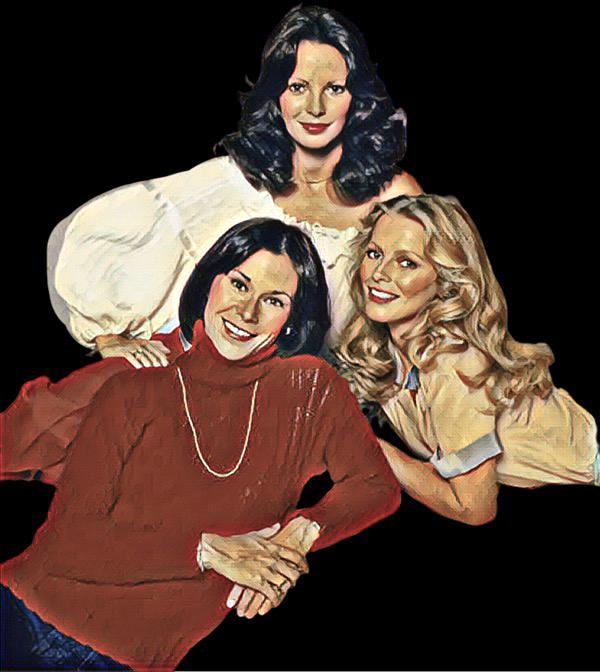
When Cheryl Ladd joined after Farrah’s departure, this structure was reshaped but never abandoned. The series depended on that triangulation, that distribution of roles that allowed viewers to project themselves into different forms of female presence.
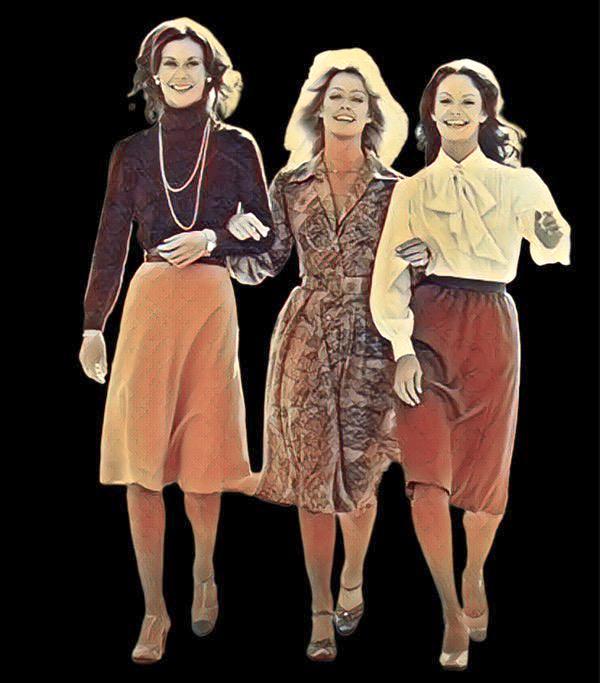
The Angel each woman chose to be
There is a less measurable, yet perhaps more enduring impact of Charlie’s Angels that does not appear in ratings or reviews. It lives in the memory of those who grew up with it.
For many women now in their fifties and beyond, Charlie’s Angels was not simply something they watched. It was something they inhabited. They would play at choosing which Angel they were. Not as a superficial exercise, but as a form of identification tied to personality, posture, and even a sense of possibility.
Sabrina Duncan was the rational one, the strategist who thought before acting. Kelly Garrett was warmer, intuitive, socially agile, and able to move through situations with ease. Jill Munroe embodied immediate magnetism, a beauty that drew attention and became part of the investigative method. When she left, her younger sister Kris Munroe stepped into that role, with a slightly different tone but still within the same framework.
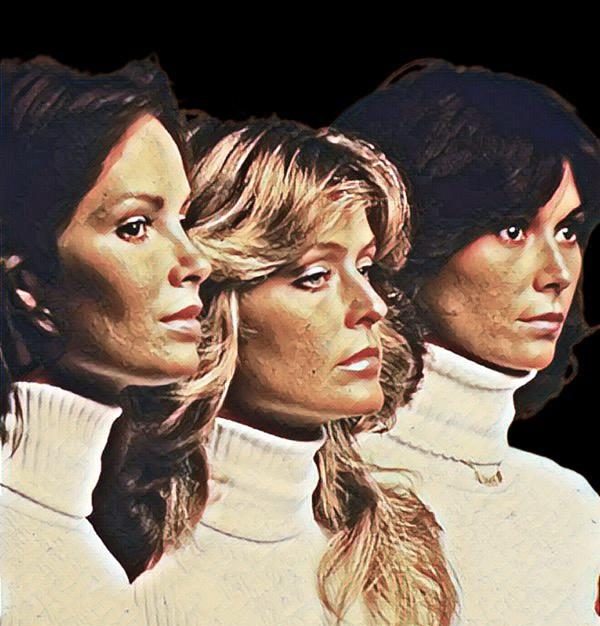
This division was not accidental. It was a precise construction of archetypes that allowed audiences to recognize, choose, and project.
And this is where a contemporary reading begins to complicate that legacy.
The very name “Angels” — and even more so the Portuguese title The Panthers— carries a symbolic weight that is difficult to ignore today. The term evokes an animalized sexualization that, in the 1970s, was already used to label women who stepped outside accepted norms. In Brazil, during that same decade, Angela Diniz was referred to as the “Panther of Minas,” not as praise, but as a way of framing her independence and sexuality within a narrative that rendered her dangerous.
There is an unavoidable irony here.
Because, contrary to that projected image, the Angels themselves were largely chaste. They rarely became romantically involved, and when they did, it was treated as an exception. Sexuality was not expressed as freedom, but instrumentalized as a strategy. Beauty was used to deceive, infiltrate, and distract.
At the same time, the structure surrounding them did not escape that logic. Charlie Townsend, always absent in image but present in authority, was constructed as a hedonistic man surrounded by equally attractive assistants. The series never showed that world directly, but suggested it enough to sustain a very recognizable male fantasy.
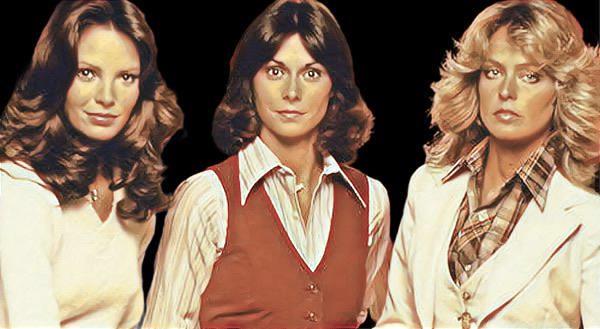
This contrast is key to understanding the phenomenon.
The show offered its viewers a sense of projection and belonging, but did so within a framework still largely shaped by the male gaze.
And yet, it worked.
Perhaps because, even within those constraints, there was space to imagine other ways of being. Imperfect, contradictory, and conditioned — but still possibilities.
And perhaps that is why, fifty years later, it still makes sense to remember which Angel each woman chose to be.
The mystery of Charlie and invisible power
One of the show’s most enduring devices was the decision never to reveal the face of Charlie Townsend. His presence existed only through voice, delivered over the phone, creating a figure that was both central and absent.
It was known that the voice belonged to John Forsythe, but this was never made explicit within the narrative. Charlie functioned as both authority and abstraction, the origin of missions without direct involvement in them.
Today, that choice reads more ambiguously. It kept the focus on the protagonists, while also preserving a male command structure that never needed to justify itself visually.
The scale of the phenomenon in numbers
Between 1976 and 1981, Charlie’s Angels produced 110 episodes across five seasons and ranked among the most-watched shows on American television in its early years.
That performance becomes even more striking when placed alongside its critical reception. The series was often dismissed as superficial, yet it achieved massive popular engagement.
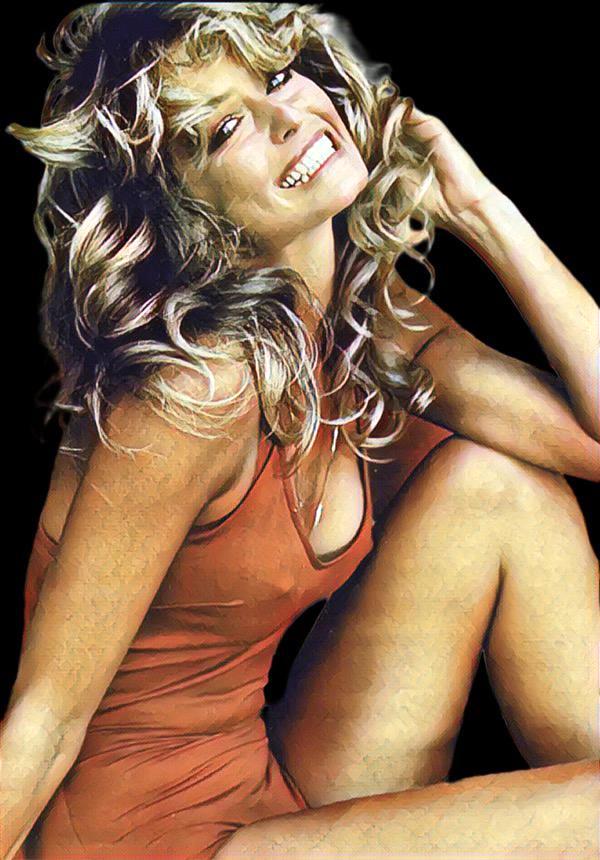
Farrah Fawcett became the most visible symbol of that reach. Her swimsuit poster became one of the best-selling images of the 1970s, transcending the show itself.
From success to reboots: what worked — and what didn’t
The longevity of the brand explains the repeated attempts to revive it.
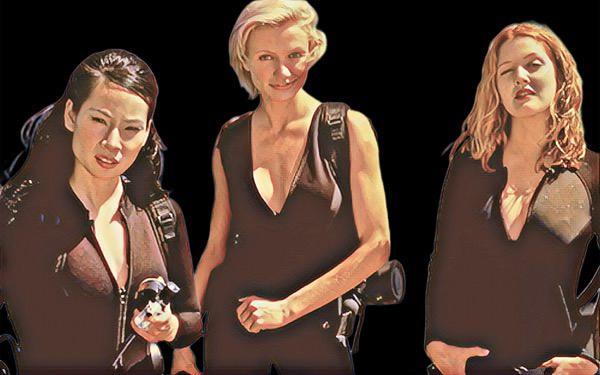
In the 2000s, Charlie’s Angels brought the concept to the big screen with Drew Barrymore, Cameron Diaz, and Lucy Liu, grossing over $260 million worldwide. Its sequel, Charlie’s Angels: Full Throttle, reached similar numbers despite a more divided reception.
Television attempted an update in 2011 with Charlie’s Angels, but it was quickly canceled. In 2019, the franchise returned to theaters with Charlie’s Angels, starring Kristen Stewart, Naomi Scott, and Ella Balinska, directed by Elizabeth Banks. This version no longer suggested, it stated. It expanded the original concept into a global network of Angels and leaned into a more explicit discourse of female autonomy.
And still, it did not land as expected.
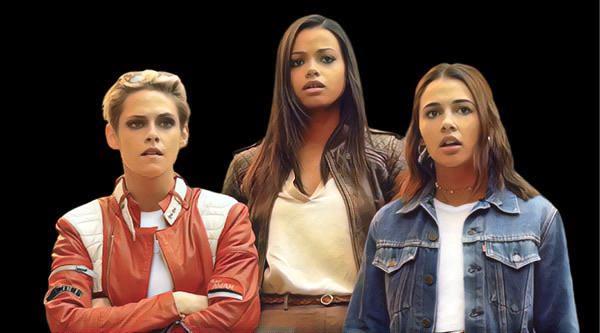
With around $73 million worldwide, its performance was modest compared to earlier iterations. Not for lack of intent, but perhaps because of an excess of definition. By removing the ambiguity that sustained the original — that unstable balance between object and subject, desire and autonomy — the film exposed a deeper challenge: how to recreate, in a different time, a tension that no longer operates in the same way.
These attempts show that the concept remains recognizable, but its original context cannot simply be reproduced.
What 50 years really reveal
Fifty years later, what remains is not a simple answer, but a tension that has not disappeared.
Charlie’s Angels articulated, from the beginning, two forces that never canceled each other out. On one side, the exploitation of the female image is a market strategy. On the other hand, the introduction of characters who occupied spaces of action and agency.
The series did not resolve that contradiction, but it was not irrelevant within it.
Revisiting it today is not only about acknowledging its impact but about understanding the negotiation it represented. Between visibility and control, desire and autonomy, what could be shown and what still had to be fought for.
Perhaps it is precisely because it offers no easy answers that Charlie’s Angels still resonates.
Descubra mais sobre
Assine para receber nossas notícias mais recentes por e-mail.
 miscelana.com