
The world of Westeros continues to expand, now moving beyond storytelling into a more interactive space. Warner Bros. Games has announced Game of Thrones: Dragonfire, a new free-to-play mobile game directly inspired by House of the Dragon, the series that reignited global interest in Game of Thrones with renewed intensity.
Developed by the studio’s Boston division, the game is positioned as a social strategy experience in which players take on the role of a Valyrian descendant. The premise revolves around hatching, raising, and commanding dragons in tactical battles that combine territorial expansion, alliance-building, and power struggles across Westeros. The inclusion of familiar characters alongside original ones suggests an attempt to balance recognition with novelty within an already established universe.
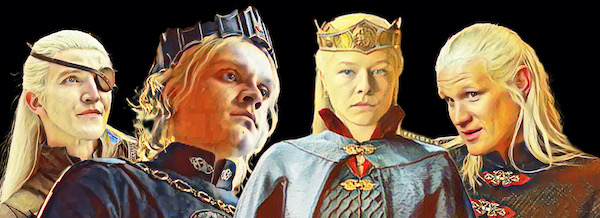
The move is not surprising, but it makes a broader strategy more visible. Westeros is no longer just a narrative setting; it is becoming a continuous engagement ecosystem, where different formats sustain interest between seasons and new releases. In that sense, Dragonfire is not simply a spin-off product, but part of a larger effort to keep the franchise active and in circulation.
The choice of a strategy-driven format also feels deliberate. By emphasizing mechanics such as faction-building, alliance negotiation, and territorial conflict, the game attempts to echo the political logic that has always defined this world. There is a clear effort to translate, even within a different medium, the power dynamics that underpin the story.
But it is precisely in that translation that tensions begin to surface. Westeros has always operated on a slower rhythm, built on accumulated decisions and long-term consequences. When adapted to the immediacy of a mobile game — with progression rewards, pre-registration incentives, and ongoing engagement loops — that rhythm risks being compressed into something more immediate and potentially more superficial.
This ambivalence is reflected in the early fan response. There is genuine excitement around the possibility of finally controlling dragons, something that has always been central to the appeal of this universe. The shift from spectator to participant carries a strong sense of curiosity.
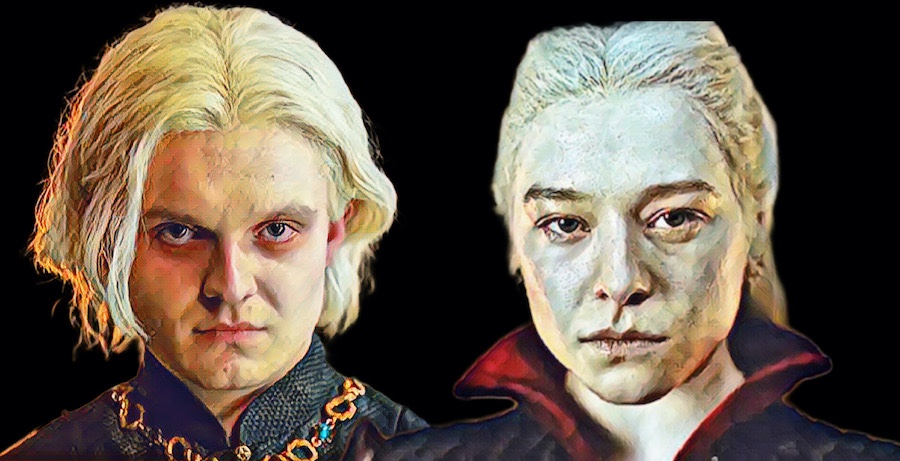
At the same time, skepticism emerges just as quickly. For many, mobile games are still associated with repetitive systems and aggressive monetization models, raising concerns about whether the political depth and moral ambiguity that defined the original series can truly be preserved. The hesitation is not necessarily about the concept itself, but about what may be lost along the way.
There is also a broader interpretation shaping the conversation. Dragonfire is being seen as another step in turning Westeros into a continuous franchise model, closer to the logic of large-scale entertainment ecosystems. For some, this signals longevity and cultural relevance. For others, it raises concerns about saturation.
Pre-registration is now open, with launch rewards including in-game currency and a rare dragon. More than a promotional tactic, it functions as a measure of something larger. Because in the end, the question is no longer just about returning to Westeros, but about how audiences still want to inhabit it.
Descubra mais sobre
Assine para receber nossas notícias mais recentes por e-mail.
 miscelana.com