
Talking about Jamie Bell still means starting with Billy Elliot, not for lack of material, but because that beginning continues to function both as a benchmark and a deviation, establishing a standard of presence his career has never abandoned and, at the same time, never reorganized into a new center with the same force.
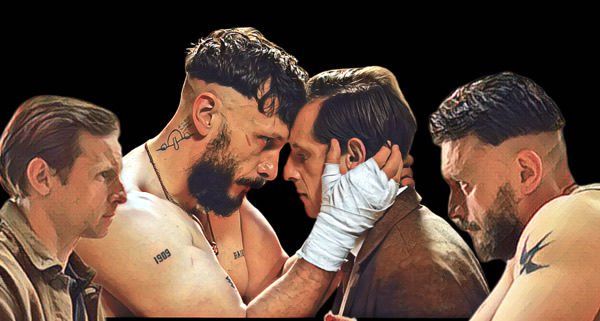
Since then, Bell has built a steady career across European and American productions, moving with consistency between auteur cinema and larger-scale projects, accumulating collaborations and performances that add depth without any of them becoming a point of synthesis, as if his career expanded laterally, always approaching a definition that never quite settles. But that is set to change in 2026. In addition to starring in the new phase of Peaky Blinders, Bell is also part of the highly anticipated Half Man, written and co-starring Richard Gadd, of Baby Reindeer. In 2026, there will be little doubt left about who Jamie Bell is.
Precocious and Awarded
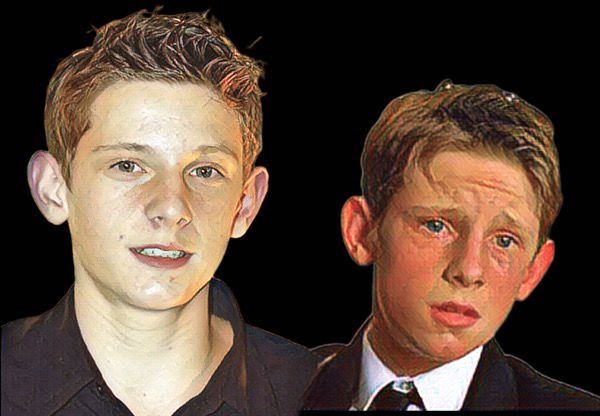
Jamie Bell was born in Billingham, in the northeast of England, an industrial region far removed from the traditional circuit of the British film industry. His path into acting began in a way as singular as the role that revealed him. Raised by his mother alongside his sister, he came to performance through dance, after accompanying her to ballet classes, a detail that would soon prove far from incidental when, still very young, he was chosen among thousands of candidates to star in Billy Elliot.
The impact of that debut was not only immediate but defining. Bell did not emerge as a promise, but as a fully realized presence, with a physical and emotional command that already seemed complete, earning him international recognition and the BAFTA Award for Best Actor, a rare achievement at such a young age. What was established then, however, was not just a career, but a reference point difficult to move beyond, as everything that followed would inevitably be read in light of that first moment.
Cinema, Music, and Hollywood
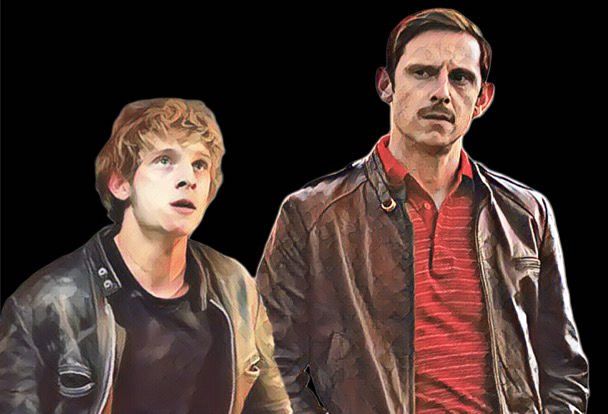
Over the years that followed, Bell built a broad and consistent filmography, moving between British, European, and American productions with a fluidity that reflects both his versatility and a certain resistance to being anchored in a single lane. He has worked across projects of very different scales and tones, from Lars von Trier’s Nymphomaniac to the dystopian world of Snowpiercer, through literary adaptations, historical dramas, and large-scale productions such as King Kong and Jumper, never disappearing from view, yet never reorganizing his career around an adult role with the same impact as his debut.
Even when he moves closer to more visible roles, such as Film Stars Don’t Die in Liverpool, which earned him another BAFTA nomination, or Rocketman, where he plays Bernie Taupin with a deliberately restrained, almost structural presence, there remains a sense that something is missing, a point of convergence, a character capable not only of standing out, but of retrospectively organizing everything he has done.
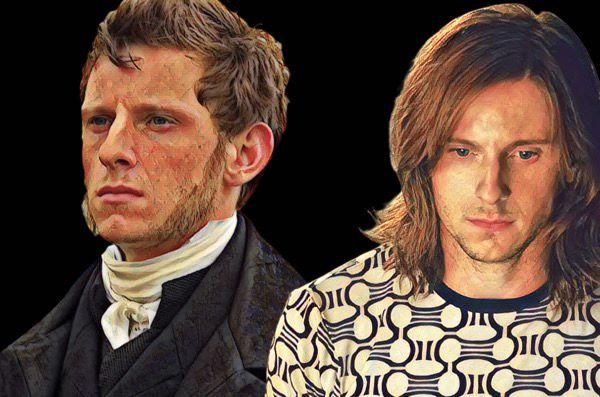
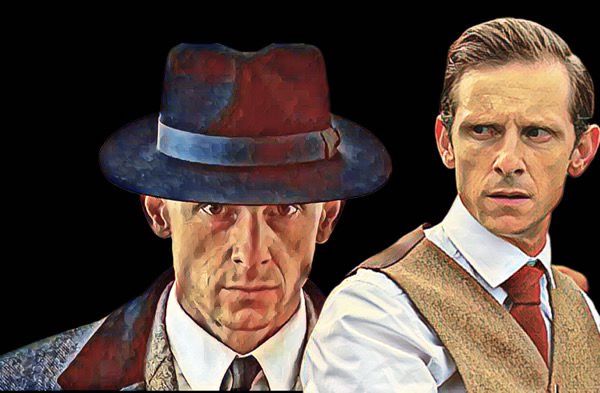
That same dynamic extends to his life off-screen, which has alternated between moments of exposure and withdrawal without ever becoming central to his public image. His relationship with Evan Rachel Wood, whom he married in 2012 and with whom he had a son before their separation a few years later, marked a period of greater visibility, as did his appearance in Green Day’s “Wake Me Up When September Ends” music video in the mid-2000s, at a time when his transition into adult roles was still underway. Years later, in a different phase of his life, he met Kate Mara on the set of Fantastic Four, marrying her in 2017 and building a more private family life, removed from the logic of overexposure.
This trajectory, marked by consistency and displacement, helps explain why 2026 feels like something more than a continuation.
The challenge of Peaky Blinders
Since being announced in the world of Peaky Blinders as Duke Shelby, Jamie Bell’s name has gained renewed momentum online. He becomes the third actor to take on a character who has never fully settled within the series, first played by Conrad Khan and later associated with Barry Keoghan. This is not simply a recasting, but the inheritance of a role that arrives already fragile, whose presence has never felt entirely organic within a narrative built on accumulation and belonging, turning his casting into a challenge that goes beyond performance and into the need to justify the character itself.
Still, Bell has the range and experience to finally make the character feel relevant within the Shelby family saga.
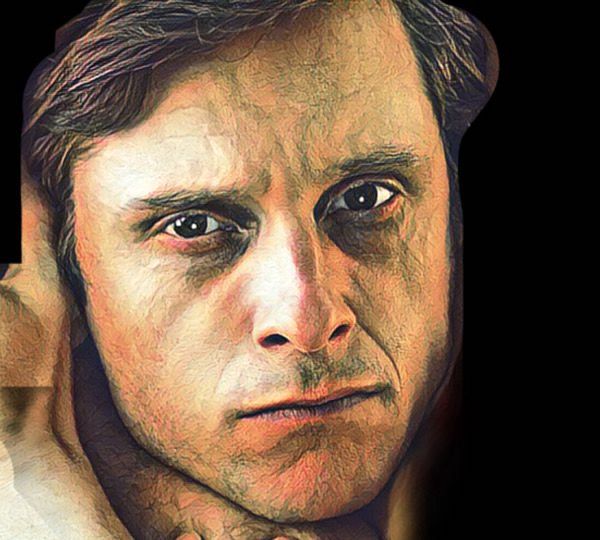
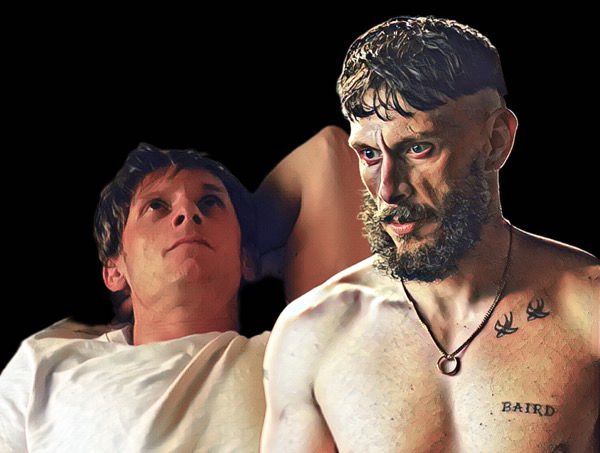
Before that, in April 2026, he leads Half Man, a series created by Richard Gadd that follows, across nearly four decades, the relationship between Niall and Ruben, two men whose lives are marked by encounters, ruptures and a violence that runs through them, structured around a triggering event — Ruben’s reappearance at Niall’s wedding — that sends the narrative back into the past, reconstructing their relationship in all its complexity. After what Gadd achieved with Baby Reindeer, expectations are inevitably high, placing Jamie Bell in a moment of renewed visibility at exactly the right time.
The actor who always had to build his place
Perhaps the most consistent element in Jamie Bell’s career is precisely this need to build belonging with each new role, something that traces back to his origins in an industrial region of northeast England, far removed from the traditional axis of the British industry, and that manifests in the way his presence operates through adaptation.
The contrast between Half Man and Peaky Blinders makes this moment particularly revealing, placing side by side two situations that rarely coexist so clearly, one in which the actor is given a character sustained by time, conflict, and construction, and another in which he must operate almost as a corrective force, attempting to fill gaps that do not originate from him. Because if there is an actor capable of suggesting depth where it has not yet fully formed, it has always been Jamie Bell.
After more than two decades of continuous work, 2026 does not represent a rupture, but a moment in which the surrounding conditions finally seem to offer what has long been missing: a role capable of giving shape to everything he has built.
Descubra mais sobre
Assine para receber nossas notícias mais recentes por e-mail.
 miscelana.com
2 comentários Adicione o seu