
I quite literally grew up with Michael Jackson as part of the soundtrack of my life.
His precise, unmistakable voice, the dance moves that seemed impossible to replicate, were everywhere. On LPs at home, on soap opera compilations, at family parties, on the radio, on television. Even in the Jackson 5 cartoon. Michael wasn’t a choice. He was a presence.
Later, as a teenager, there were more intimate moments. I remember entire summers with my cousin playing Off the Wall on repeat, long before he became unavoidable again with Thriller. And when Thriller arrived, it wasn’t just an album. It was an event.
For someone raised on rock, it had everything. The heavy guitar in “Beat It,” the impeccable pop, the swing, the traces of jazz, and the presence of Paul McCartney. It was a record that moved across genres without asking permission. And it’s difficult, perhaps impossible, to put into words what Thriller meant if you didn’t experience that moment emotionally. It wasn’t just music. It was a shared sensation.
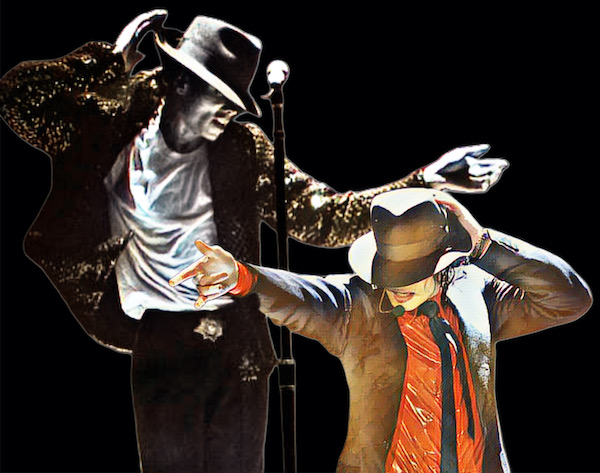
Like many artists who reach that level of exposure, Michael entered the second half of the 1980s already carrying a symbolic weight that was hard to sustain. For some, he began to verge on excess, on something almost bordering on kitsch. At the same time, his physical transformation became the dominant narrative.
His face changed. His skin changed. His eccentricities became the focus. His shyness became more visible. And that’s when one of the most unsettling aspects of Michael Jackson took shape: he was a man of contradictions.
An artist of absolute control whose image kept slipping away. An expansive performer who lived in isolation. A commercial genius, able to anticipate the industry, yet someone who seemed unable to sustain his own public self without retreating from it.
How do you explain that, even before globalization as we know it, he — and only he — could bring the world to a standstill to release a song and a video simultaneously? Even now, in the 21st century, that kind of power remains rare. Perhaps Taylor Swift comes close, but there is no real equivalent. What Michael did belonged to another scale.
And then there was the live experience.
I saw Michael Jackson live. And I say that having seen Queen, Madonna, The Rolling Stones, and Paul McCartney. There has never been hysteria like it.
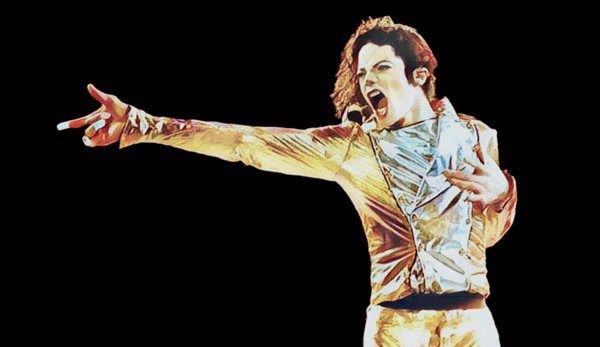
When he appeared on stage, to the sound of “Carmina Burana,” time simply stopped. There were minutes of screaming, crying, and complete emotional collapse. And he knew exactly what he was doing. He would stand still, absorbing it, extending the moment. Five, six minutes without moving. It was absolute control over the stage and over collective emotion.
But it was already a different phase.
When he came to Brazil during the Dangerous era, something had shifted. The spectacle was still immense, but the weight of what would follow was already there.
Because the man who sang that he was neither black nor white, who hid behind military-style outfits, dark glasses, and hair covering his face, was someone no one — perhaps not even himself — ever fully understood.
Yes, I have always been part of Michael Jackson’s loyal fan base. My sister likes to say I’m like that with everyone I love, that my devotion doesn’t fade even when those I admire go through difficult phases.
But with Michael, it feels different.
His music is so extraordinary that it imposes itself. It cannot be ignored. My playlists — plural — mix different periods, styles, and personal choices that don’t necessarily include his biggest hits. They are, perhaps, the most honest way of measuring how present he still is.
But now, listening comes with guilt.

The accusations of sexual abuse place him in a territory that cannot be ignored. Even for those who insist on his innocence, discomfort remains. And it was then that I also witnessed a shift in his image. That symbol of lightness and joy became darker, more withdrawn, more isolated.
I was in the United States when the news of his death, at 50, stopped the world.
And in some way, it still does.
Was it accidental? Was it provoked? Was it inevitable after years of pressure and exhaustion? What was really happening behind the scenes of his life? Who was Michael away from the stage? As a father, as a man?
It’s unlikely that these answers will be found in the film Michael.
I wish I could say that doesn’t matter. But it does.
The only thing I know for certain is something else.
That, with time, I may return to my playlists with a little less shame.
Because Michael Jackson’s music, that much is undeniable.
And, in a way that is still deeply unsettling, it remains impossible to let it go.
Descubra mais sobre
Assine para receber nossas notícias mais recentes por e-mail.
 miscelana.com