
In general, so-called “small” films — the ones labeled as arthouse — tend to resonate more with critics than with broader audiences. That is the case with Blue Moon, a film that never quite gained the momentum of something like Hamnet, but that, since its premiere at the Berlin International Film Festival in 2025, already felt like a work destined for the Oscars.
Now available on streaming (still as a rental), I was able to revisit it and confirm my first impression: it is a gem. The kind that doesn’t demand attention, but ends up requiring surrender.
And yes, I stand by what I said from the beginning. In a competitive year, with names like Timothée Chalamet, Wagner Moura, and Michael B. Jordan orbiting the race, the “robbed” actor was Ethan Hawke. Having won Best Actor from critics, he delivers a historic performance that does not impose itself; it seeps in.
What Hawke does here is rare. And precisely because of that, paradoxically, it is easy to overlook.
A plot that seems simple, until it isn’t
Blue Moon follows a specific slice in the life of its protagonist, inspired by a real story that many will recognize, even though the film does not depend on that recognition to work. There is no attempt here to encompass an entire life, as so many films in the genre insist on doing. Instead, the screenplay chooses a moment, almost an interlude, and expands it.
Everything happens within that frame.
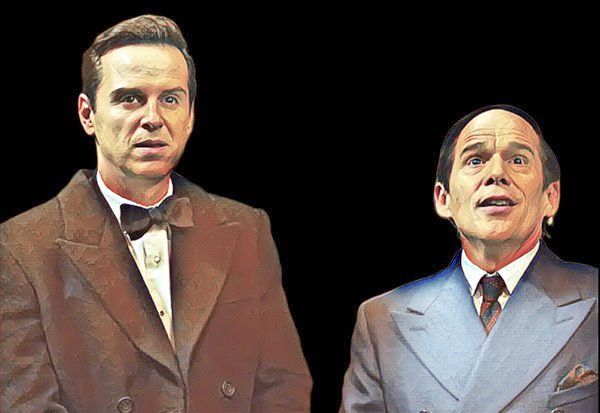
Lyricist Lorenz Hart, one half of the historic duo Rodgers and Hart, revisits his successes and failures during a dinner following the opening of Oklahoma!, the musical that marks the consecration of his partner Richard Rodgers alongside a new lyricist, Oscar Hammerstein II.
Hart, played by Ethan Hawke, is not on stage. He is on the margins.
The film unfolds almost entirely inside a bar, where he observes, comments, ironizes, and tries, in his own way, to remain present in a world that has clearly moved on without him. Between drinks, between fleeting encounters and conversations that oscillate between humor and melancholy, what emerges is the portrait of a man in suspension.
The narrative is not structured around major events, but around small fractures.
Hart recalls his partnership with Rodgers, revisits successes that now seem to belong to another life, and at the same time confronts the reality of an inevitable displacement — artistic, personal, and emotional. There is also the weight of his own fragilities: alcoholism, a sense of inadequacy, the difficulty of adapting to a new moment in the industry and in Broadway itself.
The title is no coincidence.
“Blue Moon,” one of the duo’s most famous songs, echoes as a symbol of this state of mind — something between nostalgia and the impossibility of return.
And the film understands that this night is not just a night.
It is an ending.
The result is a film that seems small and, gradually, reveals itself to be vast.

Staging: between cinema and theater
The openly theatrical aspect of Blue Moon is not a flaw. On the contrary. The mise-en-scène relies on restraint, on contained spaces, on dialogue that carries more than it says. It is not difficult to imagine the text being staged on a theater set, sustained by the strength of its actors.
But cinema is there at all times, doing what theater cannot.
The camera moves closer when needed. It observes when appropriate. And, above all, it respects silence.
This formal choice is not merely aesthetic. It directly engages with the film’s theme. Blue Moon is not about major events, but about what remains unresolved. About what lingers in suspension.
Ethan Hawke: intensity without excess
This is where the film becomes undeniable.
Ethan Hawke builds a performance that refuses any obvious gesture. There are no calculated outbursts, no moments designed as “Oscar clips.” What exists instead is a meticulous composition, built from pauses, hesitations, and glances that always seem to arrive a second too late.
It is a performance of listening.
And perhaps that is what makes it so powerful — and so invisible to awards that still often operate within the logic of immediate impact. To say he was ignored is an oversimplification. He was overtaken by performances more easily recognizable as “great.” But what is great does not always carry the same value.
What remains is a sense of debt.
A biopic that respects what cannot be explained
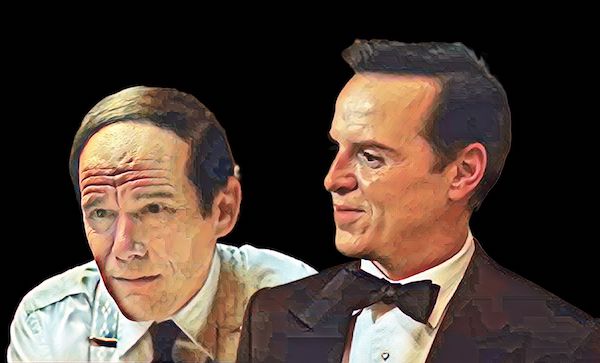
There is something even rarer here. Blue Moon is, at its core, a biopic, but it does not behave like one.
There is no didacticism. No excessive explanation. No obsession with translating an entire life into two hours. The film understands that there are areas that cannot be fully accessed — and chooses not to exploit them.
For those who know the real story, that respect is evident. The screenplay not only remains faithful to events but also preserves what is most difficult: ambiguity.
And it is precisely this ambiguity that sustains the film.
Why watch, and rewatch
Some films exhaust themselves in a single viewing. Blue Moon is not one of them.
In a time when everything seems to demand immediacy, explanation, and shareability, Blue Moon asks for time. It asks for attention. It asks for a willingness to sit with what does not resolve.
And in return, it offers something increasingly rare: a true encounter between actor, text, and audience.
The Oscars do not always recognize that.
But that does not change what is there.
Descubra mais sobre
Assine para receber nossas notícias mais recentes por e-mail.
 miscelana.com