
The murder of Rob Reiner and his wife, Michelle, found dead in their bed at the end of 2025, is one of the most striking scandals and mysteries in Hollywood history. And yet, in an era defined by the relentless consumption of true crime, there is also, strangely, silence.
The name Nick Reiner is already circulating with enough intensity to fuel interpretations, theories, and parallel narratives. But legally, we are still in a much narrower terrain, and, in some ways, a more predictable one than it may seem.
In a matter of weeks, that terrain stops being abstract.
The next hearing is scheduled for April 29, 2026, in Los Angeles, and serves as a crucial milestone: the moment when the case truly begins to take shape inside the courtroom.
What we already know, and what it means
Some facts are already established, and they help define the contours of the case more clearly.
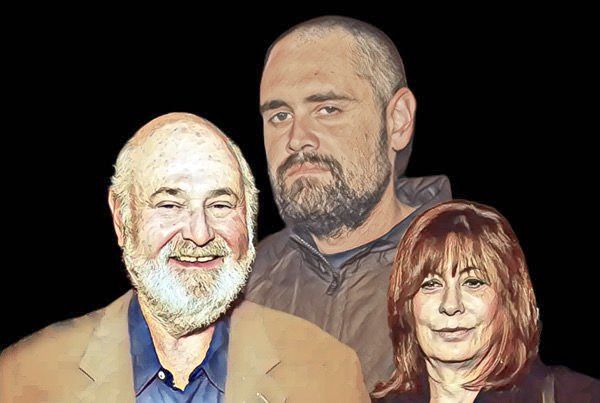
Nick Reiner, 32, pleaded not guilty in February 2026 to two counts of first-degree murder in connection with the deaths of his parents, Rob Reiner and Michelle Singer Reiner.
The killings took place in December 2025 at the family’s home in Los Angeles and were described as the result of multiple stab wounds, a detail that, while brutal, carries specific legal weight, as it may directly influence how the crime is characterized and how the prosecution builds its case.
Since then, he has remained in custody without bail.
Another relevant development is the change in legal representation: the not guilty plea was entered by a public defender after his previous attorney withdrew. On its own, this does not define a strategy, but it does alter the dynamics of the case.
And there is one element that shifts the tone entirely: the case is eligible for the death penalty.
What happens at the April 29 hearing
With these elements in place, what comes next is not a full trial, but a preliminary hearing.
This is where the case moves from formal accusation to legal testing.
The prosecution is expected to present its initial body of evidence, aiming to establish probable cause sufficient to move forward to trial. This may include forensic reports, early witness testimony, and the construction of a basic narrative linking the defendant to the crime.
The defense, in turn, is likely to proceed with restraint.
Without revealing its full strategy, the expectation is that it will challenge the strength of the evidence, the way it was obtained, and the reliability of the testimony presented. It is a process of erosion, not direct confrontation.
The weight of silence, and what it protects
If there is one defining element at this stage, it is silence.
And it is not accidental.
Cases of this magnitude, especially in the United States, are often surrounded by strict limitations on information in order to preserve the integrity of the proceedings. The formation of an impartial jury, the admissibility of evidence, and the overall conduct of the trial depend on this control.

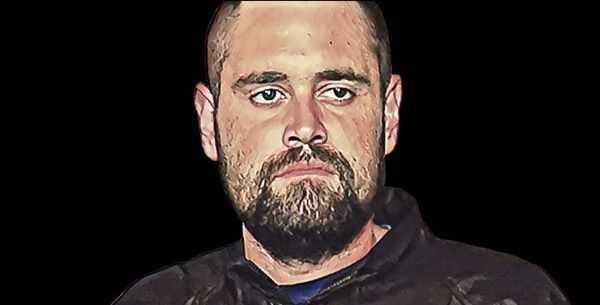
This helps explain why, despite the notoriety of Rob Reiner and the shock of the crime, so few concrete details have emerged.
In a way, that is a good sign.
It suggests that the case is being handled within parameters designed to prevent contamination by external narratives.
When the courtroom meets entertainment
Outside the courtroom, however, the movement is very different.
The case is already being absorbed into the machinery of contemporary true crime, which transforms ongoing investigations into real-time narratives.
The new spinoff series of 48 Hours, titled 48 Hours: Case by Case, is a clear example. The production aims to follow high-profile cases as they unfold, analyzing what is happening, why it matters, and what developments may come next.
Among the cases featured is Reiner’s, alongside other widely discussed names in the U.S., such as Luigi Mangione and Duane “Keefe D” Davis.
Its premiere, set for April 17, comes just days before the hearing.
This is not merely a coincidence of timing. It reflects how these cases now exist simultaneously in two spheres: the legal one, which moves with caution, and the narrative one, driven by anticipation.
What we should not expect (yet)
Perhaps the most important point is to adjust expectations.
The April 29 hearing will not provide definitive answers.
There will be no full reconstruction of events, no complete unveiling of the defense’s strategy, and no determination of guilt.
What it offers is something else: the first moment in which both prosecution and defense will be required to sustain, even partially, their positions within the rules of the court.
Between silence and what comes next
There is an understandable temptation to fill in the gaps. A violent crime, a well-known family, a dynamic that challenges any sense of normalcy — all of this invites interpretation.
But the legal process does not operate that way.
It moves in layers, through technical criteria, within clear boundaries between what can and cannot yet be said.
And perhaps that is precisely what makes this case so compelling to follow.
Not because of what we already know, but because of the pace at which we will be allowed to know it.
Because between the silence that protects the process and the curiosity that surrounds it, there is a space where the truth has not yet organized itself into a narrative.
And it is within that uncomfortable, incomplete space that the case of Nick Reiner truly begins to take shape.
Descubra mais sobre
Assine para receber nossas notícias mais recentes por e-mail.
 miscelana.com