
Even before the trial begins, the dispute between Blake Lively and Justin Baldoni has already found its most compelling public angle: the witness list.
That is where, more than in the legal filings themselves, the true scale of the case starts to emerge.
By naming figures such as Ryan Reynolds, alongside co-stars, executives, publicists, and digital strategists, the actress turns the trial into something that goes beyond a personal dispute and begins to resemble a diagnosis of how Hollywood actually operates today.
Because these witnesses are not there simply to recount events. They represent the system that builds, amplifies, and, at times, dismantles reputations.
Who the witnesses are, and why they matter
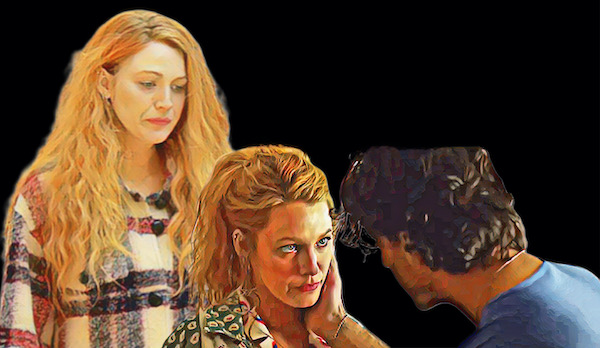
The presence of Ryan Reynolds draws attention not only because of his profile, but because of what he represents within the industry: someone directly involved in the production and promotion of It Ends with Us and, at the same time, close enough to support claims of personal and professional damage.
But the scope goes further.
The list includes co-stars, public relations professionals, executives, and even author Colleen Hoover, whose novel inspired the film, as well as expert witnesses expected to address reputation, workplace practices, and social media activity.
This composition is not accidental. It signals that the trial aims to move beyond what happened on set and into the space where the most consequential battles now take place: the digital arena.
A case that narrowed, but became sharper
Interestingly, this symbolic expansion of witnesses comes at the same time the case has narrowed legally.
After the judge dismissed most of the claims — including defamation, harassment, and conspiracy — what remains are more specific issues, such as breach of contract and retaliation-related allegations.
In many cases, that would signal weakness.
Here, it suggests the opposite.
By losing breadth, the case gains focus. The conversation shifts away from broad accusations toward something more tangible: the real impact of campaigns — or even the perception of them — on an actress’s reputation and career.

The battle over narratives
It is at this point that the case between Blake Lively and Justin Baldoni begins to stand apart from other recent disputes in Hollywood.
Her legal team’s argument is clear: there was a coordinated effort to damage her image, with measurable consequences. Baldoni denies the claims and is expected to testify in his own defense.
The legal challenge, however, is more complex than it appears.
It is not just about proving what was said, but about establishing that a digital narrative — fragmented and often diffuse — can be traced back to specific actors with deliberate intent.
If that can be proven, the precedent is profound. It shifts the debate from public perception into the realm of legal accountability.
A star, but not “the” star
There is also an element that makes this case particularly revealing.
Blake Lively is a major star, but she has never occupied an untouchable or dominant position within the industry. Her career has always existed in a space of negotiation between prestige and positioning.
That nuance matters.
If she wins, it will not be just a personal victory, but a potential shift for actors who do not sit at the very top of the hierarchy. If she loses, the impact will likely be more symbolic than financial, reinforcing how difficult — perhaps structurally — it is to turn public perception into legal proof.
What is really at stake
In the end, this may not be just a trial about two individuals and a film.
By bringing behind-the-scenes figures, image specialists, and digital ecosystem players to the forefront, the case exposes something larger: an attempt to translate into legal language what has, until now, operated as noise, strategy, and narrative warfare.
If there is an instinct to see the witness list as a secondary detail, it is misleading.
Because that is precisely where the case feels most contemporary, and potentially most consequential.
Descubra mais sobre
Assine para receber nossas notícias mais recentes por e-mail.
 miscelana.com