
Half a century ago, Hollywood did something rare. It didn’t just tell a great true story; it came close enough to the facts to capture their pulse. Released in 1976, just four years after the start of the Watergate scandal, All the President’s Men is not a film about memory. It is a film about the present. About an event still being contested, still being understood, still unfolding.
When I wrote about Watergate’s 50th anniversary in 2022, the starting point was inevitably historical. In June 1972, a series of reports by The Washington Post triggered an unprecedented political crisis, directly involving the White House and culminating in the resignation of Richard Nixon. For generations of journalists, the work of Bob Woodward and Carl Bernstein became both reference and aspiration. Not only for its outcome, but for its method. For its persistence. For its refusal to publish without confirmation. For the understanding that a story only exists when it can be sustained.
Fifty years after the film, the shift is inevitable. We are no longer looking only at what Watergate was, but at what it came to represent.
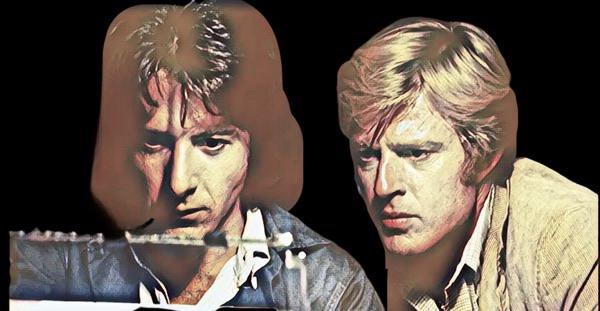
In the 1970s, the American press emerged from that episode not only strengthened but legitimized. Watergate consolidated the idea of journalism as a real counterweight to power, capable of exposing, investigating, and ultimately altering the course of history. There was, at that moment, a trust built through practice. The public saw the process, recognized its rigor, and, even with tensions, accepted the authority behind that work.
Today, the landscape is different. The press remains central, but no longer occupies the same uncontested position. It operates in an environment where information and opinion frequently blur, where speed replaces verification, and where digital platforms amplify noise as much as fact. The proliferation of fake news, the radicalization of public debate, and the transformation of narratives into permanent ideological disputes have created a field in which journalism is, at once, more necessary and more questioned.
In that context, revisiting Watergate, and especially All the President’s Men, stops being an exercise in nostalgia and becomes something closer to orientation. The film makes visible something that has become harder to sustain: the time of reporting. The corrected mistake. The admitted doubt. The process as value.
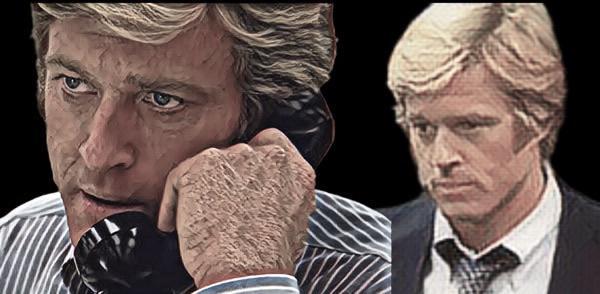
There is an unavoidable irony in this. In a moment when information has never been produced in such volume, what this fifty-year-old film continues to offer is the opposite. A reminder that investigating is not reacting. That publishing is not opining. And that credibility is not built in urgency, but in the consistency of a method.
Perhaps that is why Watergate still stands as a reference. Not only because of the scandal that brought down a president, but because of the standard it established. A standard that cinema translated almost in real time and that, half a century later, feels less like a portrait of the past and more like an uncomfortable measure of the present.
When investigation becomes language
There have been many political scandals, before and since, but few have sustained the same symbolic weight as Watergate over the decades. It is not only what happened, but how it happened and, above all, how it was told. At the center of it all, two relatively young reporters at The Washington Post transformed what seemed like a minor break-in into a constitutional crisis.
Watergate’s legacy lies not only in the magnitude of what was revealed but in the way the investigation was built, layer by layer, through a process that demanded time, doubt, verification, and persistence. It is precisely at this point that cinema enters not as an accessory, but as an extension of that logic.
Not just a scandal, but an institutional test
The investigation exposed a network connecting political espionage, illegal financing, electoral sabotage, and systematic attempts at cover-up from within the White House itself. For the first time in U.S. history, a sitting president left office under pressure from a process that began outside formal institutions.
What emerges is not simply a scandal, but a stress test of the system. The response was neither immediate nor linear, but it happened. And that helps explain why Watergate became a benchmark.
The method as narrative
We now know that Mark Felt, then the FBI’s deputy director, played a decisive role, though his identity remained hidden until 2005 under the codename “Deep Throat.”
When the Watergate scandal began, the FBI director, J. Edgar Hoover, had recently died, and the leadership of the agency was in transition. Felt, as number two, had privileged access to sensitive information from the investigation.
This is part of what makes his role so decisive and controversial. He was not just any agent, but someone at the heart of the system, who understood institutional limits and, at the same time, saw from within the attempts at political interference.
As an anonymous source, Deep Throat helps build the mythology, but what sustains the story is the method. There was no single leak that resolved everything, but a continuous work of confirmation, cross-checking information, and resisting haste. This model of reporting became a reference and is still invoked today as a standard of rigor.
When cinema understands what is at stake
The film does not compress Watergate into a conventional thriller. It preserves what made the case singular. By doing so, it transforms the method into a narrative.
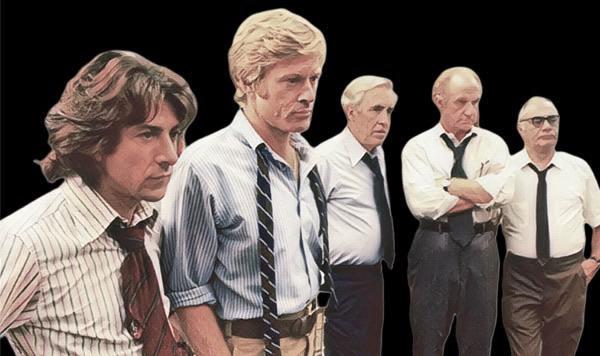
Journalists are not framed as impulsive heroes, but as professionals working within constraints, under pressure, navigating uncertainty. The newsroom becomes a space of collective construction, where responsibility carries as much weight as urgency.
Few films have captured the ethics of reporting with this level of precision.
Origins of an obsession
Robert Redford’s intuition was vital in turning the story into a global inspiration by bringing it to the screen. In the 1970s, cinema “changed” radically, and there was the seed of what is now commonplace in films and series: real-life stories and everyday characters were gaining prominence, and Redford was part of that movement, even before becoming a director.
While he was filming The Way We Were, the actor followed the unfolding of the Watergate scandal and realized that there was more than a political crisis: there was a story about two unlikely characters forced to work together. Even before the publication of the book by Woodward and Bernstein, Redford bought the rights for a high amount for the time and began insisting on the adaptation when the journalists themselves still resisted the idea, especially Bernstein, who at the time was married to Nora Ephron, who even worked on one of the scripts that was eventually discarded. To this day, there is much discussion about which version ultimately made it to the screen and earned William Goldman the Oscar for Best Adapted Screenplay, because director Alan J. Pakula made extensive changes to the text until filming.

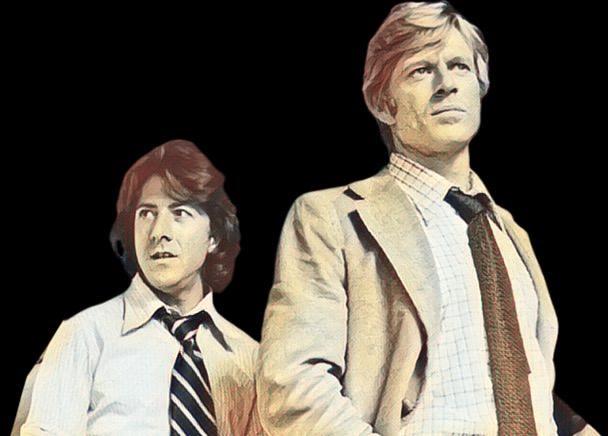
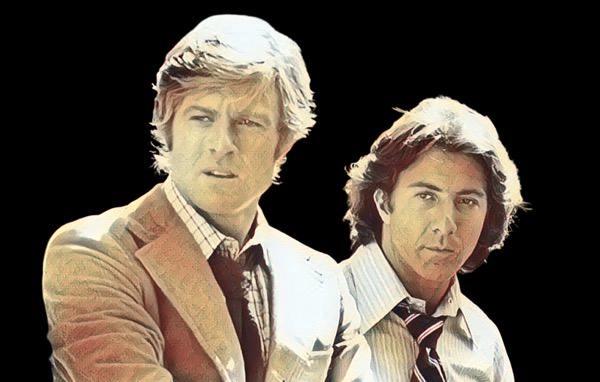
Redford knew he would play Woodward and initially considered Al Pacino to play Bernstein, but eventually arrived at Dustin Hoffman, whose nervous energy and intensity matched the reporter. The choice of the two was not only obvious in terms of casting but also in terms of balance. Redford represented restraint, method, and silence. Hoffman brought urgency, impulse, and friction. This dynamic, which already existed in real life, becomes the dramatic engine of the film.
The film is also interesting because it chooses a path that goes against Hollywood instinct. Instead of expanding the scandal, it reduces the scope and covers only the first months of the investigation, interrupting the narrative even before Nixon’s fall, precisely to preserve the focus on journalistic work. This balance explains why so many other productions tried to replicate the model and rarely succeeded. What is sought to be replicated is not only the impact, but the rare combination of fact, method, and form.
Behind the scenes of obsessive realism
What makes the film even more singular lies in its production. Redford and Hoffman spent months inside the newsroom, observing reporters and absorbing the environment. They even learned each other’s lines to create more natural dialogue.
The production was equally obsessive. Without authorization to film in the newspaper, the team reconstructed the newsroom with almost documentary precision, using hundreds of desks, period phone books, and even real trash sent by the newspaper itself to compose the environment. Every detail was designed so that the camera would not only show the space, but also convey the sense of continuous and repetitive work that defines investigation.
There are also creative choices that became emblematic. Jason Robards, as editor Ben Bradlee, constructs a figure of authority that does not shout, but imposes rigor. Jane Alexander, in a brief appearance, creates one of the most tense scenes in the film using only hesitation and silence, in a claustrophobic space that conveys the fear of those who decide to speak.
Awards and recognition
The impact was immediate. The film was nominated for eight Academy Awards and won four, including adapted screenplay for Goldman and supporting actor for Robards. Over time, its recognition only grew. It was included in the National Film Registry as a culturally significant work and remains one of the most precise portrayals of journalism ever made.
Curiously, one of the most discussed decisions over the years is the fact that it did not win the Oscar for Best Picture, something that, in retrospect, fifty years later, many members of the Academy say they would correct if they could.
What came after: films and series that expand Watergate
If All the President’s Men establishes the method, other works help to broaden the context, revisit characters, and understand how this story continues to be retold with each generation.
The institutional prologue of it all
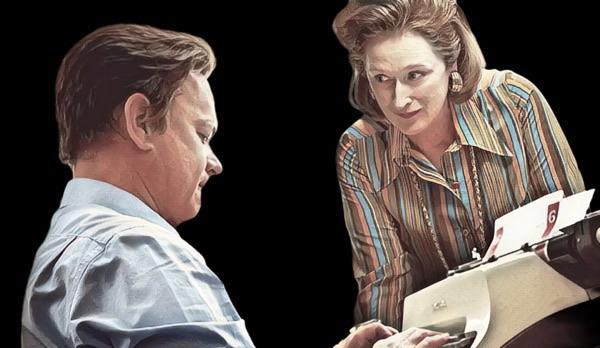
The Post is a key piece in complementing All the President’s Men because it shows what came immediately before: The Washington Post’s battle to publish the Pentagon Papers in 1971. If Pakula’s film immortalizes the method of investigation, Steven Spielberg’s reveals the editorial courage that helps make it possible.
There is also a decisive gain in perspective: by placing Katharine Graham at the center, the film recovers a fundamental figure who was largely absent from All the President’s Men. In that sense, The Post does more than complement Watergate. It helps explain how that newspaper became capable of confronting it.
The other side of power
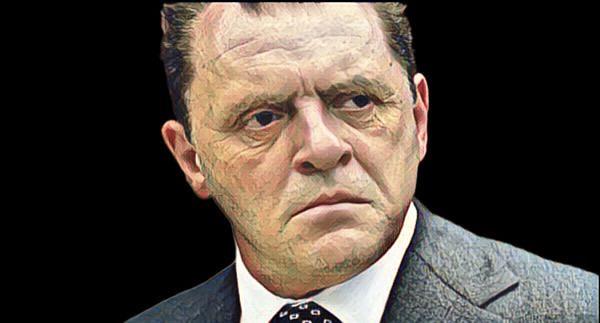
Nixon, by Oliver Stone, shifts the focus inward, into the mind of the president. It is not a film about the scandal itself, but about the man who made it possible. In doing so, it complements Watergate by suggesting that political collapse is also, to some extent, psychological.
The testimony that was missing
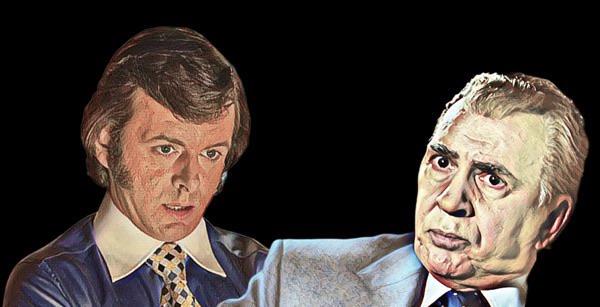
Frost/Nixon turns the interviews between journalist David Frost and Richard Nixon into an almost theatrical duel. It is the moment when the public narrative meets an attempt at reckoning, years later, in front of the cameras.

The informant takes shape
Mark Felt: The Man Who Brought Down the White House brings to the center the figure who, in All the President’s Men, was almost a ghost. By revealing Mark Felt as a central character, the film attempts to fill a gap that the original deliberately chose to keep as a mystery.
The contemporary television lens
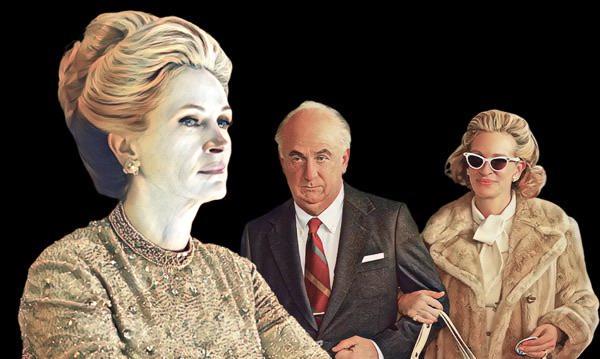
Gaslit is perhaps the most interesting reinterpretation of recent years. By shifting the focus to peripheral figures, especially women who were ignored in the traditional narrative, the series reframes the scandal and shows how the official version always leaves gaps.
White House Plumbers follows a similar path, but with a more satirical approach. By focusing on those responsible for the break-in, it exposes the absurdity and incompetence that are also part of the machinery of power.

Why it still matters
Watergate made visible something that had previously been abstract: the ability of journalism to alter the course of history. The film expands that perception by turning the investigative process into a shared experience.
Fifty years later, All the President’s Men remains a point of comparison. And perhaps that is its greatest legacy. Everything that came after continues to orbit that same point of origin.
There are those who try to see this model today as something distant, almost impossible to replicate. The reading is tempting, especially in a scenario where scandals accumulate and revelations circulate quickly without always producing consequences.
But that conclusion displaces the problem. It is not the method that has lost relevance. What has changed is the environment in which it operates.
What the film reveals today is not an outdated practice, but a contrast. It does not move away from the present. It illuminates it.
Descubra mais sobre
Assine para receber nossas notícias mais recentes por e-mail.
 miscelana.com