
On the 15th anniversary of the release of Game of Thrones, it is worth revisiting a character who remains extremely popular among fans, a woman over 80 years old, a masterful player, and someone who never needed to lie about who she was. We are, of course, talking about the “Queen of Thorns,” Olenna Tyrell.
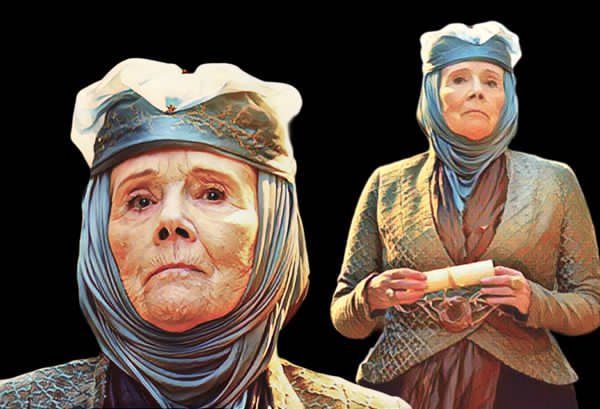
There is a recurring mistake in how she is remembered. It begins with audience enthusiasm, passes through the irony that turned her into an icon, and ends in a kind of silent absolution. Olenna became the character “who says what everyone is thinking,” the only one capable of standing up to Cersei Lannister, the sharpest mind in Game of Thrones. No one forgets her final words: “Tell Cersei it was me. I want her to know.”
But that reading says less about her than it does about those watching.
Because Olenna never presented herself as anything other than what she was. She did not construct narratives of honor, she did not claim justice, she did not attempt to disguise the calculation behind her decisions. The difference is that, unlike characters who perform virtue, she made pragmatism elegant. And in doing so, she made her cruelty easier to accept.
House Tyrell and the structural insecurity of power
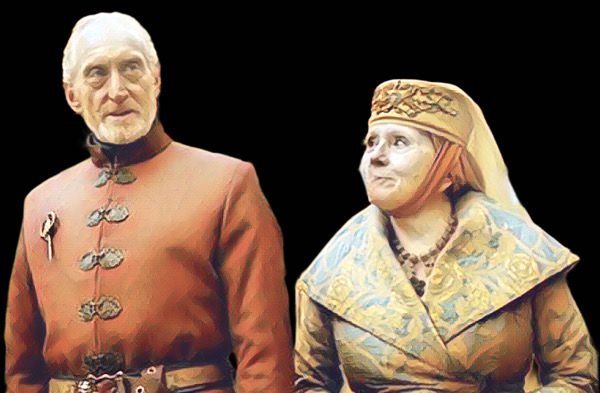
Olenna’s logic begins long before what we saw on screen. Because Casa Tyrell does not carry the ancestral weight of other houses in Westeros, its power is the result of a relatively recent rise, consolidated after the Targaryen Conquest, when efficient administration was rewarded with control over the Reach and Highgarden.
This detail creates a fundamental difference.
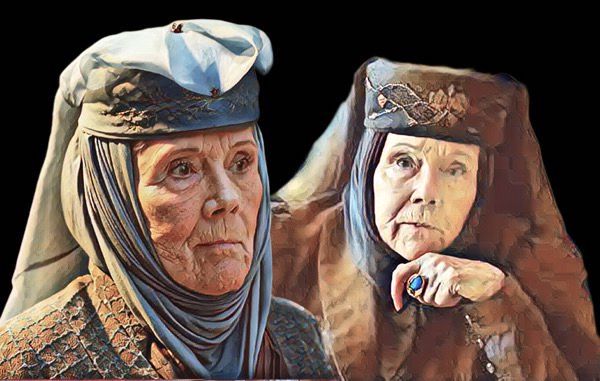
The Tyrells do not rule because they always have; they rule because they managed to make themselves indispensable. The fertility of the Reach sustains the realm, but it does not guarantee legitimacy. It must constantly be negotiated, defended, and reaffirmed.
It is a power that cannot fail.
And it is within this structure that Olenna is formed and begins to operate.
Olenna Redwyne and the early understanding of instability
Before she was Tyrell, Olenna was Redwyne. Born in the Arbor, daughter of one of the richest and most strategic houses in the south, she grew up in an environment where alliances determine destinies.
Still young, she is promised to Prince Daeron Targaryen, son of Aegon V (whom we meet as a child in A Knight of the Seven Kingdoms) and part of the direct lineage that occupies the Iron Throne. The marriage never happens. The versions diverge between the disdain that Olenna claims to feel for the groom and the fact that he himself may have broken the agreement.
But the impact does not lie in the explanation.
It lies in the lesson.
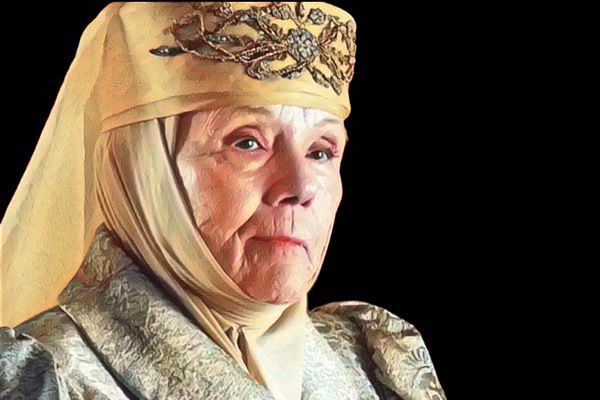
Olenna learns early that alliances are not guarantees, that promised power can disappear, and that depending on external structures is always a risk. When she marries Luthor Tyrell, a kind but notoriously unstrategic man—whose death, notably, occurs in an almost absurd way, falling off a cliff while hawking—she does not simply enter a new house. She takes control of it.
The mind behind an entire house
In the books by George R. R. Martin, this is even more evident. Olenna is not merely a matriarch. She is the permanent correction to her family’s weaknesses. She despises the lack of intelligence in her son Mace, conducts negotiations, interferes in decisions, and above all, ensures that House Tyrell remains relevant in a system that does not forgive mistakes.
She does not rule formally.
But she rules in practice.
And that translated to the screen as well.
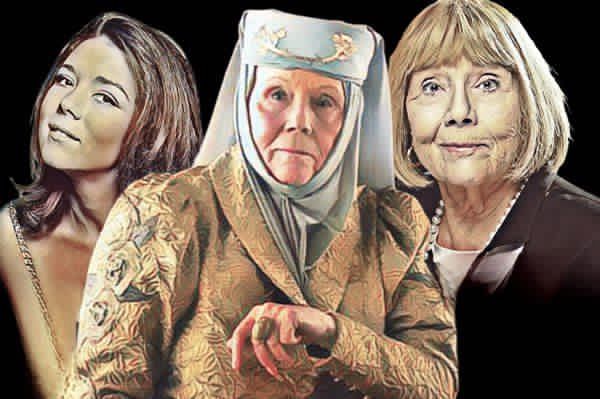
And not by accident. The casting of Diana Rigg was decisive in making Olenna work in the series. Rigg did not simply play the character; she understood exactly what was at stake. She captured irony as a defense mechanism, coldness as a method, and arrogance as a language of power. On screen, all of this appears with an almost invisible precision, without apparent effort, which only reinforces the sense of absolute control. It is a perfect performance, not because it softens Olenna, but because it makes her even more sophisticated and, for that very reason, easier to admire even when her actions are indefensible.
Marriage as a tool of continuity
The Tyrell strategy in King’s Landing is not improvised, but built as a project of insertion into the center of power. These indirect alliances are formed through marriage, the so-called political marriages.
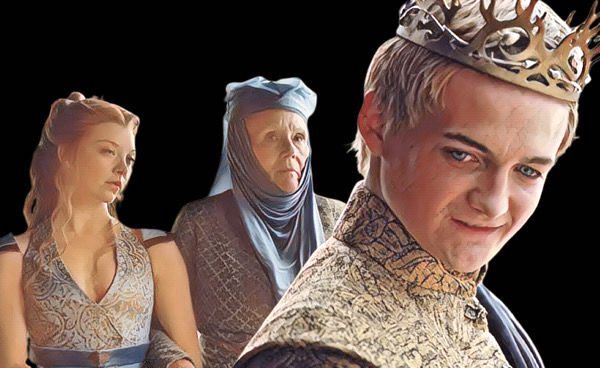
Olenna’s granddaughter, Margaery Tyrell, is as astute as her grandmother and is successively positioned alongside different kings—first Renly Baratheon, then Joffrey Baratheon, and finally Tommen Baratheon—not out of affection, but calculation. As she herself said, she did not want to be “a” queen, but “the” queen of Westeros. After all, the throne does not need to be loved, but it certainly needs to be occupied.
And Olenna, even more than Margaery, understands this better than anyone at that court.
Joffrey and the decision that reveals everything
The practicality of the Tyrells was used by Littlefinger in an exemplary way. Initially positioned against the Lannisters and supporting one of the branches of the Baratheons, after the assassination of Renly by/at the command of Stannis Baratheon, they change sides in search of revenge. In fact, this detail is never obvious, but Olenna Tyrell is a vengeful woman and always was.
In the series, we only meet her precisely when Littlefinger brings the Tyrells to support the Lannisters against the Starks and whoever else rebels against the Crown. Once the marriage of Margaery to Joffrey is negotiated, we finally see how intelligent and calculating the Queen of Thorns is.
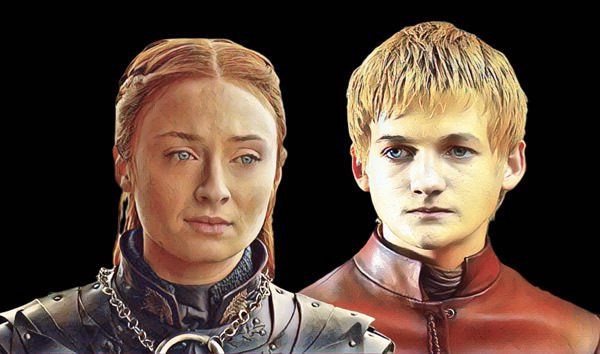
She treats Sansa with apparent kindness, but never hides that it is in her interest. She even agrees with Varys to marry Loras to Ned Stark’s daughter, but that provokes Tywin’s anger. With a direct threat to prevent that, beyond the Crown, the Tyrells indirectly have the North; he blackmails Olenna and the two close another agreement: Joffrey marries Margaery, but Loras marries Cersei (something Olenna hates, but concedes). And the turning point of the whole story comes next.
Margaery will be the Queen of the Seven Kingdoms, as she wanted and as Olenna ensures. Removing Cersei from the equation, so that Joffrey listens only to his wife, is one of the reasons why she ends up conceding her grandson’s marriage. Up to that point, everything is crystal clear. But there is a piece of information that only Sansa can provide, and it is decisive for what Olenna is capable of and wants to do in order to gain Power and keep her grandchildren safe.
Olenna calls Sansa for a direct conversation: What is Joffrey like? And at the initial hesitation of the traumatized young girl, she becomes irritated without the slightest empathy. There is no time for politeness, and nothing will change Margaery’s ascent as queen, but it is essential to prepare her granddaughter for what truly awaits her. Up to that point and as far as she could assume, Olenna believes that all atrocities are committed by Cersei. But she soon discovers the truth.
“Joffrey is a monster,” Sansa confesses. Olenna shrugs. “That is unfortunate,” she replies. Strange response, don’t you think?
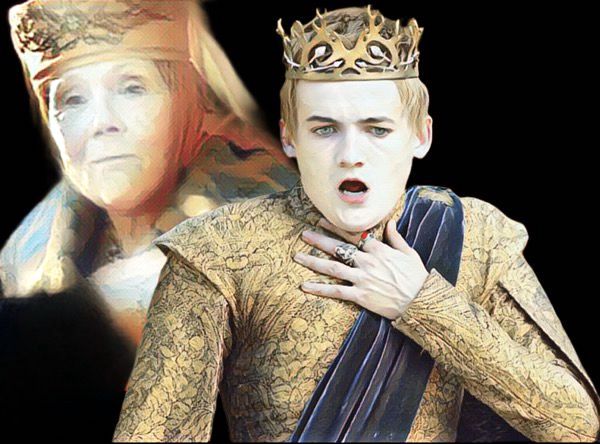
At the wedding feast, unexpectedly, Joffrey chokes on the poison placed in his wine and dies in front of everyone. The culprits, according to Cersei? Tyrion and Sansa. We knew the couple was innocent, but who else would have done us that favor?
Littlefinger was involved, as always, since Sansa was rescued and escaped, beginning another ordeal, but at least safe from the Lannister threat. And Tyrion? He is imprisoned, humiliated, and almost executed, were it not for the help of Varys and Jaime. We go on like this for years, without knowing for sure who killed Joffrey.
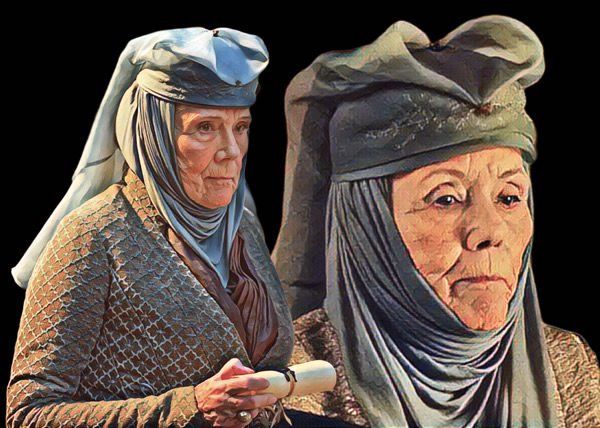
The murder of one of the worst villains in the series is often treated as an act of justice, but that reading ignores what is really at stake. Olenna does not kill a tyrant to save the realm. She removes an obstacle to protect her political project.
The most revealing aspect is not the act itself, but the engineering behind it. She executes the poisoning in a public, calculated, irreversible way.
Innocent people — even those she somewhat likes — are condemned within a system that Olenna fully understands and does not interfere with. Almost the opposite. With both out of the game and Joffrey eliminated, Margaery moves toward Tommen and becomes queen in truth, with total control over her husband.
Teaching manipulation is also perpetuating the system
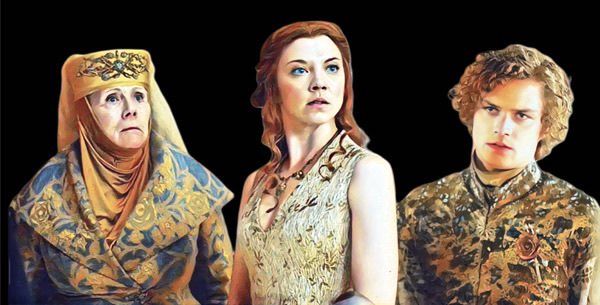
Olenna’s relationship with Margaery is never purely emotional. Olenna trains her granddaughter to operate in a world where everything is an instrument. She teaches her to use appearance, desire, and empathy as tools of power. Sex as well.
With Tommen, this becomes explicit. Margaery builds influence not through imposition, but through shaping the king’s perception.
It is a sophisticated, efficient, and deeply violent strategy.
Because it eliminates any possibility of spontaneity. Because it turns affection itself into performance.
The mistake with Cersei
Olenna masters the traditional political game, but makes a structural mistake when dealing with Cersei Lannister, because she believes that everyone operates within limits.
Cersei does not operate.
Cersei does not suspect the Tyrells’ involvement in Joffrey’s death (her hatred for Tyrion is so blind that she conveniently embraces the chance to kill him), but she is more than aware and attentive to the strategy of controlling Tommen, something that, as a mother and as a queen, she does not accept.
Tommen and Myrcella were good at heart, the opposite of Joffrey, and Cersei saw in the two a kind of surrender to everything she had done and would still do. And she cannot stop Margaery from using sex to control her son, increasing all the resentment. And that is what Olenna, just like Margaery, underestimates: the intensity of Cersei’s love for her children.
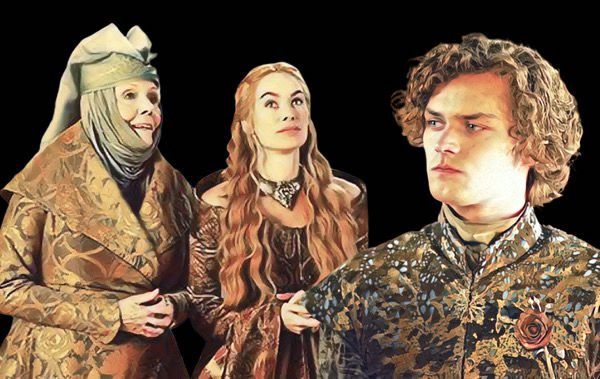
To push Margaery away from Tommen and free herself from having to marry Loras, Cersei dangerously embraces the religious militancy of the High Sparrow, exposing Loras as gay and Margaery as complicit. It is a dangerous move, but one that catches Olenna off guard, after all, Cersei is not known for integrity, lack of lovers, and worse, her children are the product of incest.
In the agreement she made with Tywin, Olenna knows that it is not worth exposing Cersei because if the Lannisters fell from Power, the Tyrells would suffer together. It was also in her interest, for the sake of her grandchildren, to maintain the alliance and unite the families.
She never considered that Cersei would flirt with danger to such an extent as to hit her enemies. And the imprisonment of both becomes irreversible, even after Cersei herself is imprisoned for her crimes (reported by a vengeful Margaery). The only alternative to get out is to confess the crimes, publicly, humiliated with the walk of shame. Margaery refuses and makes a deal: in addition to handing over Cersei, she “converts” and takes Tommen, the king, to embrace the faith as well.
With no alternative, Cersei makes the walk of shame. For us, once again sadistic in training by the showrunners, it is good to see her losing. But Cersei comes back worse.
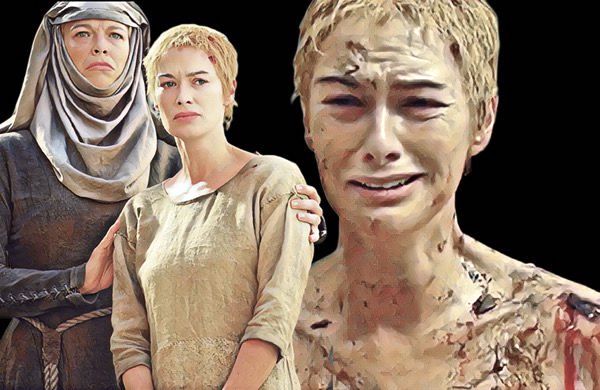
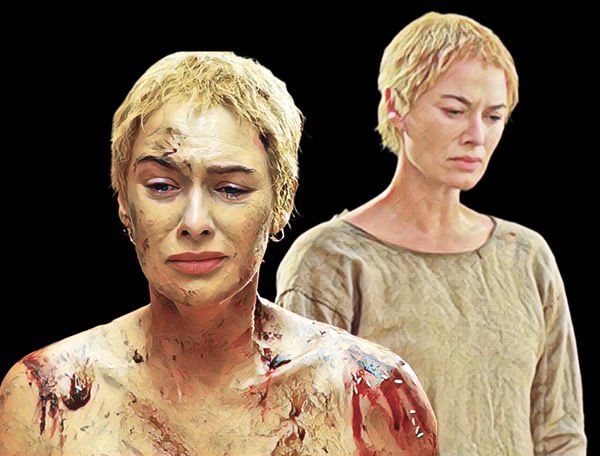
The second mistake of Olenna, after already having witnessed how capable Cersei was, was to keep the resentment and refuse to create an alliance to “save” Tommen, Margaery, and Loras from the militant faith. A mistake that became, literally, fatal.
Olenna humiliates Cersei, refuses to help her, and ironizes: what was she going to do? Blow up all enemies at once? Exactly that, it was Olenna who indirectly gave Cersei the most radical alternative to eliminate all her problems, including Loras and Margaery.
By destroying the Sept of Baelor in one of the most legendary sequences of the entire series, Cersei does not win a dispute. She eliminates the very system that sustained everything. And, at that moment, Olenna’s strategic intelligence becomes insufficient.
She does not lose for lack of capacity.
She loses because she still believes in rules when she should already have been more attentive.
Daenerys and the phrase that reshapes the future
With the defeat and the suicide of Tommen, the Tyrells withdraw from King’s Landing as a house with no future, since the only two heirs have died. For a while, we lose sight of Olenna, but she returns, thanks to Varys.
When Daenerys Targaryen finally lands in Westeros, she needs to immediately stitch together a front against Cersei, but even if many houses have a desire for revenge against the Lannisters, because of Dany’s father, the Targaryens are considered even worse. Tyrion and Varys need to appeal to those who seek immediate revenge, which are the Martells and the Tyrells, taking advantage in some way of the conflict between the Greyjoys as well. The meeting of the Mother of Dragons with the Queen of Thorns is brief, epic, and definitive for History.
There, Olenna has already lost everything. Her house was destroyed, her lineage interrupted, her power reduced to a final gesture. And that gesture is a phrase.
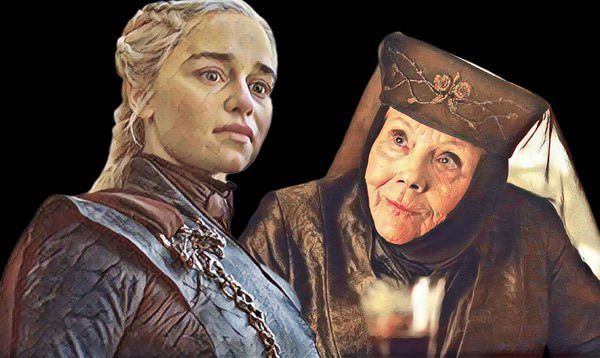
Seeing Tyrion betting on diplomacy while Daenerys has nuclear weapons under command, she gives advice: no one will give her Power if she asks politely. She has only one alternative: “Be a dragon”.
The phrase is usually read as empowerment. But within Olenna’s logic, it is something else.
It legitimizes destruction.
Olenna identifies Daenerys’ fragility, her need for affirmation, and her difficulty in imposing herself in Westeros and offers a solution that dispenses with mediation. If power cannot be negotiated, it can be imposed.
This is not an order.
It is an authorization. Even more because Cersei can never inspire security.
King’s Landing and the displaced revenge
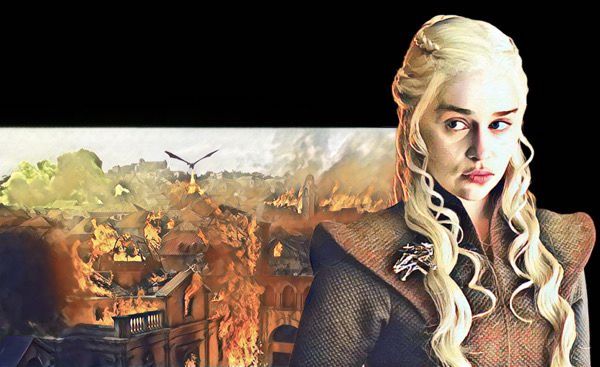
But Olenna changes the framing of this decision. Added to Missandei’s last words, “Dracarys”, she contributes to making legitimate the decision to burn everything and everyone, within the logic of the one who executes it.
If there is a Tyrell revenge, it does not happen directly. It moves through time, crosses characters, and is realized when Olenna is no longer alive. In the end, Olenna took from Cersei her children and her throne; she just was not there to witness it.
Death as the final act of control
Cersei, always underestimated, managed to neutralize the power of three dragons, a fleet of Greyjoy ships, the strength of the Martells, the force of the Dothraki, and the Unsullied. In the first victory, the Tyrells were the first to fall, without the strength or command to resist the retaliation of the Lannisters.
Cersei wanted to imprison and humiliate Olenna, but Jaime convinces her to let her take her own life, which is the choice of the Queen of Thorns.
In the final scene with Jaime Lannister, Olenna maintains control until the end. She takes the poison, relieved to know that it would not make her suffer, and before dying, confesses to having killed Joffrey. Coldly. And makes sure that Cersei will know it was her. In her last appearance, she transforms her own death into yet another piece in the game.
There is no regret.
There is no redemption.
There is revenge.
The character who is remembered after leaving the board
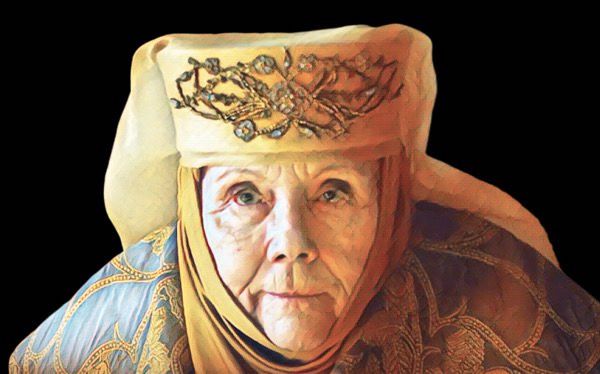
Olenna Tyrell is not just an efficient strategist. She is a character who understands the functioning of power to the point of acting beyond her own presence.
Her decisions do not end with her, and maybe that is what makes her so fascinating and so uncomfortable at the same time. Because, in the end, Olenna never pretended to be anything else. She always knew exactly who needed to be sacrificed.
And we always knew too.
Descubra mais sobre
Assine para receber nossas notícias mais recentes por e-mail.
 miscelana.com
1 comentário Adicione o seu