
We are living in a Barbie fever that even for those who have had more than one doll, is almost oppressive. But the film, which was born from a project by Mattel itself (which makes the dolls), took more than 10 years to get off the ground and has already broken records: it is the best opening for a film in the last two years and the second highest box office in history, in Brazil. Barbie has more strength than a Marvel hero.
Greta Gerwig‘s film brings existentialist questions to a universe hitherto always connected with superficiality and consumption. The idea is to work with constant subversion, that is, a feminist film that is also critical of the beauty standards with which the doll was associated. In Barbie, the Stereotypical Barbie (Margot Robbie) has a long and complex journey of self-discovery and crosses paths with her inventor, Ruth Handler, played by Rhea Perlman. What does not enter into the plot was precisely how the idea for the doll was ‘born’.
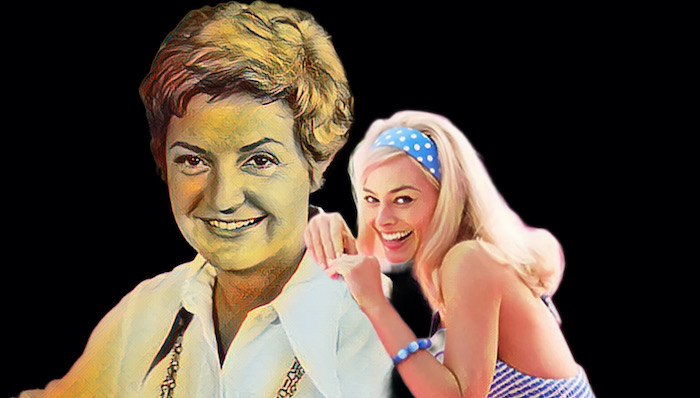
Ruth, who has always been enterprising and creative, worked with her husband to create furniture using plastic as a raw material. During World War II, furniture sales plummeted, so to earn extra they started creating toy furniture as well. It was so successful that making toys also became part of the job. And that’s how they paved the way for the creation of a phenomenon.
They say there are two versions of the original idea for the doll. One says that on a family trip through Europe, Ruth saw a doll that resembled an adult woman, something unusual until then, and realized a business opportunity. The other says that she observed her daughter – Barbra – playing with paper dolls, which looked like teenagers or adults and came with various outfits and accessories. To please her, she thought of creating something more realistic and in 3D. She knew there was something aspirational about all play, so the doll (named after her daughter) had to reflect “what girls wanted to be”.
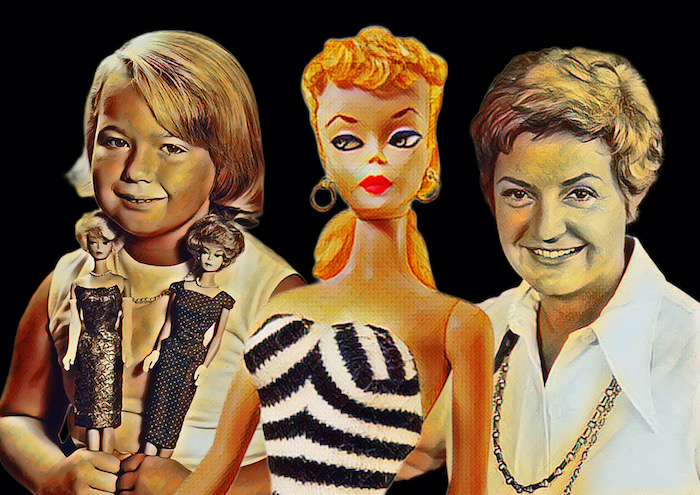
The first Barbie hit the market in 1959, becoming an instant hit and immediately becoming Mattel’s best-selling product. After all, it was the first mass-marketed adult-looking doll for girls, and over the years, in addition to various outfits, houses, and models, Barbie gained a partner – Ken – and other characters. It soon grew into a corporation, with movies, TV shows, video games, celebrity collaborations, and more. The criticisms were also quick, with Barbie becoming the symbol of the object woman, of little intelligence, unreal body (big bust, thin legs) as problematic. Not to mention that for many years she was just blonde with blue eyes until in the late 1960s came Christie, the first black Barbie. For these reasons, the creation of was one of the symbols most attacked by the feminist movement until Barbies appeared with professions such as astronaut, lawyer, etc.
Ruth ran Mattel for 30 years, until she and her husband, then co-chairmen, resigned in 1975 amid a financial scandal of fraudulent reporting to influence stock prices. Then Ruth, surviving breast cancer, went on to another phase of her career by creating a company that made prosthetic breasts for cancer survivors, made from foam and silicone. She died in 2002, aged 85, from colon cancer.
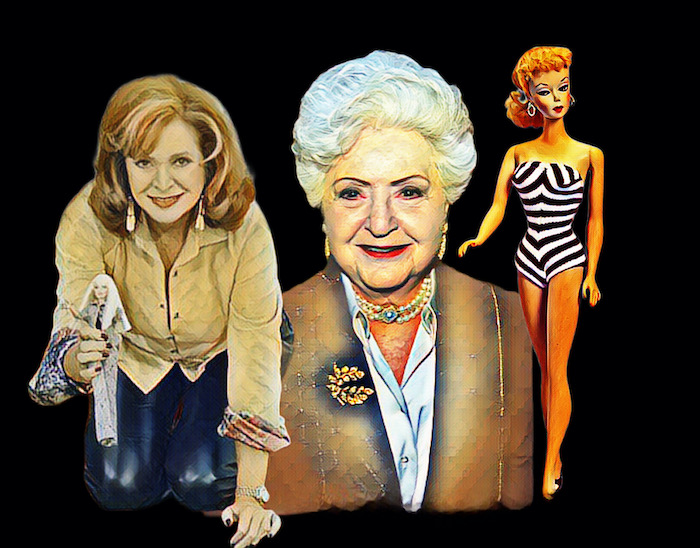
Barbie today already has her legend incorporated into the imagination and culture of several generations, long before the film, which is the first live-action with the character. There are Barbies that are worth as much as works of art with values above 25 thousand dollars, including commemorative or limited editions. Of the most expensive versions is the Barbie Marie Antoinette, estimated at between 1,500 and 3,500 dollars, with an image based on the portrait of Élisabeth Vigée-Lebrun, from 1783, where the Queen is in blue and with the infamous diamond necklace that generated one of the biggest scandals before the French Revolution, the Barbie Original, from 1959, which had seven versions and were sold at the time for 3 dollars, today they are worth more than 6 thousand.
Twiggy was the first celebrity to have a Barbie with her face, in 1967 (a year before the release of Christie). The Gone with the Wind lineup is also stunning, as is the Elizabeth Taylor special edition.
For those who will enjoy the movie, stay tuned for the scene where Barbie meets Barbra Handler, it’s not the real one, okay? It’s designer Ann Roth, doing a cameo.
Descubra mais sobre
Assine para receber nossas notícias mais recentes por e-mail.
 miscelana.com
Barbie 1960 christmas Dall
https://barbiebs.com/barbie-dolls-1960-the-fascinating-world-of-the-1960-christmas-barbie/
CurtirCurtir