
What’s Love Got To Do With It is a romantic comedy. The short statement is to emphasize that YES, it follows the expected structure of a neurotic girl, trying to be cynical with love precisely because her great passion is impossible. Until it isn’t and everyone lives happily ever after. Were it not for the behind-the-scenes of this common narrative of the genre, perhaps I would not have checked the film or was talking about it, but it is because it has two feet in a real story that makes it interesting.
The screenwriter of the film is documentary filmmaker Jemima Khan, in her fictional debut. She famously spent 10 years working on the story, which reflects just a little bit of her own (and more interesting) personal trajectory. For anyone who follows the Royal Family and Princess Diana‘s life, you know that Jemima is closely linked to her. Jemima is the daughter of financier Sir James Michael Goldsmith and Lady Annabel Goldsmith, whom Diana considered a foster mother. If this connection were not enough to place her in the select group of the princess’s personal friends, she was also married for many years to the former Pakistani Prime Minister and cricketer Imran Khan, during which time Diana was already separated from Charles and in love with the Pakistani cardiologist Hasnat Khan (Imran’s distant cousin), therefore Diana’s confidant and friend in a crucial period of her short life. I mention all this because What’s Love Got To Do With It reflects both intercultural relationships, which did not have a happy ending, but which Jemima reproduces with affection and personal easter eggs.

Directed by Shekhar Kapur, aka Elizabeth, with Cate Blanchett, we see how documentary filmmaker and dating app addict Zoe (Lily James) enters a personal crisis when Zoe’s childhood friend and neighbor Kazim (Shazad Latif) decides to treat his marriage as a rational choice and agrees to follow the example of his parents and opt for an arranged (or “assisted”) marriage with a brilliant and beautiful bride from Pakistan who he will only meet in person on the day of the ceremony (or close). For someone who has a mother (Emma Thompson, repeating her version of the clueless mother once again) who always meddles in her sentimental life, Zoe starts to question more than the concept of eternal love, but whether there are big differences between an algorithm or tradition in the choices of the heart. We know the answer, obviously, but it’s a cute premise.
Lily James is always beautiful and empathetic, which holds the predictable, even without the slightest chemistry with Shazad Latif. Pessimistic fairytale ‘updates’ for her friend’s daughters are fun – boring or unpleasant princes; a beast that hides a sexual predator behind a beautiful appearance, the frog that wants to be saved, but which the princess discards to save herself – make up for the cliché moments, as well as the invitation of “would you like to binge a series with me” instead of the traditional “would you marry me”. It would be an immediately disposable film if it didn’t remember what is being (re)imagined: the unrealized dream of a princess who didn’t have the same chance in life. Do you know who I mean?

Because Jemima makes several references to her relationship with her friend. For example, instead of a cricketer or another profession, the hero is a surgeon, like Hasnat. Kazim’s last name is Khan, like Hasnat and Imran. He’s a smoker, like Hasnat. He is discreet, practical, and rational, like Hasnat. He wants to please his family above all else, Hasnat and Charles. The age gap is as much of an issue for the assisted couple as it was for Charles and Diana and probably Jemima and Imran. Kazim’s sister caused drama by abandoning the family for love with a Westerner, which sounds like a quote from Charles’ great uncle.
Want more?
If none of this was clear, we have ‘almost’ statements. Kazim oddly says that his happiness with his “assisted” wife will be “whatever love means,” Charles’ infamous declaration on his engagement to Diana that Zoe points out to his friend as a curse in any relationship. The tailor who listens to her then quotes Diana’s love for Hasnat and how she considered going to live with him in Pakistan, to tell us what happened to him in real life. He married as the family wanted, with a Pakistani woman, but the relationship ended in divorce, alluding that he would also only have been happy with Diana. At another point, Zoe comments that Diana and Charles’ marriage was also just an arrangement, which is no different from what Muslim cultures do, but their marriage went wrong because we live in a Western culture that demands that we seek happiness and not accept that someone chooses your partner for you.
What’s Love Got To Do With It would have everything to get it right, but it doesn’t deliver more than sweet and fleeting content. The screenwriter’s intention was to leave a declaration of love and experience of the ten years of her marriage, which she spent living in Pakistan, and where she witnessed the happiness of many successful arranged marriages, a theme that served to be ridiculed or criticized in Western cinema. In the other 10 years it took to finish the story, Jemima made news when she became involved with showrunner Peter Morgan, who helms The Crown, just as he was developing the part of the story to which she was an intimate witness. Apparently, she was not very fond of the version that the Netflix series presented about Diana and Hasnat, but it is discreet and not mentioned very often.
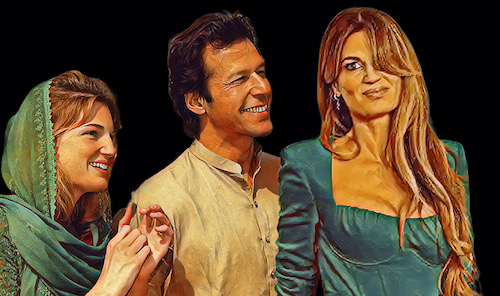
Though she seems trapped in a culturally biased trap, Jemima’s story is a sweet one with all sides, concerned parents and unhappy children. Basically, when she has Emma Thompson in a cameo and the movie jokes that it’s a Love, Contractually instead of the classic Love, Actually, we see an original touch. Kazim’s parents are happy and in love, not always like that since they only met when they got married, but it worked out. Zoe’s mother was betrayed and exchanged for a younger woman, so marrying for love does not guarantee eternity with your partner. And in the greatest of ironies, we see that the boyfriend that Emma Thompson’s character finds for her daughter is perfect, too bad it’s not what she wants. On the other hand, the film also shows the successful industry and business behind the oriental custom.
The only conclusion she gives us is precisely the lack of rules for love, but it’s always worth betting on it. And that somewhere in the universe, Diana Spencer could have been happy with Hasnat Khan. In Jemima’s little princess story, she would have been.
Descubra mais sobre
Assine para receber nossas notícias mais recentes por e-mail.
 miscelana.com