
After all other platforms had their “modern” period series hits, Apple TV Plus couldn’t be left out. The premiere of The Buccaneers confirms that there is a strong influence from Bridgerton, which, in turn, followed the school of Sofia Coppola and Marie Antoinette. Series like The Serpent Queen and the recently deceased The Great confirm that the formula for talking about History with a younger generation necessarily involves anachronisms. Series like The Gilded Age and The Crown refuse to go down that road, but they are the exception these days.
Purists (I’m part of the team), appreciate when the showrunner manages to stay current without reversing the original proposal as a shortcut. The anachronism of Sofia in Marie Antoinette was on the soundtrack and an occasional element (the sneakers among the period clothes). Like everything she does, delicate, subtle, intelligent, and cool. Something The Serpent Queen is following. However, the Bridgerton fever, as I already mentioned, created almost a subgenre that made the updated version of Persuasion transform the shy and suffering Anne Elliott into an Elizabeth Bennet. If the public is not curious to seek out the original source, it is almost a dangerous misrepresentation.
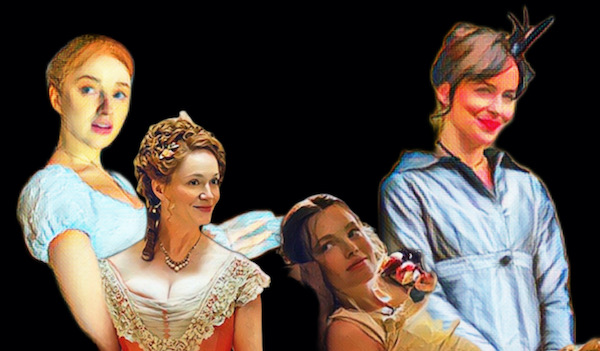
The long-awaited debut of The Buccaneers sort of confirmed the fears of traditionalists: too much shouting, too much “modernity” deflating the real drama that was being reported there. Not that it makes the series a bad product, on the contrary, it is beautifully filmed and acted, but it is not what Edith Wharton wrote or tried to report. We will have a fairer comparison if The Gilded Age continues, as it began, in the mirrors of the real people who inspired The Buccaneers, especially Consuelo Vanderbilt who in the HBO series is Taissa Farmiga‘s character, Gladys Russell. It is a tragic story that young girls were auctioned off to bankrupt nobles and still called “buccaneers” (pirates “approved” by the Crown).
The advancement of time and female autonomy distance us from the years when this was the rule accepted by society. Consuelo was forced by her mother, Alva Vanderbilt, to marry a man she did not love and abandon the one she loved because he was not a Duke. They say she cried so much and so loudly at the wedding ceremony that the orchestra had to play louder to drown out her sobs. There is no way to modernize this suffering. Her marriage was unhappy from the first second until the day she managed to get a divorce. A story so public and tragic that it generated books and films. But let’s talk about the series.
The Buccaneers is the least popular book by a writer as fascinating as Wharton. Just like Henry James, Jane Austen, refused to distance herself from reality and create happy endings. She and James, her friend, accurately recorded the years of the “golden cage”, but she died before finishing the book, therefore, there are groups that complain about a series of poorly developed arguments in what would be her last story, published in 1938, that is, 85 years ago. At the time, the New York Times already considered the book to have the writer’s traits but that “the characters seem like mere sketches” and “its dramatic ending lacks the visualized vitality it would have received from Mrs. Wharton’s pen”. 30 years ago, in 1993, there was a “complete version” of the story, written by Marion Mainwaring, who used notes from the original author. When the BBC aired a miniseries starring Carla Gugino and Mira Sorvino, purists went through the roof with complaints. We Brazilians could also question the fact that the Brazilian woman in the story, Conchita, has a Spanish nickname and not one from our culture. Details? Perhaps.

The 2023 version, in light of Meghan Markle‘s drama with monarchist culture, also gains another light. The inclusive cast is nothing new, but youth angst and cultural conflicts gain volume. But the narrative tries its best to stick to the original text. We begin with the wedding of Conchita Closson (Alisha Boe) to Lord Richard Marable (Josh Dylan). Still, in New York, Nan meets Guy Thwarte (Matthew Broome) with whom she immediately gets along. Conchita, in her authenticity, is already pregnant with Lord Richard, who almost gives up on the union but ends up moving on. In what he himself anticipates to be a difficult period for his wife – adapting to the rigid rules of the monarchy – he invites his wife’s friends on a trip to England, where they can possibly find noble husbands for them. The sisters Nan St. George (Kristine Froseth) and Jinny St. George (Imogen Waterhouse) and Lizzy Elmsworth (Alissa Ibrag) and Mabel Elmsworth (Josie Totah), are initially accompanied by their mothers, excited by the prospect, but, they will live each one, the pains of arranged marriages and wrong choices.
The discovery of a family secret shakes Nan and Jinny’s relationship, and, accompanied by her housekeeper, Miss. Testvalley (Simone Kirby), Nan meets the taciturn Duke of Tintagel (Guy Remmers), who falls in love with her. Without going further into what’s to come, although torn between how she feels about Guy, omitting the secret of her bastard origin, and throwing herself into a relationship that has barely begun and has already turned into marriage, Nan is our heroine.
Taking liberties with the original story explores plots only hinted at in the book, including a same-sex romance and an abusive relationship, nothing that would have been explicit 85 years ago.

Kristine Froseth skillfully held the leading role in the series and the love triangle between Theo, her, and Guy promises to divide fans. But it is Alisha Boe who transforms her from Conchita into an updated Meghan Markle, with the suffering of racism and the difficulty of fitting into a suffocating society like the monarchist. Every attempt to adjust is in vain and anyone who follows the Royal Family’s drama must not have missed all the details portrayed in the first three episodes of the series. In fact, going from the series to the reality show that has dominated the news for six years, since Meghan became involved with Prince Harry, it is clear that little has changed. Americans are treated as loud and classless, but from their perspective, it is the English who are snobbish and arrogant. Conchita’s Latin blood in the role (there are no Brazilian references in the series) also adds a hint of general prejudice, including that of the author.
Basically, intolerance was one of the messages of the original plot, fueled by greed, secrets, and indifference. I would like to see the story closer to the original, but with everything we see today, we notice how current it is. Scary, right?
The saddest turns are yet to come, but, in general, it is another success for the platform that has been easily occupying a competitive space for quality series and films. The Buccaneers could be just the beginning of an investment in period content. That is, at least, my hope!


Descubra mais sobre
Assine para receber nossas notícias mais recentes por e-mail.
 miscelana.com
1 comentário Adicione o seu