
Not that non-monarchists are obliged to know, but the highest position of a noble – other than Prince or King – is a Duke. So when in The Gilded Age the ambitious mothers of potential marriage candidates discover that a British (and single) Duke is strolling through New York, we can bet on a race for the prize. In the next episode of the series, we will meet the Duke of Buckingham (Ben Lamb) and as he is literally at the heart of the dispute between Bertha Russell (Carrie Coon) and Mrs. Winterton (Kelley Curran), shall we talk about him?

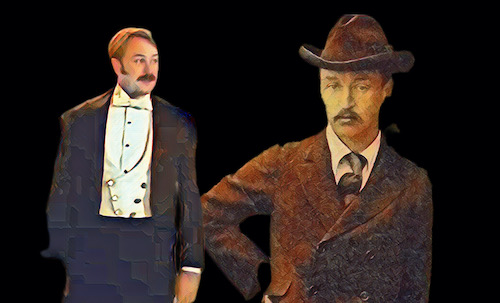
Well, the first thing to know is that, although some real characters appear in the series, the Duke of Buckingham is not one of them. The “real” nobles who married American heiresses, at the time called the “dollar princesses”, were others from whom the character was inspired. In particular, the Duke of Marlborough married Consuelo Vanderbilt in 1895.
It is curious that they chose the title of “Buckingham” for the fictional one and did not invent another duchy because the title of “Duke of Buckingham” was extinguished and created several times throughout the British monarchy and there was one still alive during the period of the series. But I doubt it is ‘ours’ as the real one was married and died in 1889, the position becoming extinct since then.
The first Duke of Buckingham was Humphrey Stafford, in 1444, son of Anne of Gloucester, Countess of Buckingham, and granddaughter of King Edward III. Although in the War of the Roses, the Staffords supported the House of Lancaster, when King Richard III took the throne (I’m a Ricardian, I don’t say he usurped), his grandson, Henry Stafford, the second Duke of Buckingham, helped the Prince of York, although he later turned against him and executed him when his revolt went wrong. His titles were lost along with the dukedom until Henry VII became king in 1485. Once again, a Duke of Buckingham entered history as a traitor because, in 1521, Edward Stafford (Henry’s son) opposed Cardinal Thomas Wolsey, principal advisor to Henry VIII, when Henry’s son was also executed and the title once again extinguished.
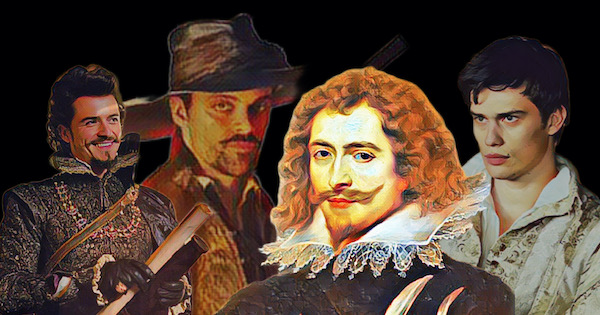
Only in 1623 did the position of Duke of Buckingham come into existence again, when George Villiers, one of James I of England’s favorites, was named in the title. George’s life is the subject of the series Mary and George and he is mentioned in the Three Musketeers, but was murdered in 1628. His son inherited the title, but as he died without heirs in 1687, the title was once again extinguished. And so it continued over time: until in 1822 the family had the duchy back, but still then, since 1889, when Richard Temple-Nugent-Brydges-Chandos-Grenville, died, no one has received the duchy again. No wonder no one really wants it.
So who is Buckingham in The Gilded Age?
Where we hear Buckingham, we must think Malborough. Why isn’t it used in the series? Because the title of Duke of Malborough still exists and belongs to none other than a cousin of Princess Diana. That’s right, Jamie Marlborough is today the 12th Duke of Marlborough, a distant relative of Prime Minister Sir Winston Churchill and Diana, but also linked to Christina Onassis (he’s her half-brother) due to his father’s second marriage to Athina Livanos. Obviously, he is also a distant cousin of Andrew Cooper, a Vanderbilt, as his great-grandmother was Consuelo Vanderbilt. It sounds complex, I know, but the fact is that with the real Malborough alive, it was better to use a title without an owner, even though historically it could cause confusion.
Following in the original’s footsteps, The Gilded Age‘s Buckingham is destined to eventually marry Gladys Russell (Taissa Farmiga), but if Turner, Mrs. Winterton can get in the way of Bertha’s goal, it won’t be easy. And from the teasers, we know that even Caroline Astor (Donna Murphy) will want to “buy” the nobleman. And he was indeed “for sale”.
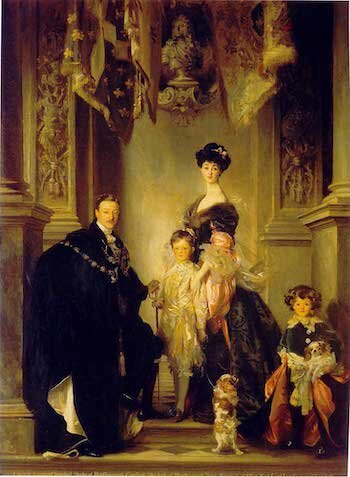

Charles Spencer-Churchill, the ninth Duke of Marlborough, cousin of Winston Churchill, married twice and his first wife was Consuelo, the American railway heiress. The union was purely a commercial transaction: in 1892 his dukedom was almost bankrupt and marrying for money was the quickest solution to solving his family’s financial problems. Working was impossible for a nobleman, so the other solution was to find a rich wife.
The interference of Alva Vanderbilt, desperate to see her daughter become a duchess, was essential and Consuelo’s price was around $77 million in recent values, plus other shares and dividends. Consuelo’s suffering was public from the beginning, but legendary afterwards. She claimed that she was locked in her room until she agreed to the marriage and discovered on her honeymoon that her husband loved another woman and that he married her to “save the Palace of Blenheim.” Even so, they had two children (an heir and a spare) and lived years of sadness in England, until they managed to get a divorce.

Her dowry was used to restore Blenheim Palace, still stunning today. The duchess wrote about the problems in her autobiography, The Glitter and the Gold, where she admitted infidelity on her part (with her first love, Winthrop Rutherfurd, whom she really wanted to marry) as well as three of her husband’s cousins. An unhappy life was accepted by society and Consuelo (who also inspired Madame Olenska in The Age of Innocence) shocked everyone when she separated in 1906. At this point, a remorseful Alva Vanderbilt testified that she coerced her daughter into marrying the Duke, contributing that the marriage was annulled by the Vatican in 1926, freeing both to remarry.
Consuelo married Frenchman Jacques Balsan and died in 1964 when her firstborn son became Duke of Marlborough. Although she disliked Blenheim, she visited the palace frequently. Her first husband married another American, Gladys Deacon, who became a friend of Consuelo even though she was her husband’s lover. Her union with Charles went from bad to worse. Officially married, they began to disagree so much that Deacon kept a revolver in her room to prevent her husband from entering, who ended up leaving the palace for which he sold his honor. He managed to evict his second wife, from whom he separated but never divorced. Charles died in England in 1934.
In other words, in reality, the Duke generated a lot of drama, will the Duke of Buckingham be up to the task?
Descubra mais sobre
Assine para receber nossas notícias mais recentes por e-mail.
 miscelana.com
3 comentários Adicione o seu