
The most handsome man in all of England in his time (some argue that even today), George Villiers, the first Duke of Buckingham has opposing narratives that make him an enigmatic figure even 395 years after his death, completed on August 23, 2023. According to Alexandre Dumas in his The Three Musketeers, he was a womanizer, a hero, and Queen Anne’s lover. But (serious) historians claim that, as a ‘favorite’ of King James I (official code for ‘lover’) and his son, eventually King Charles I, George was actually one of the most notorious and openly homosexuals in the British monarchy, also defamed and murdered. In addition to the French production of the classic of French literature, Villiers’ youth is the focus of the series Mary & George, still to be confirmed airing in Brazil, but with Juliane Moore in the role of her ambitious mother, Mary Villiers, and Nicholas Galitzine as George.

Based on the bestselling book The King’s Assassin: The Fatal Affair of George Villiers and James I by Benjamin Wooley, the series will cover the rise of George Villiers at court, guided by his ambitious mother, and how he won the James Stuart, son of Mary Stuart and successor to Elizabeth I on the British throne. James, who like his father was homosexual, had a wife and children as demanded by the rules of succession, but also his favorites. Before Buckingham, his lover was Robert Carr, Earl of Somerset.
Obviously, in the fight for Power, the favorites took as many risks as they gained followers, due to their direct influence with the King. Against this backdrop, Somerset’s enemies saw in the young Villiers, aged just 21 and described by the Bishop of Gloucester, Godfrey Goodman, as “the most handsomely built man in all England; his limbs so tightly packed and his conversation so pleasant and of such a sweet disposition,” as the perfect opportunity to overthrow and replace him. And it was all part of Mary’s plan, which identified early on that the undeniable beauty of her second child could ensure her dream of political power and fortune.
Mary is described as “a woman of formidable strength of character”, unpopular, loud, tactless, greedy, and ruthless. Not a nice sight, is it? Daughter of a direct descendant of Henry de Beaumont, a key figure in the Wars of Scottish Independence, Mary was the second wife of Sir George Villiers, with whom she had four children. As soon as possible, she sent George to the French court, where he learned fencing, speaking French, and dancing, as well as learning how to dress luxuriously. As soon as he returned from France, she caught the eye of James I, quickly becoming his ‘favorite’. In this position, the Villiers gained position, money, and power, as Mary planned.
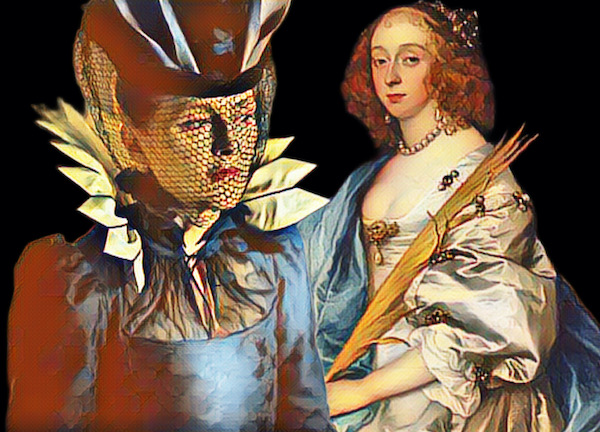
The romance with the King could be obvious and open, but like the other men of the Court, George had to marry and once again it was his mother who arranged everything, electing the richest woman in England, Katherine Manners, Baroness of Rutland, as a daughter-in-law. Unsurprisingly, neither Katherine nor George was willing to accept the proposal, but it is said that Mary created a situation that forced the young woman to spend the night under the same roof as George, thus tarnishing her reputation and having no choice but to marry her. he. The union was consummated and they had children, so another point for Mary in her antics.
George Villiers was considered the “wife” of James I until his death in March 1625. Part of this version is given by the letters signed by the King, such as the one written in 1623 and where he wrote: ‘God bless you, my sweet son and wife, and may you always be a comfort to your dear father and husband.’ George’s response leaves little doubt of the two’s relationship, saying that ‘I naturally love you and I adore all the other parts of you which are more than a man ever had’, ‘I only wish to live in the world because of you’ and ‘I will live and die as a lover of you’. It didn’t help that Jamie I called Buckingham “Steenie”, after St Stephen, who was said to have “the face of an angel” and to have once argued with the Crown Council that “I love the Earl of Buckingham more than anyone else. and more than you gathered here. I wish to speak on my own behalf and not have this be considered a defect, as Jesus Christ did the same and therefore I cannot be blamed. Christ had John and I have George.” Even with this evidence, there are historians who claim that the relationship was platonic, something impossible in the face of so many words of love.
Even with so much mutual affection, Buckingham’s enemies accused him (as well as Mary) of poisoning her lover, prompting a parliamentary investigation and the defamation of his name. Wooley’s book, hence the Mary & George series embarks on this possibility, using as a reference new historical studies that suggest that the accusation was well founded and that Villiers was directly involved with the death of the King.
If the Mary & George series covers this period, the last three years of the Duke of Buckingham’s life gained fame thanks to Alexandre Dumas‘ version, which inserts him into the plot of The Three Musketeers. It is what we see so popular today, anachronism, which serves to confuse those who do not seek historical confirmation.
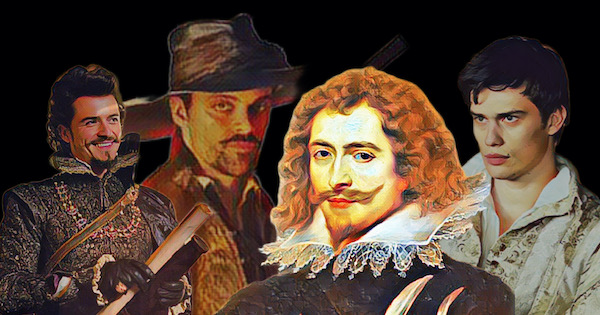
Due to his intimacy with James I, Buckingham naturally lived with the heirs and had a greater connection with Charles, who would replace his father. When he was still Prince of Wales, he was accompanied by George Villiers to Spain for negotiations on his marriage to the Infanta Maria, something that Buckingham’s aggressive opposition led to the agreement breaking down, creating problems between England and Spain. In Mary’s place, Buckingham negotiated the Prince’s betrothal to Henrietta Maria of France. If earlier Protestants appreciated the intervention of a Protestant avoiding a Catholic queen by electing another, this sparked religious conflicts. The downfall began like this.
A fervent Protestant, Buckingham decided to help the rebel Huguenot Admiral Benjamin, Duke of Soubise in a conflict in France and made Richelieu his enemy, but lost La Rochelle (all this is part of the Musketeers plot) and with that failure only contributed to the unpopularity of the Duke in England. When Charles became King, however, Buckingham was the only man in James I’s court to retain his position, which made him more powerful and hated. His failures as a military man, accumulating defeats and generating taxes to pay for new expeditions, accelerated his tragic end. In 1626, the English Parliament began impeachment proceedings against Buckingham, leading King Charles to side with his friend and dissolve Parliament to protect him.
Even as The Three Musketeers reverse the truth, as an enemy of Richelieu, Buckingham negotiated to help him in the fight against French Protestant Huguenots, in exchange for French help against the Spaniards, leading the British Parliament to be horrified at the idea of English Protestants fighting against French Protestants. In the political back-and-forth, when France. and Spain understood each other, Buckingham led another force to aid the Huguenots rather than oppose them, but it was another failure.
In Dumas’ version, Lady de Winter and Richelieu are behind the death of George Villiers, but the truth is that his position has become untenable. Twice Parliament tried to impeach him and twice the King rescued him by dissolving Parliament, but Buckingham was the most hated person in the UK. He was stabbed to death on August 23, 1628, while organizing yet another campaign to aid the French Huguenots. The assassin, John Felton, felt that he had been overlooked for promotion by the Duke. George Villiers even tried to fight back but fell dead from his wounds. His death was celebrated in every country, except on the Throne.
It is said that upon hearing the news of her son’s death, his mother, Mary, did not seem surprised and even resigned. She is cold as everyone has always called her. Only three years had passed since the death of James I. Mary died four years after her son, in 1632. Both are buried in Westminster Abbey. On Buckingham’s tomb is written in Latin: “The Enigma of the World”. Indeed, he still seems to be, even 395 years later.
Descubra mais sobre
Assine para receber nossas notícias mais recentes por e-mail.


2 comentários Adicione o seu