
Classical dance as we know it today owes a lot to the Taglioni family. Until the day Marie Taglioni entered the stage and danced on tiptoe, dancing was one thing. With her, it became magic. Furthermore, in a universe where men dominated the stages, from Marie onwards dance became essentially feminine and she was one of ballet’s first great stars, its first superstar.
Her legend is still worshiped today and in April 2024, her birth will be 220 years old. It’s worth remembering her trajectory.

Born into a family of artists, she was hunchbacked but overcame her limitations to become the greatest
Marie’s life was destined for the stage from birth. Born in Stockholm, Sweden, on her mother’s side she came from a long line of opera singers and, on her father’s side, from traditional Italian dancers. We don’t know what her voice was like, but from an early age, she was trained to dance.
Nothing would suggest that little Marie would have a chance as a ballerina: although she started taking ballet lessons at a young age, she was dropped by her teacher when she was just six because of her hump. And she wasn’t just any teacher, Jean-François Coulon was the best but he said that in addition to her back problem, she had excessively long arms and legs as well as a very unattractive elongated face. He called Marie “la petite bossue”, or the little hunchback, with no chance of ever being able to dance. Filippo Taglioni did not agree.
He decided that he would teach his daughter personally and many credit this investment with the dancer’s legendary technical ability. When the Taglionis were transferred to Vienna, where Filippo was appointed ballet master of the Court Opera, the demanding choreographer isolated his daughter in an apartment near the theater and for a year, drilled her into a rigorous training regime.
Every day, Marie started the day with two hours in the morning, with the most difficult exercises focused on the legs. In the afternoon there were two more hours, now focusing on adagio movements (the slower ones), to refine the posture. This part was particularly more important because Marie had a habit of bending forward, due to her rounded back, creating the opposite of the image that classical dance demanded. There were two more hours to balance, making six hours a day, every day.
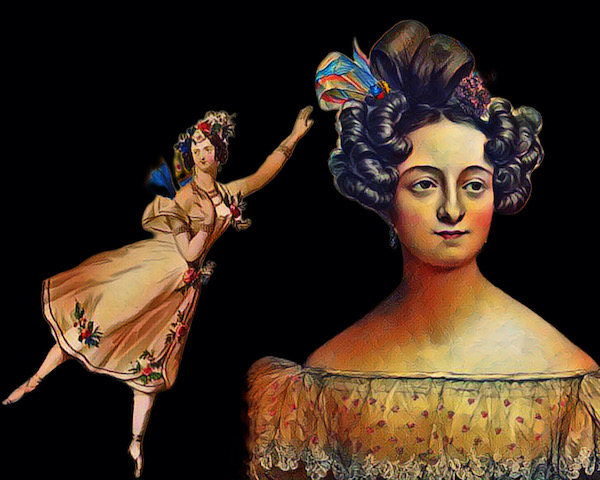
Filipo’s brilliance was revealed not only through the method but mainly because, to disguise his daughter’s physical limitations, he created steps with wider movements, which required strength, avoiding pirouettes. The use of exclusive poses and the Port de Bras that he created for her became mandatory steps in Romantic Ballet.
During the process of transforming the ugly duckling into a sylph, Filippo was not a loving father, but a stern teacher. When he judged her ready, he cast Marie to star in La Reception d’une Jeune Nymphe à la Cour de Terpsichore. Ethereal images of nymphs and fairies would always be Marie Taglioni’s strong suit.
Success before pointe shoes
From the beginning to the end of her career, Marie was always linked to her father. Before joining the Corps de Ballet of the Paris Opera, she danced in Munich and Stuttgart, always charming audiences wherever she was.
The names of the ballets revealed that everything Filippo did was to highlight his daughter’s versatility: La Sicilien, La Ginata, and L ‘Ombre are some of the ballets she danced and gained prestige throughout Europe. Some historians complained about the ‘control’ exercised by Filippo over Marie because she practically only danced what he created for her and others, such as Théophile Gautier, who saw her as “a living poem”.
Soon he would make his daughter the legend she is to this day when he created the ballet La Sylphide, especially for her and she would become a superstar.
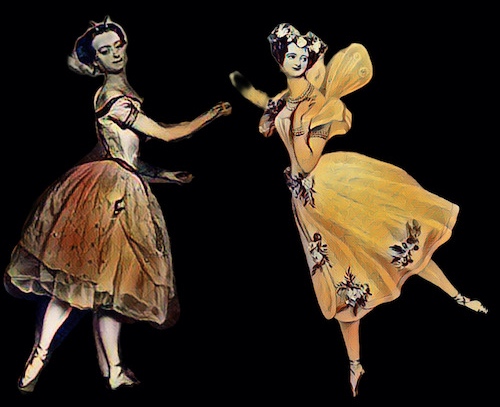
A sylph, innovations, and invention of “white ballet”
In 1832, the ballet La Sylphide changed classical dance forever. Yes, it was the first ballet where a dancer appeared on tiptoe, as well as her tulle skirt being shorter (a scandal at the time). Also, by using the spiritual magic of sylphs, he established the tradition of “white” acts, repeated in Swan Lake, La Bayadère, Les Sylphides, and, of course, Giselle.
Since it was first used, the pointe shoe has transformed the aesthetics of ballet. It was created as logic, as spirits like sylphs would not touch the ground), but the dance was never the same. And, forever, became synonymous with a ballerina.
Divided into two acts, there were two versions: the original, by Filippo Taglioni, from 1832, and by August Bournonville, which premiered four years later, in 1836. It is Bournonville’s that has survived and is one of the oldest ballets in the world still in production (losing to La Fille Mal Gardée).
With music by Jean-Madeleine Schneitzhoeffer and libretto by Adolphe Nourrit, was based on the short story Trilby, or Le Lutin d’Argail, by Charles Nodier, La Sylphide was made to order for Marie.

The plot takes place in Scotland, where James Ruben is woken up by a sylph who watches him lovingly and falls in love with the spirit, although he is engaged and about to get married. A witch, Old Madge, appears to James and makes some prophecies: his fiancée will abandon him for his best friend and warns him that he loves someone else. The sylph reappears and declares herself to James, who kisses her passionately. At the time of the wedding, she distracts him and he abandons his bride, following the sylph into the woods, but she always escapes his touch. Madge gives him a magic scarf, which will tie the sylph to him so she won’t be able to escape. When he follows the witch’s guidance, the sylph’s wings fall off and she dies in James’ arms. It was all part of the plan of the jealous witch who wanted to kill the free spirit.
La Sylphide became closely associated with Marie Taglioni and marked the life of another dance legend, Emma Livry as well. The public’s craze for Marie was so great that women copied her hairstyle, and created dolls like her and other “La Sylphide” products. They say so. Queen Victoria had a La Sylphide doll when she was little.
In 1892, Marius Petipa remounted the work for the Imperial Ballet, with additional music by Riccardo Drigo, but La Sylphide later fell into oblivion. The 1972 version of the Paris Opéra (the one that was staged in Brazil, with Ana Botafogo, in the 1990s) is the ‘official’ version of the last 50 years, choreographed by Pierre Lacotte.
Many lament that Filippo Taglioni‘s choreography has been irretrievably lost, Lacotte needed images and notes to try to recreate something close to the 1832 original, but it is, in fact, entirely new. Is beautiful.
The connection between Marie Taglioni and Emma Livry
The young Frenchwoman, Emma Livry, has one of the most tragic stories in Ballet, a promise that was not fulfilled by the accident that took her life. She starred in the 1858 production of the ballet La Sylphide, nine years after Marie’s retirement (in 1847). They say that when she saw Emma on stage, in the role that made her a legend, the prima ballerina was deeply moved, “adopting” her and teaching her technique personally, making it official that she saw Emma Livry as her successor. Unfortunately, it wasn’t to be.
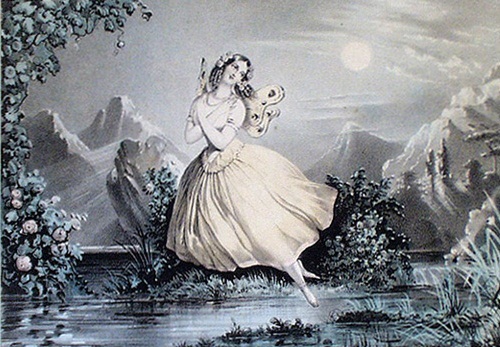
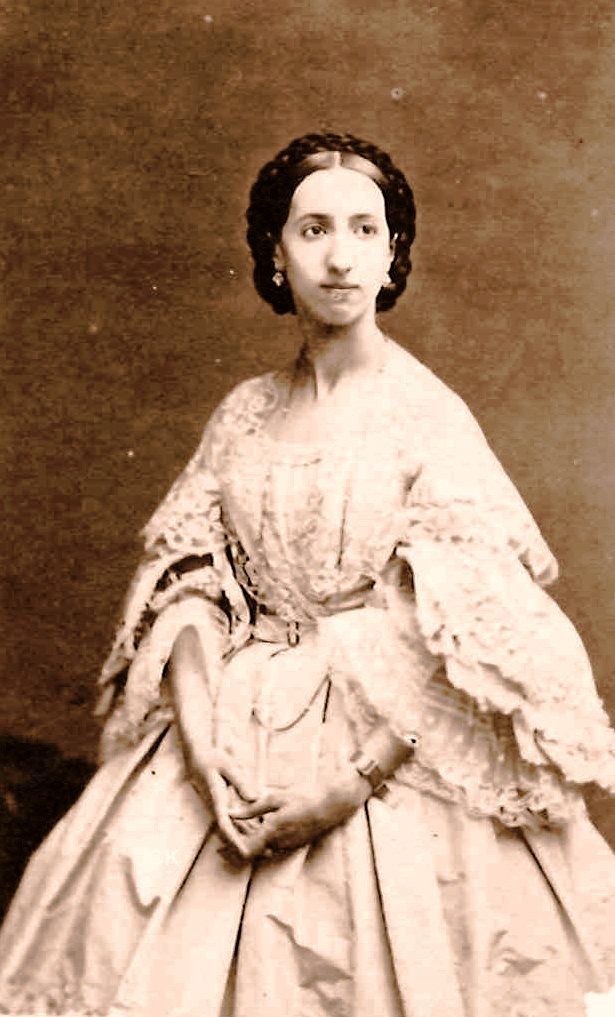
It was for Emma that Marie created her only choreography, the ballet Le Papillon, which became her pupil’s signature. When she was preparing to go on stage in a performance of this work, Emma made the usual gesture of shaking her tulle skirt, but her outfit accidentally caught fire. It was the time of gaslighting and such accidents were common, but Emma Livry‘s was the worst of all time. Almost 70% of her body was burned, especially her legs. Emma still survived with pain and injuries for another year. She died at just 21 years old. One of the saddest stories in dance.
Marie’s farewell alongside the three other greatest dancers of her time
Before leaving the stage, Marie Taglioni accepted an offer to dance for three years in Saint Petersburg, with the Imperial Ballet. It is said that she accepted the contract because her rival, the popular Fanny Elssler, had joined the Paris Opera Ballet and Marie did not want to share the spotlight. Be that as it may (there is also the drama of her personal life intervening), she went to Russia and there she was worshiped as a superstar. Legend has it that a pair of used sneakers were auctioned off for a fortune only to be cooked and served to fans.
Later, in London, she gave another legendary performance in the short ballet known as Pas de Quatre, alongside the famous Lucile Grahn (who replaced Fanny, who refused to dance), Carlotta Grisi, and Fanny Cerrito, with choreography by Jules Perrot.
As the biggest star among them, Marie Taglioni was the last of the four to perform the solo and the entire ballet is a tribute to her, as it does not have a specific plot and represents the ethereal qualities of the dancer.
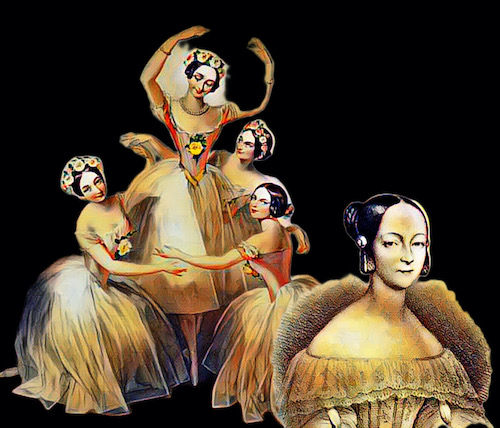
Two years later, she left the stage. Her personal life would take its focus and the ballet said goodbye to what was considered the greatest of her time.
From Prima Ballerina to Countess: scandals and dramas
In the same year that she enchanted the world as La Sylphide, in 1832, Marie Taglioni began to sign as the Countess de Voisins, when she married Count Auguste Gilbert de Voisins. The union was not a happy one for many years, in fact, it came to an end in just three. And then came the scandal.
With an injury to one of her knees, Marie retired from the stage for some time but went to a masquerade ball in January 1836, where she met the poet Eugene Desmares. A loyal fan, Eugene was the son of an actress and a playwright, and in his passion for Marie wrote poems and letters in her honor. They are said to have immediately become lovers and he took part in a duel to defend her honor.
Be that as it may, she became pregnant during this period, and many claims that Eugene is the real father of her daughter, although officially the paternity belongs to her husband.
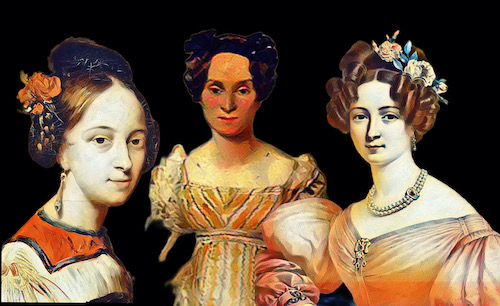
It was her lover who wrote the libretto for the ballet La Fille du Danube, with music by Adolphe Adam, a ballet in which she starred months after giving birth to her daughter. As in La Sylphide, the ballerina embodies a supernatural being, a water nymph reminiscent of Hans Christian Andersen‘s short story, The Little Mermaid, published in the same year as La Fille du Danube. Unfortunately, the public did not respond to the ballet as expected, without the same success as previous productions.
When Marie agreed to dance in Russia (for three years), Eugene accompanied her, but would never return to France as he died suddenly in Saint Petersburg. Some say it was a “hunting accident,” but Marie’s letters about his death suggest something different. She wrote that it was impossible to find any consolation: “I lost a lot. His illness was very short, 15 days, but he suffered a lot, he died like an angel,” she wrote.
Back in Paris, Marie had another son in 1842, also officially by Gilbert de Voisins, but whose father was unknown.
The ballerina retired from dancing in 1847 and went to live in Venice, at the Palazzo Santa Sofia, on the Grand Canal. Marie’s children married rich and titled people, with her firstborn marrying Russian prince Alexander Trubetskoy, with whom she had five children.

While her children turned out well, Marie Taglioni struggled at the end of her life, even though she had accumulated a fortune that she slowly lost. by 1858, it was already bankrupt. To support herself, she returned to Paris where she worked as a teacher at the Paris Opera Ballet and met Emma Livry. Marie was one of the witnesses to her tragic accident.
She also found an alternative livelihood during the Prussian War of 1870, teaching ballet to children and society ladies in London. She died poor, in Marseille, just one day before her 80th birthday. Her body was transferred to Paris, but there is disagreement as to whether she is actually buried in Montmartre or in the Père Lachaise Cemetery. As there are many dance stars buried in the cemetery in the bohemian district of Paris, right where Marie’s mother’s tomb is, it is what many consider to be her final address. So much so that it is common for dancers to leave used pointe shoes at the tomb, as a tribute and thanks to the first pointe ballerina in history.
Historians rightly credit the revolutionary figure of Marie Taglioni as one of the most important artists of the 19th century. The best definition comes from the historian, journalist, novelist, and playwright Alberic Second. “That a dancer, thirty years ago, was able to bring about a revolution in the art of dance, which is still effective, is surprising in itself. That this dancer, this great revolutionary, she should have been a poorly made woman, almost hunchbacked, without beauty and without any of those impressive external advantages that command success, equivalent to a
miracle. The art of other dancers is learned as a craft, that of Mlle. Taglioni was born from
nature.”
As we know, a legend.
Descubra mais sobre
Assine para receber nossas notícias mais recentes por e-mail.
 miscelana.com
4 comentários Adicione o seu