
In current times it is uncomfortable to think how for so many centuries patriarchal society has contributed to creating the myth of female rivalry. In the world of ballet, then, the disputes between soloists for the opportunities to shine yield a thousand legends, less exploring the great friendships that also existed. Films like Black Swan based the plot on the competitiveness behind the scenes of a ballet company, which is undeniable, but I hope it’s a thing of the past.
There is always an even more complex issue in dance, which is age rivalry, which does not depend on gender. Dancers have very short and intense careers, so prominent roles from an early age are very important. And if in the past Fanny Elssler and Marie Taglioni antagonized each other, at the beginning of the 20th century the two biggest Russian stars that shone in the West, Anna Pavlova and Tamara Kasarvina, did not fight each other either. Could it be a myth?
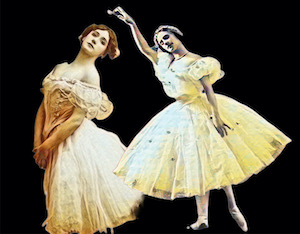

Twin stars of Russian ballet: the classicist and the romantic
In times of dance legends, it must have been incredible to be in Paris in 1913 and be able to see on the same stage legends such as Kasarvina, Pavlova, and Vaslav Nijinsky, to name a few, as there were also composers, set designers, conductors, choreographers, writers and others dancers who entered history. And it happened, that everyone performed on more than one occasion that year, part of Serge Diaghilev‘s Ballets Russes.
These were difficult times in Russia, with political tension growing pre-revolution. The rivalry between the company’s two stars means that one is rarely mentioned without mentioning the other, which is not exactly “proof” of a conflict. Nor does it eliminate doubt.
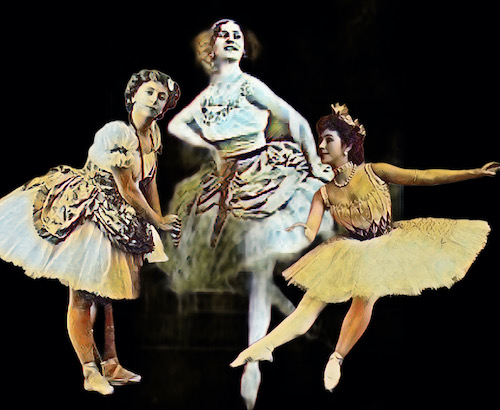
Behind the scenes at the Imperial Ballet was not easy. There are several stories of fights and even traps of dancers trying to disrupt the other’s performance, like Mathilde Kschessinska, who only helped Anna Pavlova a little when she considered her weaker and less competitive. This is because as she was pregnant, Mathilde could not dance La Bayadère and would have trained Anna Pavlova for the role of Nikya, doubting that she could surpass her, precisely what happened with the public enchanted by Pavlova’s ethereal and fragile figure, making her a star.

An accident, an argument, tears, and resentment
Although there are no easy records of Pavlova speaking about Kasarvina, she mentioned a small criticism in her autobiography, Theater Street: The Reminiscences of Tamara Karsavina, released in 1931, the same year that Anna died.
In the book, Kasarvina appears to be generous when she speaks of Pavlova, but she notes that “Pavlova at that time hardly realized that in her agile form and in her technical limitations lay the greatest strength of her charming personality.” In other words, there was a lack of refinement in his steps, but he had plenty of charisma. It’s still a nudge.
In 1982, in the documentary A Portrait of Giselle, Karsavina returns to talk about her times at the Imperial Ballet and admits that she had a grudge against Pavlova, thanks to a performance by Giselle, on a night in which her corset, which left her shoulders exposed, fell apart because of a “wardrobe malfunction.” It was like the scene in the Russian film Mathilde (about Mathilde Kschessinska), in which the ballerina accidentally exposed her bare breast.
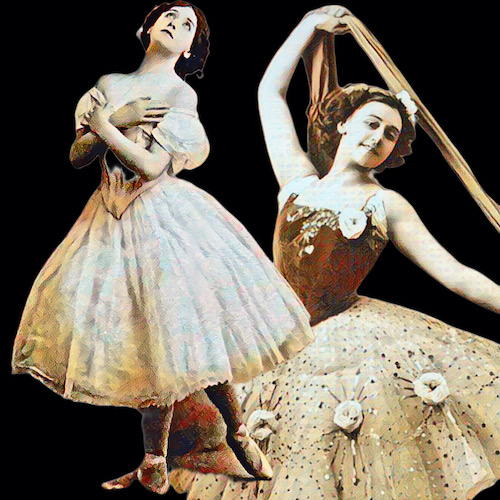

The shame was made even worse by Pavlova’s comments. “She came to me furious, and said I was indecent,” said Kasarvina, “and other nasty words were exchanged. I, of course, cried,” she recalled. She immediately comments that Olga Preobrajenska, who also witnessed the accident, made a point of being affectionate. “She was always very good to me,” she confessed, “but the main endorsement came from her father, the former dancer Platon Kasarvin. “He saw the performance and praised my pirouettes, which was a pleasure and comforted me a little”, she added, still visibly emotional.
Different origins, and jealousy since school
Anna Pavlova was born in Saint Petersburg and had a very poor childhood, falling in love with ballet when she was just 9 years old. She faced many problems, one of which was not having the body type of the dancers at the time because she was thinner and had arched feet. Her physical fragility led to her being bullied, with students calling her “broom” and “savage” and making jokes about her. From the moment she stepped on stage, she lived a life dedicated to promoting ballet throughout the world, almost like a religion. She was a superstar.
As for Tamara, who was also from Saint Petersburg, the fact that she was the daughter of a great Russian dancer, Platon Kasarvin, helped and hindered her. Yes, today she would be called “nepo baby”. Kasarvin was a teacher at the Imperial Ballet School, which is today the Vaganova School of Ballet, and among her students were Michel Fokine, her daughter’s future partner and boyfriend, and, of course, Tamara herself.
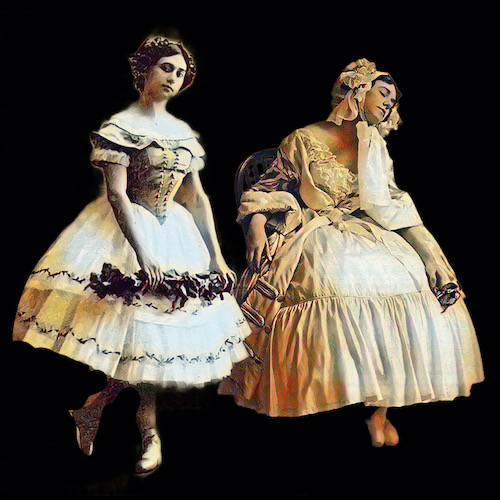
The Kasarvins were intellectuals, but they had their financial problems too when Platon was forced to retire (after a disagreement with Marius Petipa). Karsavina’s talent was so great that she graduated ahead of schedule, before turning eighteen, and her meteoric rise in the company’s hierarchy, quickly becoming one of the main ones, certainly generated jealousy.
In the battle for popularity, Pavlova reigned supreme
Both Pavlova and Kasarvina signed with Diaghilev and were in the legendary 1913 season in Paris. However, even though she became the biggest celebrity of her time, the victor in the company was Tamara Kasarvina, whose partnership with Nijinksy placed her in the pages of History.

Karsavina was unanimously considered by everyone, including the audience, as friendly and sweet. She was considered perfect for the “new” ballet idealized by Diaghilev and Michel Fokine (the latter being professional with her, but hurt because the ballerina refused to marry him). From this polarization perceived by fans, Pavlova began to be referred to as the “classicist”, dance was what mattered most and Karsavina began to be seen as the “romantic”, where expressiveness weighed more than technique.
It is undeniable that Tamara Kasarvina created some of the most important roles in classical dance: the ballerina in Petrouchka, the young woman in L’Espectre de La Rose, Les Sylphides, and many others. For Pavlova, Michel Fokine created what became her signature: The Dying Swan, a piece that she danced in all her performances and that marked the lives of many artists, including Frederick Ashton who decided to become a dancer after seeing Anna Pavlova on the stage and said that all his ballets always had her in mind as their muse.
According to critic Alistar McCalister, even at age 80, Ashton remembered Pavlova with detail and fervor, recalling details of her technique. Interestingly, one of Tamara Kasarvina’s most iconic roles, The Firebird, was supposed to be her rival, but she didn’t like Stravinsky’s music and preferred to work on The Dying Swan. Everything worked out in the end!
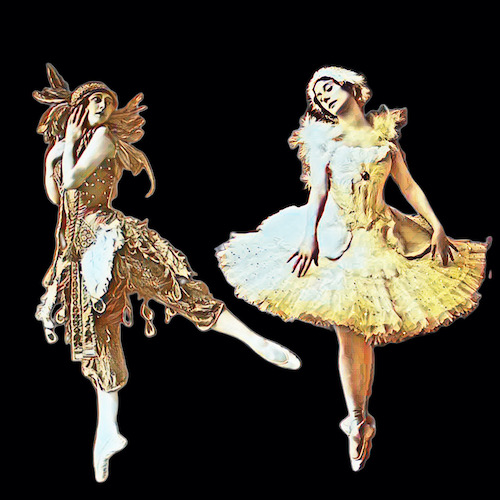
The test of time gave Pavlova victory, somehow. NY Times critic Anne Kisselgoff put it perfectly in a 1978 article about the two: “Tamara Karsavina and Anna Pavlova were the twin stars of the Russian ballet firmament that exploded in the West just before World War I and from which our part of the world has not yet recovered”, opened the article, written precisely to highlight Kasarvina’s relevance in Ballet, under the shadow of Anna Pavlova, whose determination to travel the world, combined with her unique talent, makes her still in the 21st century being synonymous with dance and known by generations who only know it through photos or snippets of videos on YouTube.
“The roles that Karsavina created for Serge Diaghilev’s Ballets Russes are danced today on every continent, and it was largely because of the artistry of Karsavina and her partner, Vaslav Nijinsky, that the Ballets Russes had their legendary impact in Paris in 1909 and in London. in 1911″, Kisselgoff explained.
After all: who was the best?
Interestingly, after the Russian Revolution, both Anna Pavlova and Tamara Kasarvina chose London as their home, with Anna always traveling. I often wonder, did they visit each other?

Tamara Karsavina was one of the founders of the Royal Academy of Dance (RAD), where she emphasized expression over rigid tradition, something represented by Pavlova. Adored by everyone and always cited as generous, Kasarvina died in 1978, 47 years after her rival.
Those who saw both dances didn’t blink at keeping the polarization alive. In the documentary A Portrait of Giselle, Anton Dolin indirectly asks if Kasarvina was better and Olga Preobrajenska responds without blinking: “No, she was the best person”, she responds clearly by comparing them.
Bronislava Nijinska held the same opinion, because when Frederick Ashton asked her “Who was the greatest ballerina of all?” she immediately replied: “Pavlova.” To be sure, he insisted: “What about Karsavina?” Nijinska replied: “Belle femme; belle femme” (Beautiful woman, Beautiful Woman).
We have to consider the matter decided, don’t we?

Descubra mais sobre
Assine para receber nossas notícias mais recentes por e-mail.
 miscelana.com
1 comentário Adicione o seu