
Look, if Muhammad doesn’t go to the Mountain, the Mountain comes to Muhammad. Henry Cavill is an actor whose name is suggested by all social networks for any relevant franchise, with a battalion of active fans always voting for him, from the roles he got with Superman or Witcher, to Aegon I Targaryen or, of course, James Bond. And since nothing has happened concerning the most famous British spy so far, it is ironic that without his last film, The Ministry of Ungentlemanly Warfare, Cavill plays the man who inspired Ian Flemming to create 007: Gus March-Phillips.

The film directed by Guy Ritchie is immediately compared to Quentin Tarantino‘s Inglourious Basterds (in my opinion, his best film), but while the brilliant 2009 film is admittedly fiction, The Ministry of Ungentlemanly Warfare tells us right away that it is inspired by a true story, which leaves us open-mouthed 100% of the time at the madness and apparent impossibility of what we see unfolding before our eyes.
The story is an adaptation of the 2014 book Churchill’s Secret Warriors: The Explosive Story of the Special Forces Desperadoes of WWII, written by Damien Lewis, and portrays the origins of the Special Air Service, a department created by Winston Churchill to carry out secret military operations during World War II and which eventually became the seed for the Special Operations Executive (SOE), still active today and which carries out espionage, sabotage, and reconnaissance.
The film’s original title, if translated literally, is more ironic than what we have in Brazil – Unruly Warfare – because as it is is not as accurate and too obvious. Because the goal was to play dirty. The Small Scale Raiding Force (SSRF) was what we see in fiction as the “00”: they have a license to kill, lie and steal, but if they are caught by either side they are on their own. What Churchill wanted was to “develop a reign of terror on the enemy coast”. Even more specifically, the film’s story focuses on Operation Postmaster, the unit’s first.

The mission required the team, led by Major Gus March-Phillips, to destroy German maritime control, breaking the blockade that was weakening the United Kingdom. To do this, they would have to board German and Italian ships in the port of Fernando Po (today Bioko, in West Africa), to steal them and sail them to Lagos.
You can read it again. They had to go to the enemy side and steal freighters with less than 10 people involved (in total) to carry out the mission. Does anyone doubt James Bond now?
Guy Ritchie‘s humor and style highlight the group’s suicidal vocation and make us forget that everything really happened. The controversy that the initiative was considered a violation of Spanish neutrality, after all, Fernando Po was a Spanish colony at the time, is equally ironized and the records of the time show the official denials of the governments.
Apart from all the behind-the-scenes ironies, including the obvious one of bringing together three British actors who were considered for James Bond (in addition to Cavill, we have Henry Golding and Alex Pettyfer, who were also on the list of possible 007s), The Ministry of Ungentlemanly Warfare is a festival of explosions, violent fights, and suspense, exactly as Ian Fleming witnessed and later used to create his famous work. By the way, Freddie Fox is great as the writer and this same joke with Fleming was the basis for another incredible film that is worth watching if you like the subject, which is The Courier, starring Benedict Cumberbatch and available on Amazon Prime Video.
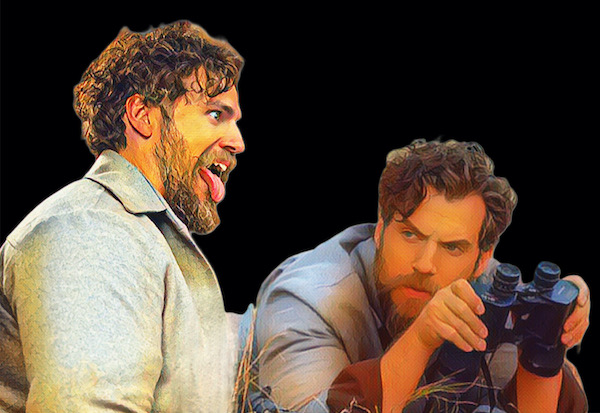

There are several interesting facts about the true story and the current film that would make another film, but if The Ministry of Ungentlemanly Warfare is a test for a Bond revival, we have our spy and our director approved. Do you agree?
Descubra mais sobre
Assine para receber nossas notícias mais recentes por e-mail.
 miscelana.com
1 comentário Adicione o seu