
If you are traveling one day and see someone in an open field (preferably on top of a mountain) running and spinning with open arms, you can be sure that in that person’s mind, they are recreating this iconic scene:
The opening scene of The Sound of Music is one of the most legendary in the seventh art, meticulously timed and technically innovative for its time. That’s right—in 2025, this classic passed down from generation to generation will be 60 years old.
The musical, which is inspired by a true story and was a hit on Broadway before hitting theaters, combines unforgettable songs, romance and the beauty of the Austrian Alps. It is one of the greatest classics in the history of world cinema and continues to enchant generations, being a reason for celebration, study and, of course, nostalgia.
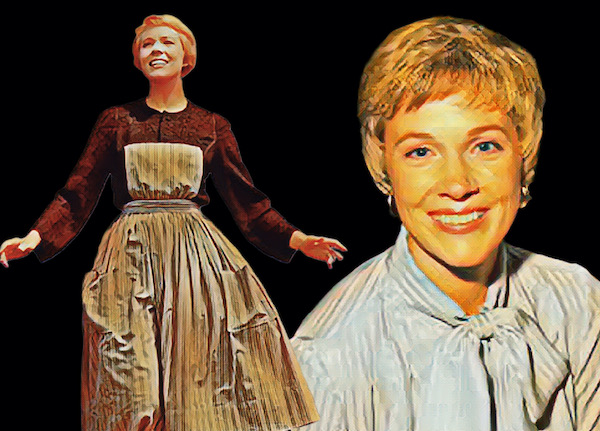
The film, directed by Robert Wise, with an impressive performance by Julie Andrews as Maria von Trapp, is more than a film: it is a cultural phenomenon. Based on the real Maria von Trapp’s memoirs, the story of a young nun who brings light and joy to the strict Trapp family, while dealing with the growing Nazism in Austria, has a plot full of music and emotions.
Songs such as Do-Re-Mi and My Favorite Things, have become immortalized and part of the collective imagination. But, like every great production, The Sound of Music also hides fascinating backstories that reveal the complexity and stories behind the magic on screen.
The Beginning: Casting
It seems obvious that the star of London musicals and, at the time, an Oscar winner, Julie Andrews, would be Maria. But she did not see this opportunity favorably precisely because she considered Maria – a nun and nanny for orphans – extremely similar to the role that made her a star in the movies, Mary Poppins. “It would be my second nanny role, almost right after the first,” the actress said in a 2019 interview, crediting her agent’s insistence to change her mind. “Arthur (Park) was very encouraging to take the job,” she said. “And I will be forever grateful for the little push over the fence that he and Bob (Wise) gave this nervous, insecure young woman.”
In the end, The Sound of Music was a great experience for Julie, who became a definitive star after the film was released.

Another good thing was the choice of Christopher Plummer to play Captain von Trapp, but for many years, it was known that he, a classic stage actor, did not like musicals and was reluctant about the project. But he accepted because he considered the role to be training for the play Cyranno de Bergerac, which he then starred in on Broadway. Years later, he acknowledged that being in this classic made all the difference in his career, regretting his bad mood during the recordings.
Behind the Scenes and Production
The behind-the-scenes work on the film was full of challenges. Directed by Robert Wise, who was already acclaimed for his work on West Side Story, he struck a unique balance between comedy, drama, and visual grandeur, but the filming process was not straightforward. Although the film was shot in Austria, many scenes were shot on soundstages, which meant a meticulous production to capture the magic of the Alps. In addition, the songs required rigorous vocal preparation for the entire cast, especially Julie Andrews.
The iconic Trapp house set, believed by many to be real, is, in fact, a meticulously constructed studio set. The exterior scenes, which showcase the stunning Austrian landscapes, were filmed on location in and around Salzburg, with the famous “Dance in the Field” scene becoming one of the film’s most iconic moments.
The Legacy: Music and the Cultural Impact of the Film
The Sound of Music not only marked a generation but also created a lasting legacy. The film won five Oscars, including Best Picture and Best Director, and remains one of the most watched and beloved films of all time. Its songs remain timeless and have been revisited in a variety of media, from stage productions to versions of other works.
Even after six decades, the film continues to be part of our culture, being broadcast during holidays and in TV marathons. Its popularity is not only due to its artistic value but also due to the way it touches on universal themes, such as family, overcoming obstacles, and the fight against authoritarian regimes.
The Musical on Broadway
The first step in the story of The Sound of Music was in 1959, when the Broadway play premiered. The musical was adapted from the book The Story of the Trapp Family Singers, written by Maria von Trapp, the real matriarch of the Trapp family, who fled Austria during the Nazi regime. However, the 1959 musical was very different from the film that would come out years later.
The Broadway version was written by Richard Rodgers (music) and Oscar Hammerstein II (lyrics), the famous duo responsible for other great musicals such as The King and I. The plot of the Broadway musical basically follows the true story of Maria, a young novice who is sent to be a governess for a widowed family with seven children, and the duo managed to create some of the most beautiful songs to follow this path.
The Broadway production had a more theatrical approach, with the story emphasizing the Trapp family’s fight against the advance of the Nazi regime, but the focus was very much on the musicality and performances, in addition to including numbers such as My Favorite Things, Do-Re-Mi and Climb Ev’ry Mountain.
Public and Critical Appreciation
The musical was an instant success, with great performances and musical numbers that became part of the popular repertoire. The original production, starring Mary Martin as Maria, was a huge success, receiving critical acclaim and winning over audiences. The Sound of Music ran for over 1,400 performances, making it one of the most successful productions of its time.
It is worth noting that, at the time, Broadway was already becoming the center of great musicals, but The Sound of Music stood out for its simplicity and optimistic message, something that resonated with audiences at the time, especially in the post-World War II period. The stage adaptation emphasized Maria’s transition from a nun to an essential member of a family and, symbolically, also the transformation of the audience through music.
The Transition to Film
The enormous success of the musical on Broadway caught the attention of Hollywood. MGM acquired the rights to adapt it for the cinema, and thus, the musical that had enchanted on stage would be transferred to the screen. Producer Saul Chaplin initially considered keeping the same formula, but it was Robert Wise‘s choice to direct the film that brought a new approach, focusing more on Maria’s story and her relationship with the Trapp family, in addition to including the historical context of World War II.
The film adaptation ended up being a reinvention of the Broadway play, with a grander production, outdoor settings, and an iconic Maria played by Julie Andrews.

The impact of six decades
The Sound of Music is still one of the most beloved films of all time and continues to be one of the most successful musical adaptations, as well as proof of how the magic of Broadway can expand, finding new ways to touch audiences, whether on stage or on screen.
Completing 60 years since its release, The Sound of Music is a perfect example of how a production can evolve, adapt, and remain relevant across generations, both on stage and on screen. It is a true legacy that, through its music, characters, and story, teaches us about the importance of family, overcoming, and, above all, the power of music to transform and inspire.
Descubra mais sobre
Assine para receber nossas notícias mais recentes por e-mail.
 miscelana.com