
After the first rejection of Étoile, whose dialogues are in allegro even when the scene would be an adagio, I return on World Dance Day to celebrate a series that navigates the universe of ballet without transforming the Art into horror.
The successes
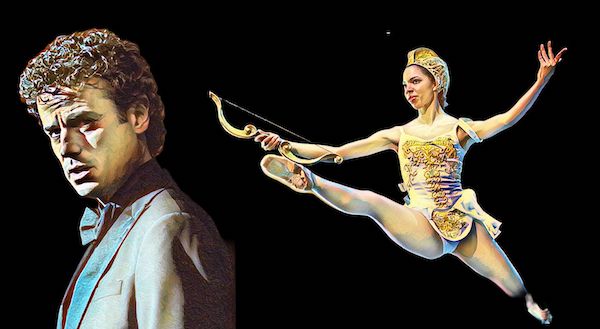
The series uses a series of real people and facts to update ballet, with precision in the dance scenes, in the precise vocabulary of steps and demands, in the personalities, in the difficulties and, above all, in the moments of magic.
Jack McMillan (Luke Kirby) and Geneviève Lavigne (Charlotte Gainsbourg) are the directors of the companies – he in New York and she in Paris – who, in addition to being former hookups, face common dilemmas to keep ballet alive.
While Jack is from a wealthy background, cultured and well-connected, Geneviève is from a working-class background, an administrator rather than an artist, but extremely perceptive. At first, I found Charlotte Gainsbourg in a comic role strange, but I withdraw my criticism. Having a woman who is the opposite of a ballerina leading the company is sensational because, without the classical restrictions, Geneviève’s practicality is coherent and interesting, a perfect counterpoint to Jack, who was born into a splendid cradle.

By the way, it’s quite curious: Cheyenne (Lou De Laâge) is also not rich and, unlike Geneviève, all she knows how to do is dance – and cause trouble. Would it be as if dance in France were more democratic and in the US more elitist? It’s implied, but never explored.
The proposal to exchange its main artists for a year to reverse the public exodus and create attractions for new generations actually hides Geneviève’s real problem: in the past, she dismissed the young Mishi Duplessis (Taïs Vinolo), who is now shining in NYC. The problem is that Mishi is the daughter of the Minister of Culture, and to ease the personal crisis she has with the government, Geneviève invests in the incredible plan (which works) to bring Mishi back. With a vision of Art, she also takes the talented (autistic) choreographer Tobias Bell (Gideon Glick) to give Paris new energy.
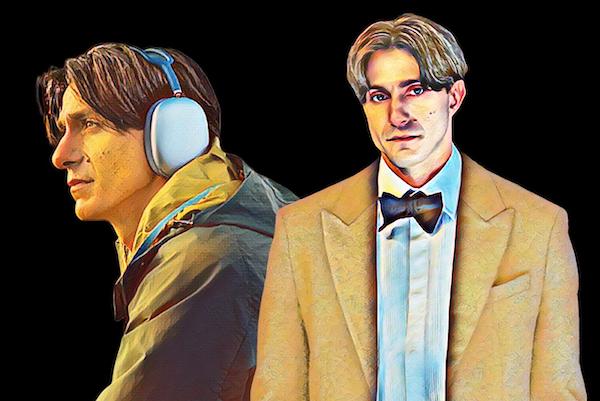
The exchange makes Cheyenne Toussant return to Manhattan, where she ends up creating a personal and professional revolution. I’ll spare everyone the SPOILERS, but here’s a hint: everything turns upside down in the last two episodes, leaving us curious about what could come next. Prime Video has not yet confirmed a second season, so there may be a question in the air…
Special appearances and inspirations
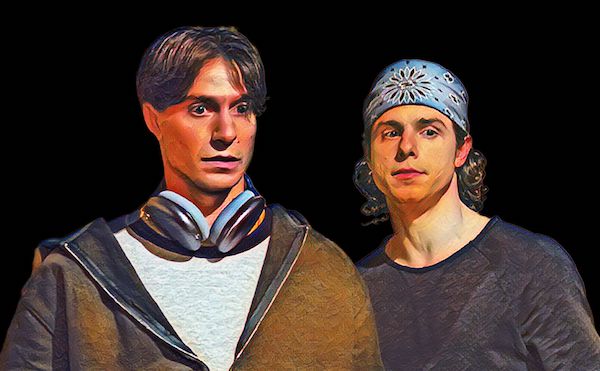
Among the stories developed, one of the best and most exciting is that of Tobias and the troubled Gilan (Ivan du Pontavice). Tobias is a mix of Nijinsky (whose failure of The Rite of Spring, in 1913, recalls the choreographer’s debut in the same Paris of Étoile), and he represents the genius of many artists, such as Christopher Wheeldon himself, who makes a cameo as himself.
Gilan is totally inspired by the Russian bad boy, Sergei Polunin, whose quarrelsome temperament was as well-known as his jumps, and Cheyenne is a version of Sylvie Gillem (often mentioned to confirm this fact). Furthermore, it is fun to see current stars like Tiler Peck playing the ballerina who recovers from a moment of paralysis on stage with a therapist glued to her ear; the great Robbie Fairchild being despised by Cheyenne; Unity Phelan, Joy Womack, and Irina Dvorovenko with occasional appearances.
In addition, just as The Turning Point showed behind the scenes at the American Ballet Theatre in 1977 and The Company, by Robert Altman, was based on the Joffrey Ballet of Chicago in 2003, Étoile managed to record in the halls of the New York City Ballet and the Paris Opera, which takes away some of the strength of both but also creates a parallel. It’s a shame that it’s barely possible to breathe, much less appreciate all of this at the same time.
The mistakes
There are great challenges in changing an interesting approach to Ballet. It was born for Drama, grew up in suspense/horror, but comedy was not something that was associated with pointe shoes. I maintain my rejection of the neurotic rhythm that prevents any dialogue from being understood the first time, especially for those who are not initiated in Dance. I also had a hard time following it.
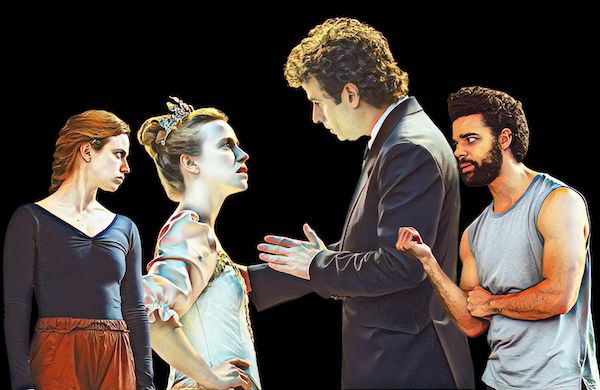
The plot is not intricate, nor is it easy either. There are hidden relationships, there are professional and personal disagreements, there is something that we do not fully understand, and that is influencing each character, especially Jack.
Luke Kirby is (beautiful) wonderful in the role; he is convincing, but he is given a somewhat superficial material for us to really connect with Jack. Is he a talentless rich kid who bought his position, or is he a rich man with great business and artistic vision? Who is his ex-wife? Where is his daughter? What happened to Cheyenne? What is with Geneviève?
Many questions would have time to develop if the script’s rush wasn’t so distressing that it prevents us from appreciating the real dance moments. That said, I want another chance for Étoile, and I’m anxiously awaiting Prime Video to give us the green light. Then, in the second act, the solos could enchant us more. The series has potential; it just needs adjustments.
Descubra mais sobre
Assine para receber nossas notícias mais recentes por e-mail.
 miscelana.com
outstanding! Famous Sculptor’s Work Fetches Record Price 2025 regal
CurtirCurtir