
On Sunday, May 4, we will have one of the most impactful scenes in The Last of Us, after having anticipated the traumatic departure of Joel (Pedro Pascal) and being dependent on Ellie (Bella Ramsey) from now on. After having played quickly in the first season, we will finally have the scene in which Ellie sings Take On Me to Dina (Isabela Merced), a moment that fans of the game have to waiting for soon.
Officially released in 1985, Take On Me, by the Norwegian band A-ha, is one of those phenomena that transcends its time. With an unmistakable melody, an explosive chorus and one of the most iconic music videos in the history of music, the song took the European trio to international stardom and helped redefine the boundaries between music, technology and visual art in the 80s.

Now a classic of the 80s, the song is always included in films and series in moments of emotion. Only in 2025 does it feature prominently in the final part of the series Adolescence, in a scene that is impossible not to be moved by, and now in The Last of Us. Let’s remember its importance.
Origins and initial versions: a struggle for perfection
Interestingly, Take On Me was not an immediate success nor did it even have that name. Before reaching its final form, the song went through several versions.
The main melody, especially the famous keyboard riff that opens the song, was composed by Magne Furuholmen when he was still a teenager in the late 1970s. He had been experimenting with melodies on his keyboard and ended up creating this fast and catchy motif, which stuck in the head of Paul Waaktaar-Savoy, his songwriting partner.
The melody originally appeared in a song called The Juicy Fruit Song, when the duo was still part of a previous band called Bridges. In 1982, with the formation of A-ha and the arrival of Morten Harket, the two decided to reuse the theme with a new arrangement.
At this point, the first incarnation of the track appeared under the title Lesson One. The group, who were still searching for a sound that would stand out in order to achieve the international career they wanted, insisted on improving the song, which reveals a combination of artistic self-criticism and vision of the future.
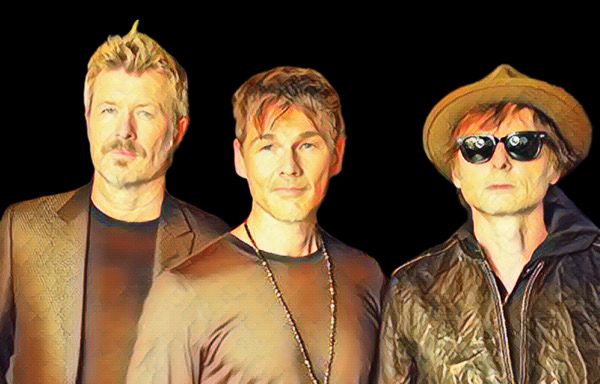
Even without a record deal in Norway, they moved to London and continued to refine the song, working with producer Tony Mansfield of New Musik. Take on Me was officially released in 1984, but failed to chart. It was only with the 1985 re-recording, combining a more polished production with a revolutionary video, that Take On Me finally found its audience. It boosted sales of the Hunting High and Low album and became a worldwide hit, putting A-Ha in the musical history of the 1980s.
The lyrics: a desperate and romantic plea
The lyrics to Take On Me are seemingly simple, but full of emotional tension. It is a plea for love — the lyricist acknowledges that he is in a shaky relationship, possibly about to end, but still invites the other person to take a chance on him: “Take on me / Take me on / I’ll be gone / In a day or two”.
This ambiguity between desire and farewell, impulse and vulnerability, is intensified by Harket’s vocal performance, which spans more than two octaves, culminating in the iconic high note that has become the song’s trademark. The line “So needless to say / I’m odds and ends / But I’ll be stumbling away” reflects an emotionally fragmented protagonist, trying to maintain balance in the face of imminent loss. According to the band members themselves, the idea was not to create something narratively complex, but rather to capture an honest feeling, with light lyrics that matched the vibrant melody.
Take On Me is, therefore, a song of desperate love, but also of emotional courage — a call to risk, a leap of faith. It is no coincidence that its title, in colloquial English, means something like “face me”, “accept me” or “try with me”, at the same time an invitation and a challenge. We’ll talk more about the lyrics later, in the context of The Last of Us.
A music video that shaped MTV culture
Today, combining the concepts of videos and music is part of every artistic process, but this is a direct legacy of what MTV was, the subscription music channel that debuted as a “visual radio”, that is, 24 hours of music in video clips.
If the millennial generation doesn’t understand the impact of music videos, Generation X grew up with them. Musicians initially reacted to the “need” to not only play, but to act in short films that transformed songs into a more complex art form. Some artists considered mixing videos and music blasphemy, but stars like Michael Jackson and Madonna embraced the new expression with fervor and became legends.
I’m making this digression to explain how having a big, impactful video on MTV changed the trajectory of the music industry, and A-ha is one of the greatest examples of this, precisely with Take on Me because it is impossible to talk about the song without mentioning its music video, directed by Steve Barron.
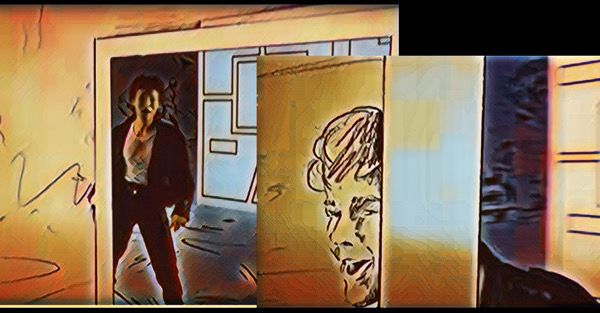
The production mixes live-action with rotoscoping animation (a technique in which animators draw frame by frame over real footage), creating a hybrid and dreamlike aesthetic. In it, a young woman (played by actress Bunty Bailey) is pulled into a comic book by a race car driver — Morten Harket himself. The video was innovative both technically and narratively, winning six awards at the 1986 MTV Video Music Awards.
This video not only propelled the song up the charts, but it also redefined the role of the music video as an art form and advertising. It was shown incessantly on MTV, creating a perfect symbiosis between image and sound that made the song a global phenomenon and is often cited as one of the most important in MTV history.
Commercial impact: a meteoric and lasting success
Take On Me reached the top of the charts in more than 27 countries, including the United States, where it reached number one on the Billboard Hot 100 in October 1985. Interestingly, the version released in Europe the previous year had gone largely unnoticed — it was the final re-recording, coupled with the innovative music video, that catapulted the track to stardom. In the UK, it reached number two on the charts, being held off by Jennifer Rush’s The Power of Love, but it still became one of the most played songs of that year.
The single sold more than 7 million copies worldwide, and the album Hunting High and Low, fueled by its success, went multi-platinum. A-ha became the first Norwegian band to achieve global fame, paving the way for Scandinavian artists in the years to come. In 2020 alone, the original video surpassed 1.6 billion views on YouTube, becoming one of the few tracks from the 1980s to reach this milestone, along with Guns N’ Roses’ Sweet Child O’ Mine and Michael Jackson’s Billie Jean.
Covers, quotes, and revivals
Over time, Take On Me has ceased to be just a symbol of the 1980s and has become constantly rediscovered by new generations. It has been covered by artists of very different styles — from the melancholic acoustic of A.C. Newman to the nostalgic synthpop of Anni B Sweet, as well as instrumental covers on saxophone or orchestra. In 2017, A-ha themselves released an acoustic version on the album MTV Unplugged – Summer Solstice, which revealed the emotional power of the melody even without the synthesizers.
The song has also become a meme, a soundtrack for parodies and animated gifs, and has been used in commercials, series, and films such as La La Land, Ready Player One, and Deadpool 2. But among all these reinterpretations, there are two particularly notable appearances — and they come from the world of video games and television, yes, The Last of Us. I’ll get to that in a moment!
Comparisons to other 1980s anthems
Take On Me is often compared to other classics that defined the sound and image of the 1980s. In terms of visual innovation, it ranks alongside Peter Gabriel’s Sledgehammer and Dire Straits’ Money for Nothing, both of which also pioneered the combination of music and animation.
Musically, it can be considered a sister to tracks like Tears for Fears’ Everybody Wants to Rule the World or Simple Minds’ Don’t You (Forget About Me) — songs that balance catchy melody, melancholy, and electronic arrangements. However, what sets A-ha apart has always been Morten Harket’s vocal virtuosity, whose range and control give the track a unique emotional dimension.
The Last of Us: love, memory, and melancholy
The presence of Take On Me in The Last of Us is more than just a soundtrack: it becomes an emotional symbol, a capsule of the past in a world in ruins. In the game The Last of Us Part II (2020), there is an optional scene in which Ellie, the protagonist of the story, finds a guitar and plays an acoustic version of the song for her girlfriend Dina. The performance is soft, hesitant, deeply moving — a form of expression and intimacy amidst chaos and pain. The scene quickly became a fan favorite for its delicacy and symbolism, and is featured in Sunday’s episode (May 4), as we saw it in the trailer images.
As I mentioned, it had already appeared before, in 2023, in the final part of the episode “Left Behind”, in which Ellie (Bella Ramsey) relives a sweet and tragic moment with Riley (Storm Reid) in an abandoned mall, before the tragedy. Therefore, doubly so, hearing Ellie sing Take on Me to Dina promises to be one of the most important moments of the season.

In the game, it enters Ellie’s repertoire because she hears it on tapes and records left in the post-apocalyptic world, functioning as a marker of a past that she never lived, with the scene in which she sings to Dina having the definitive emotional weight. In a moment of rare peace and intimacy, Ellie plays the song on a guitar that she finds in a house in a slow, vulnerable interpretation, devoid of any pop artifice — a powerful counterpoint to the original version. The song, there, represents the memory of Joel, who taught Ellie to play and who connected her with the world before the collapse. The excerpt became one of the most moving in the entire franchise, elevating Take On Me to an almost sacred status among fans, as a symbol of beauty, loss, and humanity during destruction.
This is also because the scene gives new meaning to the song’s lyrics. For example, “Talking away / I don’t know what I’m to say / I’ll say it anyway…” is Ellie confessing her insecurity – she wants to say something important, perhaps declare her feelings, but doesn’t know how to express it. Even so, she decides to speak because she feels she needs to be honest. It is a moment of courageous hesitation.
“I’m shy away / I’ll be coming for your love, okay?” mixes insecurity with courage. Ellie seems hesitant, but at the same time determined to throw herself into an uncertain love, and perhaps that is why her message remains so relevant in narratives of maturation, farewell, and transformation.
In other words, a scene to move us (and ultra-faithful to the game).
Timelessness that confirms cultural importance
Take On Me, in the end, is not just a timeless hit — it is a multimedia work of art that managed to unite music, emotion, and technology. More than a hit track, it became a symbol of an era and an inspiration for generations. A-ha may have had other hits, but it will always be remembered for having created one of the most remarkable audiovisual experiences in pop culture.
Ultimately, Take On Me survived — and continues to resonate — because it embodies a very human sensibility. It is a song that talks about throwing yourself into the unknown, loving without guarantees, singing to the highest note, even when everything around you seems about to fall apart.
This emotional universality, combined with its nostalgic appeal and aesthetic strength, made the song more than a pop hit: it became a cultural symbol. And like all good art, it continues to transform over time — whether in the hands of Ellie in The Last of Us, or in the headphones of someone walking through the city in 2025, still driven by the same impulse: to live, to feel, to try.
Descubra mais sobre
Assine para receber nossas notícias mais recentes por e-mail.
 miscelana.com
1 comentário Adicione o seu