
At the heart of Edith Wharton’s Pulitzer Prize-winning novel, The Age of Innocence, lies the impossibility and scandal of divorce within “a decent family.” The heroine, Countess Ellen Olenska, is betrayed and humiliated by her husband, but when she dares to consider a formal separation, she is met with a society turning against her. Her true love, Newland Archer, who is engaged to her cousin, is tasked with convincing her to remain in a sham marriage. When he falls in love with Ellen himself, he confesses in a legendary line: “Women should be free — as free as we are,” he declared. “I’m sick of the hypocrisy that would bury a woman alive rather than let her divorce a man.”
This quote encapsulates the novel’s central moral and social conflict: the hypocrisy of a society that demands women uphold appearances at the cost of their own happiness — or sanity. It also reflects Archer’s internal struggle; even while recognizing the injustice, he ultimately succumbs to convention.
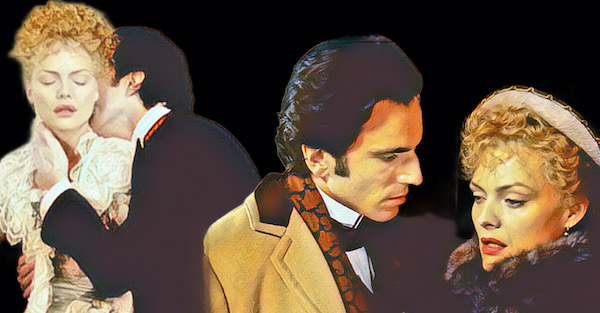
We’ve long drawn parallels between The Gilded Age and the works of Edith Wharton and Henry James, but Season 3 draws even closer to these authors through an unexpected character: Aurora Fane.
Confession: when teasers hinted that divorce would be part of the new season’s plot, everyone assumed it would involve Bertha and George Russell — not necessarily because of real problems between them, but because they are loosely based on the Vanderbilts, who famously divorced in that period, causing scandal and drama in New York. I was always confident that Julian Fellowes wouldn’t take the most literal route. I still believe the major marital upheaval lies in the Astor household (Caroline’s eldest daughter is said to leave her husband for another man), but early spoilers reveal the real scandal hits much closer to the van Rhijn family than they’d like.
Aurora Fane: Old Guard Diplomacy Under Siege
Among the many characters gliding through the glittering parlors and ornamented staircases of The Gilded Age, Aurora Fane remains one of the most discreet and yet essential to the social equilibrium in Julian Fellowes’s creation. As the niece of Agnes van Rhijn’s late husband — and thus cousin to Oscar van Rhijn and Dashiel Montgomery — Aurora welcomes young Marian Brook into the family as a relative and friend, effortlessly and without resistance.
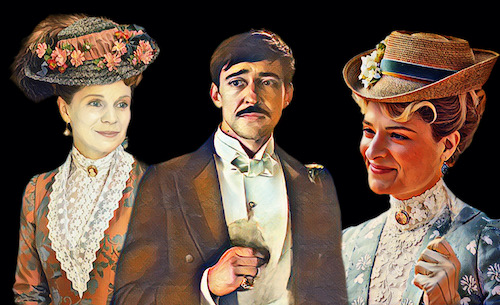
Aurora is the kind of character who never takes center stage, but whose actions and words subtly shape the direction of events. Elegantly portrayed by Kelli O’Hara — a Tony-winning Broadway actress known for her refined voice and noble presence — Aurora embodies the more conciliatory and forward-thinking face of New York’s aristocracy at the end of the 19th century.
Aurora belongs to the exclusive circle of New York’s old money, the old guard descending from the earliest great names of American society. At the time depicted in the series (early 1880s), this group feels increasingly threatened by the rise of a new elite: the industrial and railroad millionaires like George Russell and his wife, Bertha. Though discreet, Aurora never adopts the rigid, prideful stance of her aunt Agnes, who refuses to acknowledge the newcomers. She may not fully embrace them, but she’s far less aggressive.
This open-mindedness becomes an asset, as she’s gradually drawn into the role of mediator — a bridge between tradition and transformation. She understands the value of etiquette, pedigree, and convention, but she also recognizes the inevitability of change and the growing power of the nouveaux riches. That nuanced awareness places her in a vital behind-the-scenes role amid New York’s social tensions — acting as a sort of diplomatic envoy for the old world.
Relationships, Connections, and Betrayal
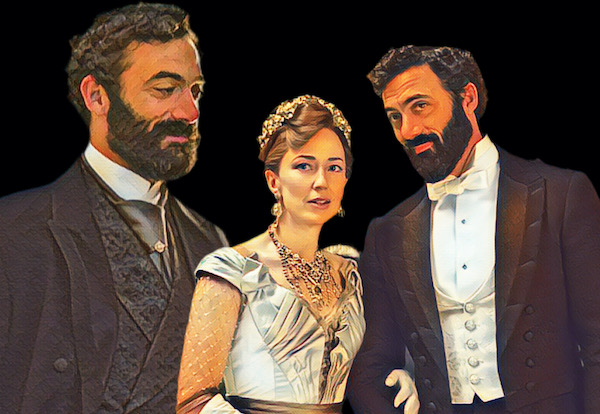
Aurora is married to Charles Fane (played by Ward Horton), a quiet, respectable New York alderman who dutifully attends social functions but rarely challenges his wife’s decisions.
When both Charles and Aurora become entangled in a feud with the Russells, sparked by the snobbish Morrises, they find themselves pawns in George’s calculated revenge against those who slighted Bertha. Charles pressures Aurora to help Bertha gain entry into high society, and Aurora, with both grace and loyalty, accepts the task — even at the cost of damaging her relationships with the Astors and her formidable aunt. It is Aurora, after all, who introduces Ward McAllister to Bertha and quietly offers support and guidance from the sidelines.
Aurora also attempts to assist her cousin Oscar in finding a wife (though she is unwittingly deceived by Maud Beaton and leads Oscar into his own humiliation), and she takes an interest in securing a good match for Marian.
By this point, Marian and Aurora have become close friends. It was Aurora who first detected Tom Raikes’s dubious intentions in Season 1 and discreetly warned Marian, acting both as confidante and protector. Marian will surely not abandon her now.
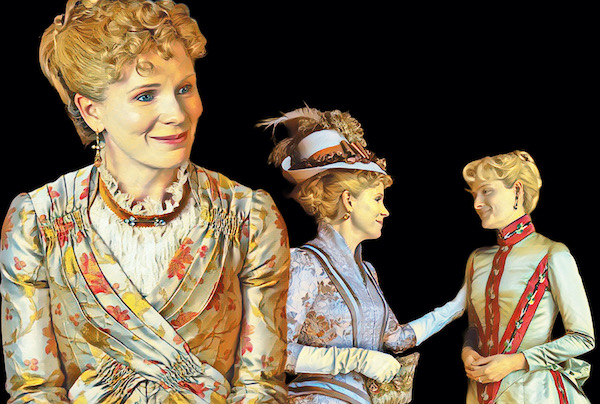
Because in one of the most dramatic turns of Season 3, Aurora’s seemingly conventional and stable marriage crumbles. She discovers that Charles is having an affair. More than that — he is emotionally involved with his mistress, leaving no room to maintain a façade.
And it gets worse: Charles wants a divorce. Despite being the betrayed spouse, Aurora is swiftly judged and socially isolated by a society that views divorce as more damning for women than for unfaithful men. Divorce in Gilded Age New York was more than a scandal — it was a social death sentence. As noted in Ward McAllister’s book Society As I Have Found It (1890) — which will also appear this season — women involved in divorce, no matter how justified, were labeled “problematic,” “fallen,” and unworthy of social inclusion. The burden of scandal fell almost entirely on them, regardless of the facts.
Aurora’s decision to proceed with the divorce shatters the image of the silent, perfect lady of high society. She remains graceful, but now directly confronts the hypocrisy of her class — and pays dearly for her integrity. Her arc reflects the most tragic and yet most modern aspect of her personality: Aurora becomes the embodiment of the aristocratic woman who, though trained to yield, ultimately chooses to resist.
Dignity as Resistance
Aurora Fane is never scandalous or overtly rebellious, but she is unwavering in her calm strength — and now, with the revelation of her husband’s betrayal, in her quiet courage. Throughout the series, she acts with discretion, avoiding overt conflict, but she does not compromise her principles. In choosing divorce, she challenges not only her husband but the entire patriarchal structure of elite New York.
This controlled dignity sets her apart from Marian Brook’s impulsiveness and Bertha Russell’s relentless ambition. Aurora follows her own path — painful, yet consistent with her values. She does not seek to climb socially, nor to destroy anyone. She simply claims the right to live with honesty.
Kelli O’Hara: Refined Strength
The casting of Kelli O’Hara as Aurora Fane is inspired. Known for her roles in musicals like The King and I (which earned her a Tony), O’Hara brings a quiet, composed elegance to the role. Her performance is never theatrical — it’s grounded in the authenticity of a woman who understands the social game as a delicate art — until she is forced to defy it.

The “D” That Destroyed Women
Divorce was rare, stigmatized, and legally difficult — especially for women. American society operated under a rigid Victorian morality, in which marriage was seen as sacred and unchangeable, particularly among the upper classes. To disrupt that ideal was scandalous, even if the marriage was miserable, abusive, or riddled with betrayal.
During the Gilded Age, no-fault divorce didn’t exist. The only legal way to obtain a divorce was to prove someone was at fault — usually via:
- Adultery (the most accepted)
- Extreme cruelty (with substantial proof)
- Abandonment or desertion (after a set period)
- Bigamy or impotence (rarely accepted)
Laws varied by state. In New York — the setting of The Gilded Age — the only legal ground for divorce was adultery, and it had to be proven indisputably, making the process painfully public and humiliating.
Wealthy couples often staged scandals to facilitate divorce: husbands might hire prostitutes or create “setups” to take formal blame and free their wives — a practice known as “reverse convenience divorce.”
No-fault divorce was only legalized in the U.S. in 1969. Before then, divorce was nearly impossible, no matter how rich you were.

“In the patriarchy, if the man initiated the divorce, it didn’t really matter,” explained series producer Sonja Warfield. “A woman’s identity was tied up in being Mrs. George Russell or Mrs. Charles Fane. That was her place in the world.” In other words, like Ward McAllister in his memoir, Aurora is subjected to a kind of social suicide. Or rather: a social assassination.
By placing Aurora Fane at the center of one of the show’s most devastating storylines — despite her having done nothing wrong — The Gilded Age exposes the deep injustice of the era. As glimpsed in the trailer, Marian is heartbroken, witnessing how Aurora followed every rule. Yet because of Charles’s selfishness, it is Aurora who will face exile, highlighting the hypocrisy of a society that punishes the betrayed woman.
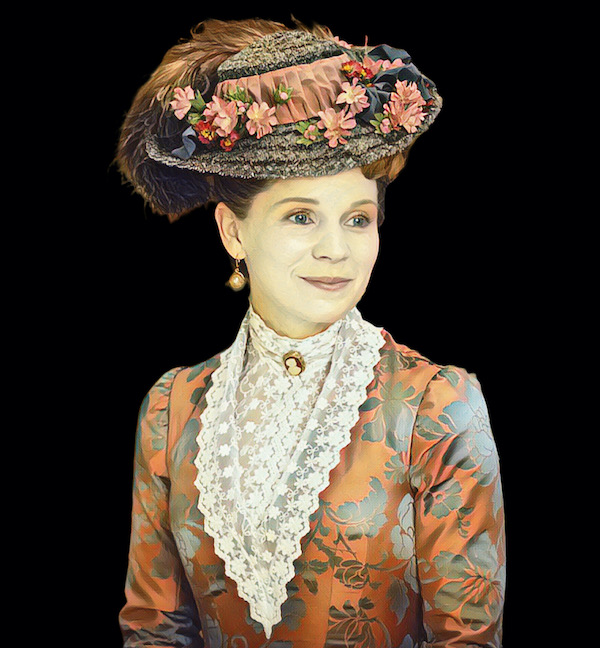
Aurora thus becomes a symbol of the tension between old values and the slow but inevitable rise of female emancipation. She is a powerful portrait of the woman who fulfilled every social expectation — yet ultimately refuses to be reduced to a mere ornament. A shame it takes such pain for her to shine.
Descubra mais sobre
Assine para receber nossas notícias mais recentes por e-mail.
 miscelana.com