
I must confess that when I danced, I found the music of the ballet Sylvia somewhat difficult because it is almost a symphony, even though it uses leitmotifs and includes one of the most performed pas de deux in galas and competitions. I appreciated the humor in the melodies of Coppélia, but Sylvia was more complex for me. That is in the past. Today, it is one of my favorite ballets, and the fact that it is once again in the repertoire with the American Ballet Theatre made me rethink its history. When it turned 145 years old in 2021, I did a summary here at Miscelana, but today I revisit it as a curiosity.
In 19th century Paris, amid a vibrant and constantly changing cultural scene, composer Léo Delibes left a mark that crossed borders and generations. Born in 1836, Delibes was neither an enfant terrible nor a loud revolutionary. On the contrary, his path was built with delicacy, elegance, and a refined sense of form, color, and musical drama. Alongside names such as Georges Bizet and Jules Massenet, he helped define late French Romanticism. But it was in the world of ballet that Delibes achieved his most silent—and enduring—revolution.

Before Delibes, ballet music was seen almost as background, a scenic artifice serving the dance, but rarely challenging or elevating the choreography. With Coppélia (1870) and Sylvia (1876), he subverted this logic. He elevated ballet music to a level that could be enjoyed even offstage, in salons, concerts, and, over time, in recording halls. His contribution is comparable to that of Tchaikovsky, who Delibes himself would directly influence.
Without a doubt, Coppélia is his most famous work, born from a meeting between a fairy-tale atmosphere and a plot with gothic touches—inspired by a tale by E.T.A. Hoffmann, where a mechanical doll is mistaken for a real young woman. The adaptation by choreographer Arthur Saint-Léon softened the darker elements of the narrative and transformed the story into a romantic farce, with a village flavor and popular energy. It was there that Delibes shone: he created a lively, melodious, and theatrical score, combining folk dances—such as mazurkas and czardas—with rich but transparent orchestrations. The Mazurka from the first act and Swanilda’s Waltz became favorites among musicians and audiences and are still part of symphonic recitals today.
The success of Coppélia, however, was marked by tragedies, as I also mentioned in that 2021 post. Shortly after the premiere, the young ballerina Giuseppina Bozzacchi, who created the role of Swanilda, died of cholera at just 17 years old. Also in that year, 1870, the Franco-Prussian War broke out, profoundly shaking Parisian cultural life. Still, Coppélia survived and thrived. More than a momentary success, it inaugurated a new ballet model: narrative, musically coherent, and capable of existing as total art.

If Coppélia enchanted with lightness and color, Sylvia, created six years later, revealed a more ambitious and refined facet of Delibes. Now fully established, he received the commission for a mythological ballet based on the pastoral play Aminta by Torquato Tasso. Sylvia moves away from the comic tone to plunge into ethereal, sensual, and heroic atmospheres. Right from the overture—a flawlessly constructed symphonic piece—one notices the elevation of language: the ballet no longer begins lightly but with grandeur and dramatic tension.
The score of Sylvia is full of contrasts and harmonic inventions. Delibes explores the orchestra freely—highlighting woodwinds, harps, and brass with clarity and daring. The sensuality of the nymphs, the bravery of the hunter Aminta, the dominion of the goddess Diana: all is translated musically with precision and poetry. Among the most famous excerpts is the “Ouverture”, often performed independently in symphonic concerts, with its heroic lyricism and Wagnerian architecture. Another highlight is the “Pizzicato” from Act III—a light, witty, and rhythmic piece written entirely for pizzicato strings (plucked strings), which has become a favorite of orchestras and contemporary choreographers for its clarity and brilliance.
Also notable is the “Marche et Cortège de Bacchus”, which closes the ballet with Dionysian exuberance and was reorchestrated by figures such as George Balanchine and even used in films and animations. These excerpts, though differing in character, reveal Delibes’ absolute mastery over musical storytelling: each piece has its own identity and, at the same time, serves the construction of a continuous dramatic arc.
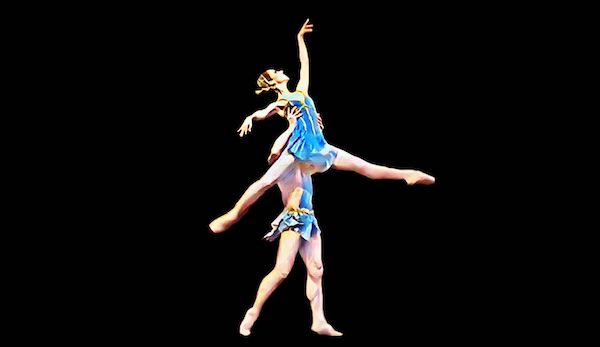
Curiously, Sylvia did not have immediate success. Critics considered the libretto confusing and the choreography uninspired. But the music—refined, dense, with bold harmony and innovative timbres—endured. Among those who recognized it as a masterpiece from the start was none other than Piotr Ilyich Tchaikovsky.
In 1877, shortly before beginning to compose Swan Lake, Tchaikovsky wrote to his editor and friend Nikolai Kashkin saying:
“Delibes’ ballet Sylvia is a jewel. Such grace! Such melodic richness! Such refined orchestration! Better than anything Minkus or Adam did. If I manage to do something at the same level, I will have fulfilled my role.”
The letter is dated January 1877, a time when Tchaikovsky was already deeply involved with the idea of transforming ballet into elevated musical art—and Sylvia showed him that this was possible. This sincere praise is more than an opinion: it is the testimony of an aesthetic turning point in European ballet, where music ceased to be subservient to dance and began to build meaning on its own.
It is curious to note that Delibes did not restrict himself to ballet. His opera Lakmé, premiered in 1883, also became a landmark, especially because of the delicate and enchanting “Duo des Fleurs”—a duet for soprano and mezzo-soprano that continues to move audiences in films, commercials, and concerts around the world. The piece reveals Delibes’ mastery of melody and instrumental texture: the voices intertwine fluidly, accompanied by a light, almost transparent orchestration, in a style that even anticipates Impressionism.


But it is in ballet where his influence is deepest. Delibes treated music as a dramatic language, creating arcs, atmospheres, and characters through timbre. He rejected functional superficiality and showed that dance deserved music with the same emotional density as opera. He paved the way for the modern integration of score, movement, and emotion.
Delibes died young, in 1891, at 54 years old. His life was discreet, without scandals or great travels—but his legacy continues to resonate on stages worldwide. Coppélia and Sylvia are not just milestones of the classical repertoire: they are symbols of music’s capacity to transcend time, reinvent gesture, and give voice to dance. Delibes did this with grace, intelligence, and an ear attuned to the eternal.
Descubra mais sobre
Assine para receber nossas notícias mais recentes por e-mail.
 miscelana.com