
With the filming of Season 3 of House of the Dragon underway, tensions between fans of the show and readers of Fire & Blood keep escalating. HBO MAX’s adaptation of George R.R. Martin’s narrative has sparked increasingly negative reactions, especially among longtime followers of the Dance of the Dragons. The changes don’t seem to be slowing down — on the contrary, they appear to be intensifying. The creative team’s justification seems increasingly focused on the idea of “preserving surprises,” even for those who’ve read the book.
But if that’s the case — is it really worth it? Books succeed because of the stories they already tell, not because of reinterpretations that borrow their elements to invent something else.
And so far, HOTD has changed a lot:
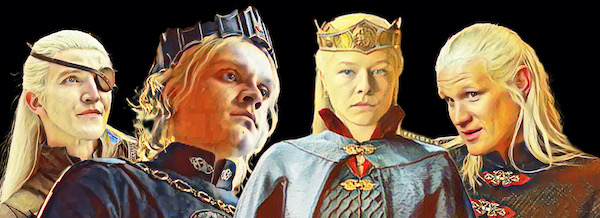
1. Rhaenyra and Alicent’s ages and friendship
In the book, Alicent is much older and was never Rhaenyra’s childhood friend. The show turns them into best friends, creating emotional tension that doesn’t exist in the source material.
The idea was to center two women as protagonists — even on opposing sides. It’s not a bad change in itself, but it eliminates some background about Alicent and Rhaenyra’s grandfather and makes Alicent seem more calculating by being older than her stepdaughter.
2. Alicent and Viserys’ romanticized marriage
Fire & Blood portrays the union as a political arrangement; in the show, Alicent marries the king in a nearly passive and emotional way, subtly manipulated by Otto Hightower.

3. The absence of Maelor Targaryen
The youngest son of Helaena and Aegon II, crucial to future events, is completely omitted in the show — causing major continuity issues, especially in the Blood and Cheese scene. Arguably the most damaging and complex change of all.
4. Criston Cole killing Joffrey Lonmouth publicly
In the book, Joffrey dies during a tourney. On the show, Criston brutally murders him at a pre-wedding dinner — which raises questions about his total lack of punishment.

5. Laenor Velaryon escaping with Qarl Correy
Instead of being killed as in the book, Laenor fakes his death and flees — easing Rhaenyra and Daemon’s moral burden and profoundly altering the succession. A strange choice, especially since Rhaenyra, not being widowed, had no legal grounds to remarry — making all her children technically illegitimate.
6. Daemon murdering Rhea Royce
In the book, Rhea dies in a “fall from her horse.” The show explicitly shows Daemon killing her, emphasizing his darker side. This change was interesting and more direct.
7. Laena Velaryon’s dragon’s death
Rather than dying trying to fly again, Laena chooses to be burned by Vhagar — changing her agency and dramatizing the scene for visual impact.
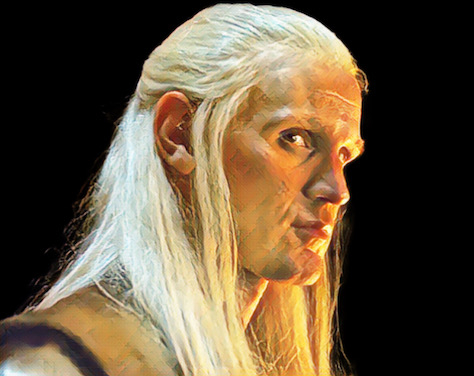

8. Vaemond Velaryon as Corlys’ brother
In the books, Vaemond is his nephew. The show makes him a brother, altering family dynamics and the weight of his challenge to Rhaenyra.
9. Omission of Daeron Targaryen
Daeron, Alicent’s fourth child and a dragonrider, plays an important role in the war but has yet to appear on the show — fueling speculation and frustration. He’s expected in Season 3, including a leaked scene where he’s handed over to Daemon, something that never happens in the book.
10. Expanded relationship between Mysaria and Daemon
The show gives Mysaria far more political agency, while in the book, she’s a marginal figure. It also implies she was Otto’s informant, meaning the gossip that separated Viserys and Daemon came from her.
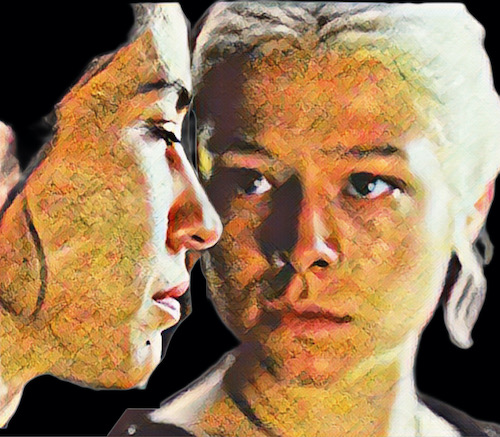

11. Lucerys Velaryon’s “accidental” death
In the book, Aemond kills Lucerys deliberately, triggering the war. The show reframes it as an accident — softening Aemond’s image but weakening the tragic weight of the story.
12. The softened Blood & Cheese attack
In the book, Maelor is chosen and sacrificed. With his absence on the show, Jaehaerys is killed without the layered threat seen in the source — diminishing Rhaenyra’s vengeance and Helaena’s trauma.
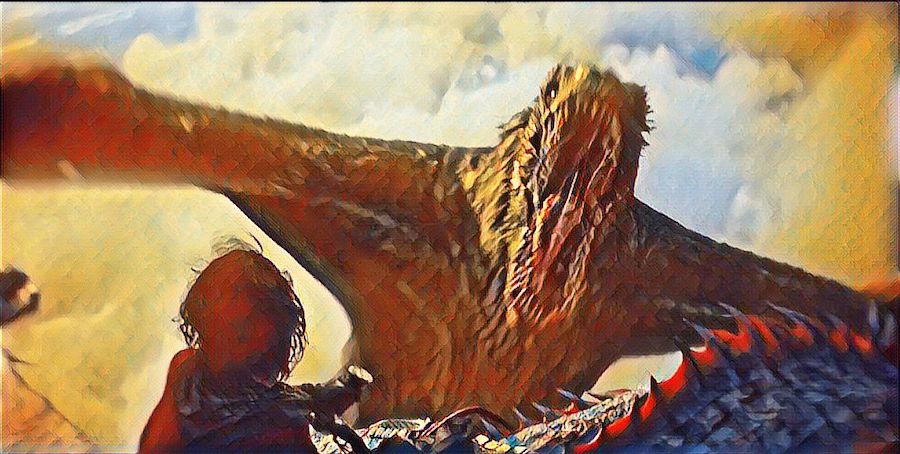

13. Helaena as a passive victim
In the book, she obeys the cruel command. In the show, she flees in horror. This alters her psychological trajectory and later causes instability. She also has prophetic visions — never mentioned in the book.
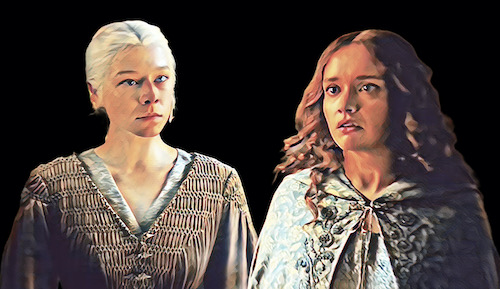
14. The Alicent–Rhaenyra reunion (which never happens in the book)
In Season 2, the two meet and even share empathy — in stark contrast to the book, where they never meet again after the coronation and maintain deep hatred.
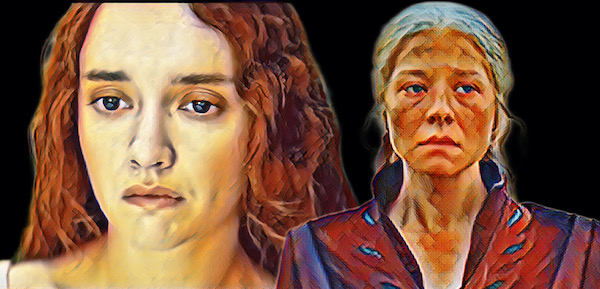
15. Alicent and Criston Cole as lovers
In the series, Alicent Hightower and Criston Cole are portrayed as lovers — a major deviation from the book, where their relationship is strictly political. This change significantly alters the power dynamics within the Greens, suggesting that Criston acts out of passion or personal loyalty rather than political conviction. It also undermines Alicent’s strategic agency, as her decisions now appear to be driven by emotional attachment to Cole, rather than solely by her desire to protect her children and her status at court. The shift has drawn criticism for weakening the moral complexity of both characters, turning what was once a tense, pragmatic alliance into a story of desire and emotional dependence.
16. The absence of Mushroom
The alternative, bawdy narrator of Fire & Blood, Mushroom, is excluded from the show — removing comic relief and critical nuance about the nobility.
17. Aemond: more ambiguous and tragic
While the book presents Aemond as cruel and impulsive, the show makes him more introspective, strategic, even remorseful — especially with Lucerys, whose death seems unintentional due to Vhagar’s disobedience.

18. Viserys I’s altered personality — more benevolent and apathetic
In Fire & Blood, Viserys I is politically active, even if peaceful. The show portrays him as physically and emotionally weakened — passive, sickly, and ruled by feelings. While this humanizes him, it also shifts the weight of his role in the succession crisis.
19. Hugh Hammer’s new origin (linked to Viserys and Daemon?)
In the show, Hugh claims to be a Targaryen relative — never confirmed in the book, where he’s simply a common bastard with Valyrian blood.
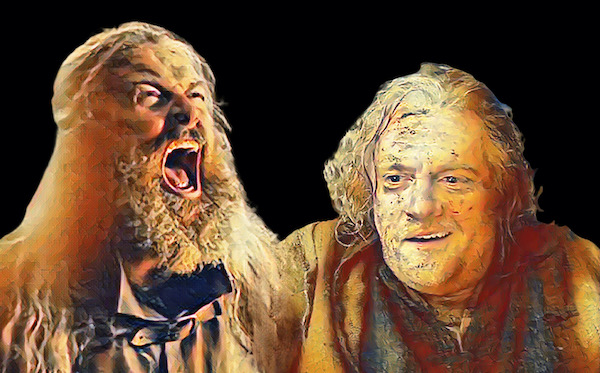

20. Leaked Season 3 scenes: Daemon receives Daeron after defeating Ormund Hightower?
In the book, Ormund Hightower dies differently, and Daeron is never captured. The leaked footage suggests a brand-new narrative arc, altering events and the war’s political geography entirely.
I might recall more changes soon — the series seems to be rewriting more and more, including essential elements of the Dance of the Dragons’ tragic arc. The main justification seems to be “avoiding spoilers for book readers” or “adding emotional complexity,” but the growing risk is a complete distortion of the original text.
Book accuracy no longer seems to be a priority. The question remains: is it worth retelling a story if it becomes unrecognizable?
Descubra mais sobre
Assine para receber nossas notícias mais recentes por e-mail.
 miscelana.com
1 comentário Adicione o seu