
From the very beginning of her songwriting career, Taylor Swift made it clear that her work isn’t just about personal stories — it’s also about crafting an entire mythology. And in that universe, few sources of inspiration recur as often as the golden age Hollywood divas. These women, with their magnetism, talent, and control over their own image, are more than aesthetic references for Swift: they are cultural codes she updates, retells, and transforms into pop narrative.
Among them, Elizabeth Taylor holds a central place. She was a playful nod in …Ready For It? (“Burton to this Taylor”), a visual muse in the controversial Wildest Dreams video — directly inspired by the sweeping romances Elizabeth filmed with Richard Burton in the 1950s — and even a point of reference in intimate moments, like when Swift, on her 34th birthday, received an opal ring and joked, “This is a present for Elizabeth Taylor, not for me.” Her friend Keleigh Teller shot back with the perfect response: “My Elizabeth Taylor.”
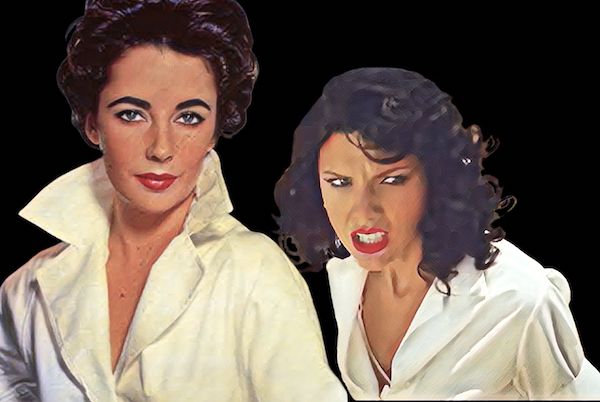

Now, in her 12th album, The Life of a Showgirl (set for release on October 3), Elizabeth moves from cameo to leading role. The second track bears her name, and Swift explained on the New Heights podcast that the song was inspired by the feeling of getting through a performance — in her case, the physical and emotional whirlwind of The Eras Tour — and ending the night exhausted but victorious, ready for two more shows in a row. It’s glamour as resilience, something Elizabeth herself understood well. Fans, of course, reacted like only a fandom trained for nearly two decades could: they went wild with theories, parallels, and speculation, making the announcement a global trending topic within minutes.
The parallels are obvious. Both started young (Taylor at 16, Elizabeth at 12), both reached their peak stardom in their 20s and 30s, and both lived under relentless media scrutiny of their relationships. The connection is even acknowledged by the family. Christopher Wilding, Elizabeth’s son, has called himself a “Swiftie” and praised the singer’s courage, comparing her political stance to his mother’s spirit — like when Swift clapped back at then-candidate JD Vance’s misogynistic jab by calling herself a “Childless Cat Lady” and endorsing Kamala Harris.
Elizabeth Taylor isn’t the only screen legend on Swift’s map of references. On Midnights, she closed the album with “Clara Bow,” reviving the silent film star whose image embodied both the magnetism and the fragility of female fame. The song reflects on how the industry builds up — and discards — its muses, a theme Swift knows all too well.


From Wildest Dreams to “Clara Bow,” from the lush imagery of The Life of a Showgirl to Elizabeth Taylor’s iconography, Swift is sketching her own place in that lineage. Like the women she admires, she knows that glamour isn’t just sparkle: it’s narrative, control, resilience, and, at times, survival. By singing about these women, she’s not just paying tribute — she’s claiming her spot in the same gallery.
With The Life of a Showgirl, Taylor Swift seems to be taking her relationship with her muses a step further. By naming a track after Elizabeth Taylor and channeling the spirit of icons like Clara Bow in others, she’s not only revisiting the glamour of another era but reframing it through the lens of her own career. Balancing the opulence of image with the rawness of experience, Swift is building an album that promises to be both spectacle and confession — reinforcing her place among the women who, with talent and strategy, turned fame into art.
Descubra mais sobre
Assine para receber nossas notícias mais recentes por e-mail.
 miscelana.com