
I have a problem with these Netflix documentaries. Unknown Number: The High School Catfish is the most recent example. For more than 40 minutes, we watch interviews and reconstructions that present a mother who appears supportive, worried, and involved, as if she were just another victim of her daughter’s ordeal. We see Kendra Licari speaking naturally about Lauryn’s suffering, almost as if she were a collateral casualty of the harassment. Only later does the film drop the bombshell: Kendra herself was the author of the anonymous messages, the one responsible for more than a year of relentless abuse.
Yes, as a narrative device, the impact is enormous. The surprise works like a cinematic plot twist. But I can’t help questioning the ethics of this choice. How far can you manipulate the order of facts to create a dramatic effect before it stops being reporting and becomes spectacle? Everyone has the right to tell their side of the story, of course. Yet giving so much screen time to someone directly involved in the crime—without the immediate counterpoint of the investigation—can feel like complicity with the performance. This is the recurring dilemma in Netflix’s “true crime”: where does journalism end and entertainment begin?
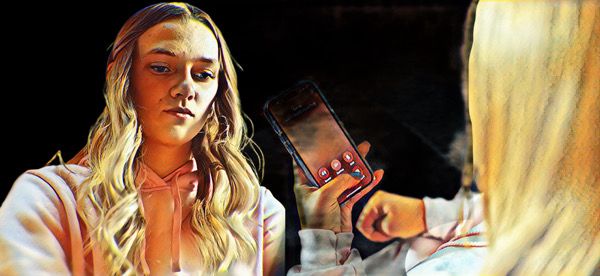
When you look at the facts, the case is even more disturbing than the documentary lets on. In October 2020, Lauryn, just 13 years old, received her first anonymous message. It seemed like typical teenage gossip: she supposedly hadn’t been invited to a Halloween party, and her boyfriend Owen was allegedly interested in another girl. But the messages didn’t stop. Soon they became more aggressive, insulting her appearance, attacking her self-esteem. Then came threats, vulgar texts, and even suggestions that she should kill herself.
The harassment became suffocating. Dozens of messages a day—sometimes fifty—flooded in, sent through apps that masked the sender’s number. Owen became a target as well. For over fifteen months, the teenagers lived under siege, unable to understand who could possibly be behind this campaign of hate.
At first, the suspicion was obvious: classmates. Even one of Lauryn’s close friends, Khloe Wilson, came under investigation until evidence cleared her. Local police couldn’t make progress because the apps effectively hid the sender. It was only when the FBI got involved that the case turned.
Digital forensics traced IP addresses, analyzed patterns, and gradually ruled out the teenagers. Finally, in 2022, the shocking truth emerged: the messages were coming from the devices and network of Kendra Licari—Lauryn’s own mother. The woman who appeared on camera as a shaken parent was in fact the perpetrator of the torment.
The revelation devastated the community. Kendra was considered a dedicated mother, even coaching the school’s youth basketball team. No one could imagine that she spent night after night generating fake numbers and profiles just to torment her own daughter. The motives remain murky. In the documentary, she references past traumas, including being raped at 17, and intense anxiety as Lauryn approached the same age. Some experts have suggested parallels to Munchausen by proxy, though no formal diagnosis has ever been made.
In December 2022, Kendra was arrested. In 2023, she pleaded guilty to two counts of stalking a minor and unlawful use of electronic devices. Her sentence: 19 months to 5 years in prison. She ended up serving just over a year and a half before being released in August 2024. Today, she is on probation until at least 2026, barred from contacting Lauryn and required to undergo counseling.
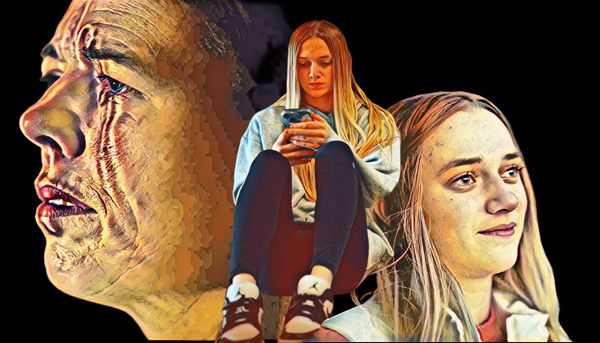
The family’s life, of course, never returned to normal. Lauryn’s father, Shawn Licari, divorced Kendra and assumed full custody of his daughter. Lauryn, now 18, has cut ties with her mother but has cautiously said she might consider reconciling someday. She has expressed interest in studying criminology, perhaps as a way of turning trauma into purpose. Owen went on to college, and Khloe, wrongly suspected at one point, continues to rebuild her life after the damage to her reputation.
For Beal City, a small and tight-knit community, the scandal left scars. More than the horror of cyberbullying, the real shock was that the threat came from inside the home. Schools and families now talk more openly about digital safety, and the town has become a symbol of how abuse can take unimaginable forms.
And that’s why, when I watch Unknown Number, I can’t just be caught up in the surprise of the storytelling. What unsettles me is precisely how Netflix delays the revelation to maximize the shock. It works as entertainment, yes, but it feels unfair to reality: this is not just a suspenseful narrative, it’s the real life of a teenager betrayed by her own mother. And that, to me, is the true horror of the story.
Descubra mais sobre
Assine para receber nossas notícias mais recentes por e-mail.
 miscelana.com