
From the moment cinema learned how to portray fear, it seems it also learned how to silence women. What began as an aesthetic gesture — the male gaze controlling the female body — became one of the most powerful allegories of doubt and guilt. In every frame, the woman who sees too much, speaks too much, or feels too much is disbelieved. And almost always, she pays for it.
In Gaslight, the film that gave a name to an entire form of psychological manipulation, a woman is slowly convinced she has gone mad. In Rebecca, she is erased by the shadow of another; in Vertigo, she is transformed into the copy of a dead woman. These stories repeat themselves under different disguises — suspense, noir, melodrama, horror — but all stem from the same root: the discrediting of the female experience as a possible truth.


Cinema turned gaslighting into an art form and the idea of the double into a prison. The woman, trapped between what she feels and what others say she feels, becomes both the victim and the narrator of her own doubt. Across the decades, directors like Hitchcock, De Palma, Bergman, and Lynch turned this dynamic into spectacle: the gaze that observes, the lens that distorts, the reflection that lies. The exchange of identities — physical, symbolic, or psychological — becomes the mirror of that violence: the female body as a territory owned by someone else’s vision.
But when the gaze is inverted, the structure collapses. Gone Girl, The Girl on the Train, The Woman in the Window, and The Woman in Cabin 10 reclaim the disbelieved voice, even when it’s haunted by paranoia and trauma. These are women who are isolated yet conscious of their isolation. They no longer seek to prove their sanity — they seek to survive judgment. And if madness has always been the price of perception, delusion might now be its form of resistance.
These narratives — from the 20th century to the streaming age — speak less about crime and more about control: who defines what is real? Who decides which woman deserves to be heard?
Between the reflection and the abyss lies an enduring truth: sometimes, the most terrifying thing isn’t what the woman imagines… It’s what the world insists on denying she saw.

1. Rebecca (1940, Alfred Hitchcock)
The unnamed heroine lives under the shadow of her husband’s first wife, manipulated by both him and the sinister housekeeper, Mrs. Danvers. A portrait of the woman erased by another woman’s ghost.
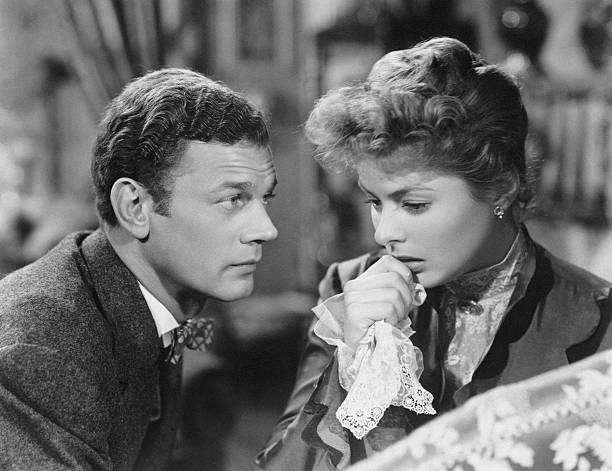
2. Gaslight (1944, George Cukor)
The film that coined the term “gaslighting”: a husband drives his wife to believe she’s insane while hiding his crimes. The blueprint for all stories of psychological manipulation. The original production was shot in 1938, in England.
3. Vertigo (1958, Alfred Hitchcock)
The ultimate film of obsession and reconstruction. A woman is forced to become the replica of a dead one — a hypnotic metaphor for the male gaze and female erasure.

4. Les Diaboliques (1955, Henri-Georges Clouzot)
Two women conspire to murder an abusive man, only for his body to vanish. Suspense, guilt, and hallucination blur together — the film Hitchcock wished he had made.
5. Persona (1966, Ingmar Bergman)
A profound study of identity and projection: an actress and a nurse begin to merge into one. A haunting reflection on voice, silence, and the dissolution of the self.
6. Don’t Look Now (1973, Nicolas Roeg)
A couple grieving their daughter’s death experiences visions in Venice. Female intuition and male skepticism collide in a labyrinth of guilt and spectral memory.
7. Sisters (1972, Brian De Palma)
Conjoined twins, voyeurism, murder, and memory distortion. One of De Palma’s earliest explorations of doubled women and the danger of seeing too much.
8. Body Double (1984, Brian De Palma)
A self-conscious tribute to Vertigo: women swapped, a staged murder, and manipulation through the male gaze. Voyeurism is both a narrative device and a crime.
9. The Hand That Rocks the Cradle (1992, Curtis Hanson)
Domestic gaslighting at its peak: a woman infiltrates another’s home, mimicking her until she nearly replaces her. A chilling study in maternal envy and identity theft. There is a new version in 2025.
10. The Others (2001, Alejandro Amenábar)
A mother protecting her children from ghosts discovers she is one. A masterful inversion of perception and guilt told through the feminine point of view.
11. Mulholland Drive (2001, David Lynch)
A Hollywood dream mutates into a nightmare of fractured identities. Lovers, doubles, and illusions collide in the definitive 21st-century Vertigo.
12. Gone Girl (2014, David Fincher)
The woman who weaponizes disbelief. Amy Dunne turns the gaslighting structure upside down, using it as revenge against the manipulation she endured.
13. The Girl on the Train (2016, Tate Taylor)
An alcoholic woman witnesses — or imagines — a crime. Her trauma and social invisibility make her truth impossible to believe, until paranoia becomes prophecy.


14. The Woman in Cabin 10 (2025, Netflix / adapted from Ruth Ware)
A journalist witnesses something horrific on a luxury cruise, but no one believes her. Claustrophobia, isolation, and silence mirror her psychological unraveling.
15. The Woman in the Window (2021, Joe Wright)
A modern reimagining of Rear Window: trauma, confinement, and denial blur the lines between vision and delusion. The house becomes a mental and emotional trap.
Descubra mais sobre
Assine para receber nossas notícias mais recentes por e-mail.
 miscelana.com