
There’s something curious — and deeply revealing — about the fact that, twenty-four years later, people are still talking about Tom Cruise and Nicole Kidman’s divorce. Their marriage ended in 2001, in a different Hollywood, in a different world. The persistence of the topic says less about nostalgia and more about a mix of misogyny, the pleasure of myth destruction, and the irresistible pull of stories that refuse to fade.
During their decade together, Tom and Nicole embodied everything Hollywood once sold as perfection: beauty, power, mystery, and control. Their marriage was a carefully staged production, polished and public. And when it fell apart, the implosion became a drama of its own — one that audiences and tabloids never stopped revisiting.
The problem is that, even more than two decades later, Nicole Kidman’s name remains tied to his, as if her existence before and after him still orbits the same star.

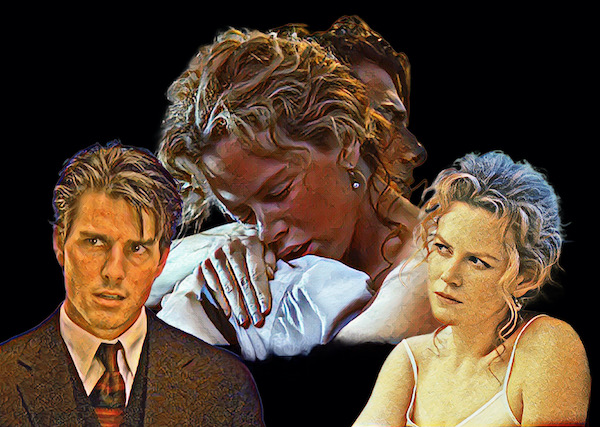
The destruction of the myth
“Destroying the myth” isn’t just a phrase — it’s a cultural reflex, the thrill of dismantling perfection.
Cruise and Kidman were the last great Hollywood fairy tale couple. When the illusion broke — through rumors of control, religion, and power — it became an archetypal narrative: the woman who escaped, the man who kept the empire, the Church as the villain.
It’s only natural that symbolic stories outlive their time. But it’s telling that, while Cruise has been free to evolve as an untouchable myth, Nicole is still, occasionally, pulled back into the role of “the ex-wife” — a supporting character in a story she left a quarter of a century ago.
The asymmetry of legacy
Like it or not, Tom Cruise is one of cinema’s ultimate legends. His name defines spectacle, risk, and endurance. He’s survived every shift in the industry — technological, cultural, existential. He has no Oscar (yet), but he transcends awards: he is a structural icon, a permanent fixture of Hollywood mythology.
Nicole, meanwhile, has built one of the most consistent and daring filmographies of her generation. She’s an artist of reinvention, a master of transformation.
But while Cruise lives as myth, Kidman is human — and that’s her magic. Still, decades later, she’s often reduced to being “Tom Cruise’s ex-wife.” It’s a case study in structural misogyny, how women — even at the top — remain defined by the men they outgrew.
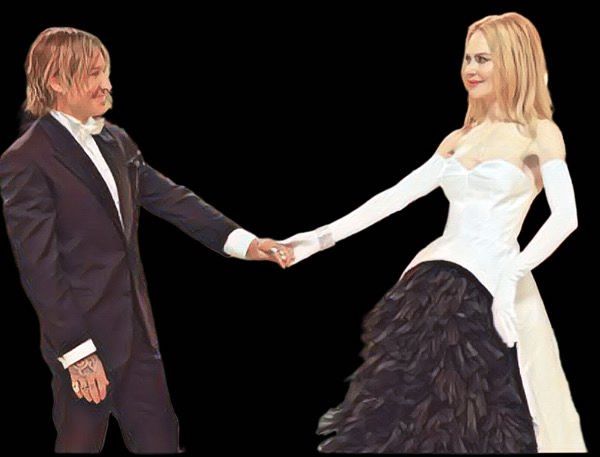

A revenge disguised as fascination
There’s also a subtle revenge in this renewed fascination. By revisiting the divorce, pop culture takes aim at the myth — using the woman to wound the man. When they were together, people called them fake; when they split, it was a tragedy; now it’s a meme, a mystery, a machine.
But Nicole Kidman never needed Tom Cruise to be Nicole Kidman — and that may be the true irritation. Her post-divorce renaissance — the Oscar, the complex roles, the artistic freedom — made her more powerful than ever.
And nothing unsettles a male myth more than a woman who thrives after him.
Days of Thunder and the impossibility of reunion
For years, I’ve written about this same theme — which was odd enough when both stars were happily married — but the moment they were single again, the old obsession reignited. Part of that comes from the sheer improbability of Nicole Kidman ever being involved in the long-gestating Days of Thunder sequel, a project Cruise has been quietly developing for years and still keeps somewhere on his production slate.
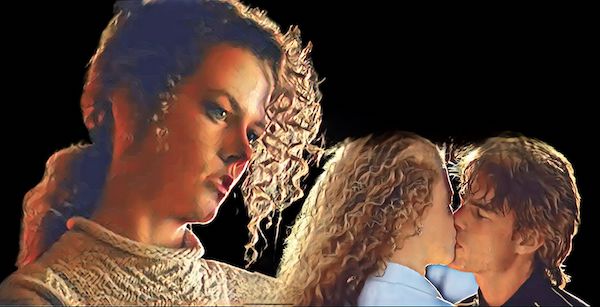
That’s the film where they met, fell in love, and where he left his first wife for her. In the story, Cole Trickle and Dr. Claire end up together — and three decades later, it would even make sense if they weren’t. Still, the very idea of Kidman making a cameo would be enough to set the internet on fire.
It’s almost unthinkable to see Cruise and Kidman share a screen again, and maybe that impossibility — that unfulfilled fantasy — explains why we’re still talking about them 24 years later.
Ironically, the three films they made together were not major critical or box-office hits, something that once fueled rumors their marriage was a façade. A façade that, if curiosity alone could bury it, should finally be allowed to rest.
Descubra mais sobre
Assine para receber nossas notícias mais recentes por e-mail.
 miscelana.com
1 comentário Adicione o seu