
Vince Gilligan’s name carries a rare kind of weight in modern television. Since Breaking Bad and Better Call Saul, any project bearing his signature arrives surrounded by reverence and expectation — audiences know they’re in for moral complexity, aesthetic precision, and characters who defy archetypes. With Pluribus, his new Apple TV+ series, Gilligan once again delivers all that — but this time, he trades the desert of crime for the universe of consciousness.
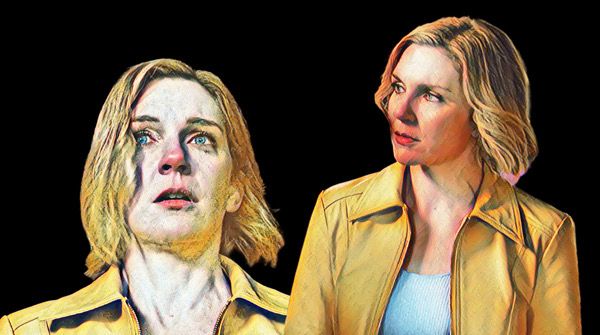
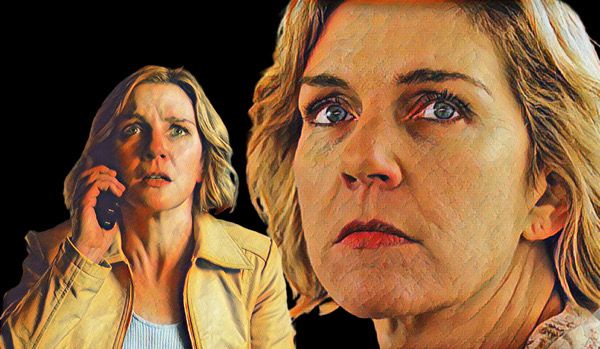
The story takes place, fittingly, in Albuquerque. Rhea Seehorn plays Carol Sturka, a cynical and solitary novelist returning home from a book tour just as a strange pandemic begins. But this time, the infection doesn’t destroy bodies — it rewires minds. A mysterious radio signal from space encodes an RNA sequence that mutates into an alien virus. The result: most of humanity becomes part of a “collective mind” — unified, serene, content. Only twelve people on Earth are immune. Carol is one of them.
From that point, Pluribus becomes an existential mirror: what does it mean to be alone in a world where everyone thinks and feels the same? Is solitude a curse — or the last trace of humanity? Gilligan turns the premise of science fiction into an essay on identity and free will. As in his best work, what begins as a personal moral dilemma evolves into a meditation on the human condition itself.
The new Vince Gilligan
Behind the scenes, Gilligan admitted that Pluribus was born from creative exhaustion. He was tired of writing villains and stories about guilt and redemption. “I spent years exploring the worst of human nature,” he said. “Now I wanted to imagine what would happen if humans suddenly became ‘good’ — but by force.”
With a reported budget of over $15 million per episode, Pluribus was once again filmed in Albuquerque, crafted with the same visual precision and symbolism that made Breaking Bad’s arid streets iconic. But here, the desert isn’t a site of moral decay — it’s the cosmic silence where humanity dissolves.
The promotional campaign was pure Gilligan: mysterious and provocative. A phone number (202-808-3981) appeared in teasers, leading callers to a cryptic message — as if transmitted by the collective consciousness itself. It was the first sign that Pluribus isn’t just a show; it’s an immersive experience.
Echoes and departures from Breaking Bad
It’s impossible to watch Pluribus without feeling the echoes of Gilligan’s earlier universe. The connection isn’t narrative but spiritual. Rhea Seehorn, who immortalized Kim Wexler, returns as the moral soul in chaos — this time in a metaphysical context. If Kim was the ethical compass in a corrupt world, Carol is the spark of individuality in a world too perfect to be human.
Gilligan’s eternal obsession remains transformation. Walter White turned from an ordinary man into a monster. Carol Sturka walks the opposite path: surrounded by a “perfect” humanity, she becomes the anomaly, the error, the bug in the system. Pluribus explores the same question that haunted Breaking Bad: what defines us as humans? The answer, again, isn’t simple.
Visually, the parallels are deliberate: the desert landscapes, the patient pacing, the black humor, the fascination with human decline. Yet the tone is different. If Breaking Bad was adrenaline and destruction, Pluribus is melancholy and contemplation.
Rhea Seehorn’s performance has been unanimously praised — “brilliant,” “magnetic,” “achingly human.” Carol is the kind of character only Gilligan could write: a witness to the apocalypse who meets it with irony, not fear — as if to say, “of course the end of the world would look like this.”
Audiences — especially Breaking Bad fans — are intrigued, and divided in the best way. On social media, many describe Pluribus as “a more philosophical Black Mirror” or “The Leftovers directed by a chemist existentialist.” Others admit they expected more action but find themselves hypnotized by its symbolic and emotional depth.
The philosophy of “us”
The title Pluribus comes from E pluribus unum — “out of many, one.” The American motto becomes, in Gilligan’s hands, an irony about the very idea of humanity. What happens when the promise of unity turns into a nightmare? When diversity of thought disappears, and the world becomes a single rhythm of consciousness?
The series is a meditation on the danger of perfect harmony. What looks like peace may in fact be the end of awareness itself. Carol Sturka, in all her loneliness, becomes a symbol of resistance to conformity. One scene — her walking through a silent city as everyone around her gazes blankly at the sky — already stands as one of the most haunting images of the season.
In the end, Gilligan hasn’t changed — he’s evolved
Even when he abandons crime realism for science fiction, Vince Gilligan keeps asking the same question that has always defined his work: what makes us human? In Breaking Bad, it was power and ambition. In Pluribus, it’s the fear of losing the self.
Pluribus is melancholic, thought-provoking, and deeply human. It’s about the loneliness of being different in a world that believes it has found happiness. It may well be Gilligan’s most personal — and most unsettling — project to date.
Because, in truth, Pluribus isn’t about aliens. It’s about us.
Descubra mais sobre
Assine para receber nossas notícias mais recentes por e-mail.
 miscelana.com