
The machine gun of criticism aimed at Ryan Murphy’s new series keeps firing, and defending All’s Fair remains a tricky, quicksand-like task. It’s not that the praise outweighs the backlash — it’s that, while far from perfect, this show is nowhere near the disasters of 2025 (And Just Like That, anyone?).
Kim Kardashian is a celebrity, a billionaire, and a law graduate, but while she hasn’t officially followed in her father’s footsteps as a lawyer, she has joined Murphy’s exclusive circle of muses. That’s right — she’s an actress now. And let’s be honest: getting into Murphy’s inner circle isn’t easy, much less leading it. Her lack of technique is undeniable, but so is this — All’s Fair was never meant to be realistic. It’s heightened, stylized, and hopelessly addictive. Deal with it.

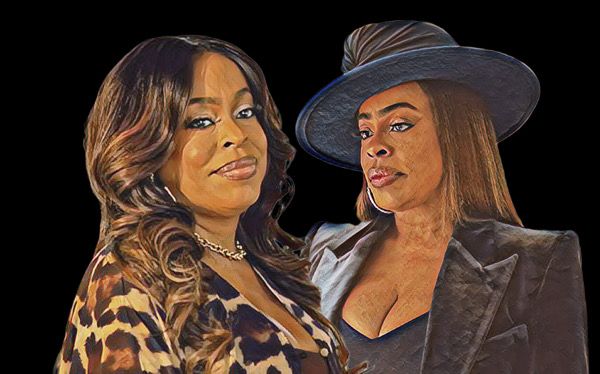
Episode four shifts the focus away from Allura Grant (Kardashian) to Murphy’s other muse, the magnetic Niecy Nash. Her character, detective Emerald Greene, faces a brutal turn of events. The sequence in which she is drugged and assaulted at a party is tragic, disturbing, and violent — transforming the show’s tone from glossy camp to something darker and more psychological.
Meanwhile, Allura’s secret — that she went through with embryo insemination without telling her partners or soon-to-be ex-husband — lingers in the background, unaddressed for now. The spotlight is entirely on Emerald: the strong woman who, after years of celibacy and isolation, is pushed by everyone around her to “get back out there.” She reluctantly agrees to attend a singles party, only to become the victim of a predatory setup. Nash delivers a raw, layered performance — perhaps her finest moment in the series so far.
The assault sequence is shot in fragments, claustrophobic and disorienting, leaving viewers as confused as Emerald herself. When she wakes up injured and terrified, she does what so many real victims do: she reports it, undergoes tests, and is dismissed by the police. Alone, she takes matters into her own hands. The “case of the week,” featuring Jennifer Jason Leigh as a woman being sued by her bitter ex-husband, mirrors Emerald’s own sense of injustice.
When her partners try to help, Emerald’s pain erupts into anger. Tracking down the man who drugged her, she and Dina connect the dots: he’s the son of one of Dina’s former clients, a man who lost everything after a case she handled. The attack wasn’t personal — Emerald was used as a means of revenge against Dina. The connection feels clumsy and over-the-top, but that’s peak Murphy melodrama: emotional excess always trumps logic.
In the end, the suspect turns up dead. The case appears closed, but tension fills the office. The women exchange knowing looks — guilt, fear, relief. Did one of them act? Or did Emerald’s sons, furious and powerless, take matters into their own hands? We end with the question hanging in the air, a moral echo of the show’s title itself: in All’s Fair, no one is ever completely innocent.
Descubra mais sobre
Assine para receber nossas notícias mais recentes por e-mail.
 miscelana.com