
I’ve always been an unabashed devotee of Dangerous Liaisons. I read the novel shortly after being struck — permanently — by the flawless 1988 film adaptation. Pierre Choderlos de Laclos wrote and published his masterpiece before the French Revolution, and its epistolary structure wasn’t just true to its era; it was bold, authentic, and radically modern. That’s why its power endures nearly 245 years later.
Today, it may seem almost ordinary to place a woman at the center of a narrative, especially one who challenges patriarchy, enjoys sex, and weaponizes seduction for pleasure, revenge, and emotional torture. The Marquise de Merteuil was never a heroine — she was conceived by an 18th-century male mind — but Laclos grasped something rare: the core of female dilemmas with startling clarity. Merteuil is iconic in any medium — stage, screen, or text. I could write about her forever.

The definitive versions — and the ones we’d rather forget
Glenn Close remains, unquestionably, the ultimate Merteuil, followed by Annette Bening in Miloš Forman’s Valmont. The rest — including the Brazilian adaptation with Patricia Pillar — fall short. Especially the attempts to explore “who Merteuil was” before she became a Marchioness.
The latest one, which debuted this week on HBO Max… is, frankly, a disaster.
The fatal mistake: turning Merteuil into a vengeful Cinderella
The premise bothered me from the start: once again, Merteuil is framed as a common girl who rises socially through marriage or prostitution. But in the book, she is dangerous precisely because she was raised among hypocritical nobles, intimately aware of the system she manipulated with surgical cruelty.
In Laclos’ novel, we never learn the first names of Merteuil or Valmont. Not by accident, but by brilliance. Titles and surnames reinforce a game of masks, anonymity, and public persona. They are constructed identities, not intimate individuals.
Giving them first names in The Seduction destroys the mystery — and the point.
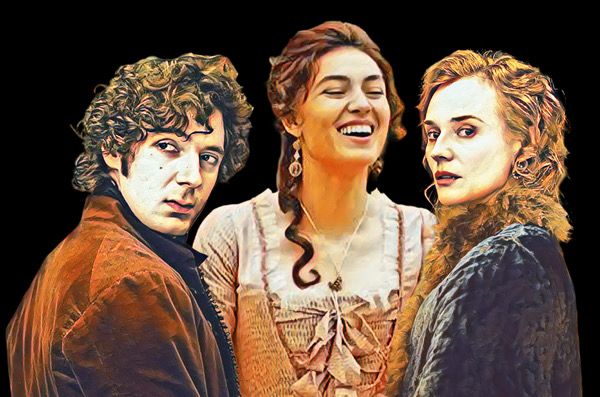
France deserved better than another bodice-ripper with no soul
The new French production had potential. After all, aside from Roger Vadim’s attempt in the 1950s, it has mostly been foreign adaptations that stood out. Surely the French themselves could reclaim the decadence of pre-Revolutionary Paris?
Sadly, no.
The visuals are lavish, as expected. But the story is confused, derivative, and commits the unforgivable sin of turning Merteuil and Valmont’s adult downfall into a repetition of youthful traumas — diminishing the horrific singularity of their later crimes.
Where the series derails: clichés, sex montages, and zero psychological depth
We meet Isabelle Dassonville (Anamaria Vartolomei), whose monologue claims her only freedom — choosing her husband — has been stolen. Flashback: she’s an orphan seduced by Beaucaillou (Vincent Lacoste). Marriage, fake priest, fake witnesses, lies — all so Valmont can deflower her.
Within ten minutes, we get a clip-show of heaving chests and candlelit nudity and suddenly — voilà — a new revenge plot. The leads have no chemistry, the dialogue is flat, and Merteuil — The Seduction earns a well-deserved spot on my “worst of 2025” list.
A shallow “rise” to power
Faced with becoming a nun, a prostitute, or dying, Isabelle decides she wants to “live” — and confronts Madame de Rosemonde (Diane Kruger), Valmont’s aunt and a witness to the fake marriage. But Rosemonde, sweet and pious in the novel, becomes here a seductive libertine frustrated by aging. Because in this universe, everyone is rotten — even Valmont’s family.
Then comes the makeover, the predictable seduction of Gercourt (yes, that Gercourt), the predictable jealousy of Valmont, the predictable duel… and the predictable orgy resuming afterward. Isabelle flees dramatically, only to resurface later as the newly married Marquise de Merteuil, seeking mentorship in the art of seduction.
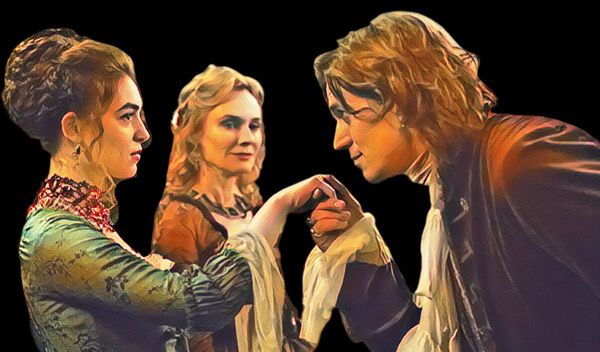
Faux-feminism wrapped in lace and sex scenes
If I hate-watch certain shows, The Seduction is now top-tier material. What irritates me most is how feminism is reduced to nudity and revenge, reinforcing the same patriarchal logic it claims to critique.
Another missed opportunity — and another adaptation that fundamentally misunderstands one of literature’s most brilliantly cruel women.
Descubra mais sobre
Assine para receber nossas notícias mais recentes por e-mail.
 miscelana.com
I agree with you so completely! I already watched the whole series (I got a preview screener since I’ll be writing about it for a magazine), and believe me, it only gets worse. (However, this series isn’t really quite a prequel to their later lives: most of the events of Liaisons appear in the series, only in drastically altered form. Ridiculous is not the word. When are we going to get a proper Liaisons series? (I’m not quite as enamore of the 1988 movie as you are, and a 2-hour film has to leave out a lot of key material like the Prévan subplot, but it’s certainly incomparably better than this absurdity.)
CurtirCurtido por 1 pessoa
Ohh… We need to be in touch! I want to thank you for your kind words!
CurtirCurtir
You can email me if you like! It’s CathyYoung63@gmail.com
I actually have something Liaisons-related that may interest you 🙂
CurtirCurtido por 1 pessoa
Oh, and my only disagreement with you is about the lack of first names for Valmont and Merteuil in the novel having a larger significance. It was not that unusual for characters in 18th Century novels (nobles, at least) not to have first names. Note that in Liaisons, Tourvel, Rosemonde, Volanges, and Danceny also lack first names. Cécile has a first name because unmarried girls were more often identified by first name. The names Sébastien and Isabelle actually appear in the credits for Dangerous Liaisons though they are never used in the script.
CurtirCurtido por 1 pessoa
You have an excellent point!
CurtirCurtir