
As published on Blog do Amaury Jr./Splash UOL
The film Avatar: Fire and Ashes arrives in Brazilian theaters on December 18, 2025—and believe me: it’s incredible. Running over two hours, it carries the monumental responsibility of continuing a franchise that redefined cinema in terms of technology, box office impact, and world-building. Rather than repeating the formula of earlier chapters, James Cameron makes an emotional and thematic pivot. As he puts it, the new installment “definitely delivers something refreshing and new” and is “very true, very authentic about the emotional consequences of what happened in The Way of Water.”
The story is a direct sequel to Avatar: The Way of Water (2022), and grief is the dramatic starting point of Fire and Ashes. For Cameron, “this is a film about a family processing what it means to be at war—children in war, parents having to let their children go and trust that they will make the right decisions.”
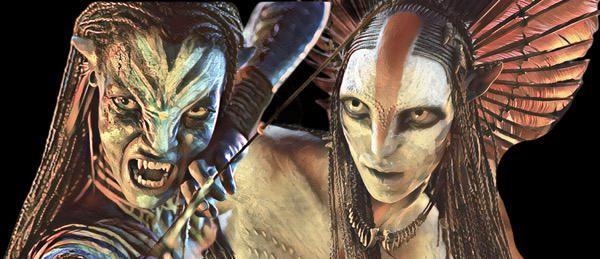
Amid the drama surrounding the Sullys comes an unprecedented rupture in the familiar “good Na’vi vs. bad humans” dynamic: the arrival of the Mangkwan, the Ash People. They are Na’vi who once lived in communion with nature, until a volcanic eruption destroyed their homeland and nearly wiped out the clan.
Confronted with nature’s destructive force, they concluded that Eywa had abandoned them. They severed their spiritual connection to the goddess and began to survive guided by instinct, harshness, and a new form of power. At the center of this people stands Varang, played by Oona Chaplin (Game of Thrones). To the Mangkwan, she is treated as a queen and savior; to the rest of Pandora, she emerges as an unprecedented threat.
“Varang has her subjects, and they truly venerate her. She’s like this young queen, but she’s in a pit of despair where everything is covered in ashes, everything has begun to die, and everyone is going mad with desperation,” explains the actress, granddaughter of Charlie Chaplin. “She focuses on the force that devastated her world, studies that force, and devotes herself to it, becoming allied with that power.”
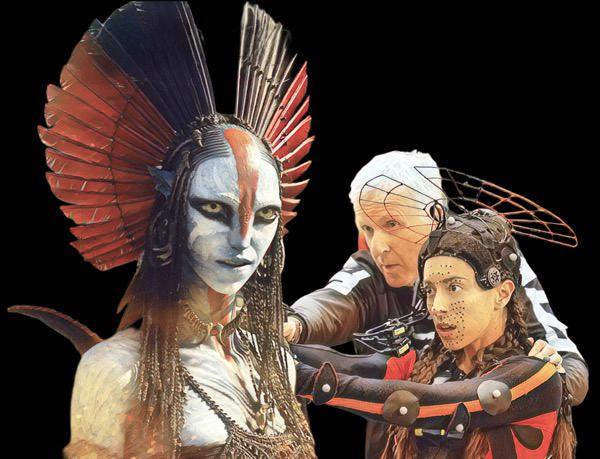
Chaplin is careful not to reduce the character to a simple villain: “It’s easy to fall into a villain mindset, but she’s actually the hero of her people, because she saved them and lifted them out of misery, hunger, and destitution.”
Varang’s origin lies in grief and in the rupture with Eywa. After the tragedy that destroyed the Mangkwan territory, she delves into darker versions of shamanic arts in search of an alternative power. Cameron explains that she “follows the dark path of being a Tsahik,” deepening her connection to destructive forces and developing abilities of mental domination and inflicting pain—powers capable even of extracting truth from those who face her.
Chaplin sums up the character’s emotional engine: “She’s a survivor who turned grief into fuel. She used pain and despair as a driving force—almost a revenge story.” She expands the idea beyond Pandora: “Grief, despair, and abandonment are very powerful energies. When that’s your fuel, you gain a lot of power. You can see that in today’s world. A large part of the conflict comes from a place of pain. It’s the classic case of ‘hurt people hurt people.’”
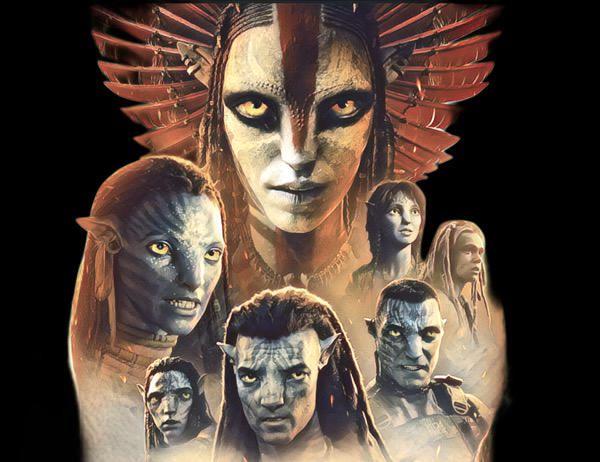
It’s in this gray zone that Fire and Ashes seems determined to plant its heart: less a binary tale of heroes and villains, more a reflection on what happens when love for one’s own people slips into the desire for power and revenge. And trust me—I’ve already seen the film: it’s powerful.
The Ash People also stand apart visually. The Mangkwan mix ash with water, creating a paste they spread over their bodies as a mark of identity—a gesture that, according to Cameron, becomes almost a ritual of belonging. “They demonstrate that it’s possible to fall from Eywa’s grace, to lose that dream of connection and balance that the Na’vi call the Great Balance. The Great Balance did not work for the Ash People.”
Fire and Ashes maintains its commitment to the combination of cutting-edge technology and performance. The Na’vi—along with creatures and environments—are created through performance capture: actors wear special suits and facial cameras, and every bodily and facial nuance is translated into digital characters.
Oona Chaplin describes this way of filming as the most liberating experience of her career: “Everything—costume, hair, makeup, lighting, extras—disappears. You have the cameras, but everything is there to feed your imagination. It’s like going back to the school playground: you imagine everything. What exists is your conviction and your imagination to create the moment.”
James Cameron calls Oona’s performance “simply beautiful”: “The way she moves, the way she speaks, the way she makes eye contact… I don’t think I fully appreciated how splendid Oona’s performance was until I saw her in character. It’s all there—in the gestures, the pauses, the looks.”
Rounding out the package of new elements, Fire and Ashes also features an original song worthy of the saga. “Dream as One,” performed by Miley Cyrus, is nominated for the Golden Globe for Best Original Song.
In other words: between the Sullys’ grief, Varang’s cult of ashes, new creatures in the skies, and the largest battle in the franchise, Avatar: Fire and Ashes aims to prove that Pandora still has much to say about family, trauma, faith, and what emerges when an entire world asks itself whether it’s still worth believing in Eywa.
Descubra mais sobre
Assine para receber nossas notícias mais recentes por e-mail.
 miscelana.com