
If there is one text that cinema has never stopped revisiting, that text is Hamlet. Not only because it stands as one of the central works of William Shakespeare, but also because it offers something rare and unsettling at once: a narrative solid enough to survive centuries and unstable enough to absorb the specific anxieties of each generation. Hamlet resists closure, definitive interpretation, and the very idea of a clear answer, and perhaps that is precisely why cinema returns to it with almost obsessive regularity.
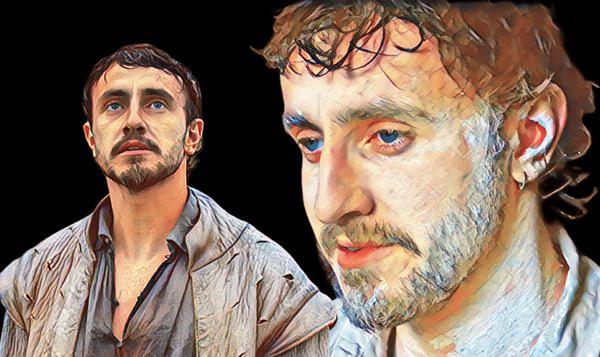
The recent success of Hamnet on screen has reignited, even among those not initiated into the English bard, curiosity about the history of the play, which is nearly 430 years old and remains one of the most famous and respected works in the history of theater. Given the cultural weight of Hamlet, it is only natural that questions about its inspiration resurface. And cinema, of course, has never lost interest in the bitter, hesitant, and excessively self-aware Danish prince.
There is no absolutely fixed number, but critical and academic consensus points to more than thirty films directly based on Hamlet, produced from the silent era through the twenty-first century. Of these, roughly fifteen to eighteen adaptations are usually considered cinema in the full sense of the word, conceived specifically for the audiovisual language and released commercially, while the rest are divided among filmed stage productions, television versions, and hybrid reinterpretations. Still, the most revealing fact is not the quantity, but the way each version chooses to answer a different question, shifting the center of the tragedy according to its time.
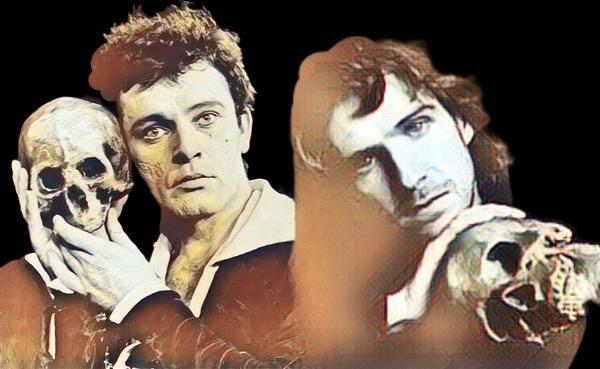
Before reaching the Elizabethan stage and later the camera, Hamlet was already a circulating story, so popular that it became the name Shakespeare gave to his only son, Hamnet, a common variation of Hamlet in England at the time. The legend of the Danish prince Amleth appears in medieval Scandinavian chronicles as a tale of revenge, cunning, and survival, one in which doubt does not exist and madness is merely a strategy. Shakespeare’s gesture was not to invent the plot, but to deform it, introducing hesitation, delay, moral awareness, and the refusal of immediate action. It is this fracture that transforms the myth into a modern tragedy and turns Hamlet into a permanent challenge for actors and filmmakers.
The Great Cinematic Adaptations of Hamlet
If we adopt a strict criterion, considering only films conceived as cinema and that explicitly adapt the play, with its characters, structure, and central conflicts, we arrive at a relatively stable core around which the critical history of cinematic Hamlet is organized.
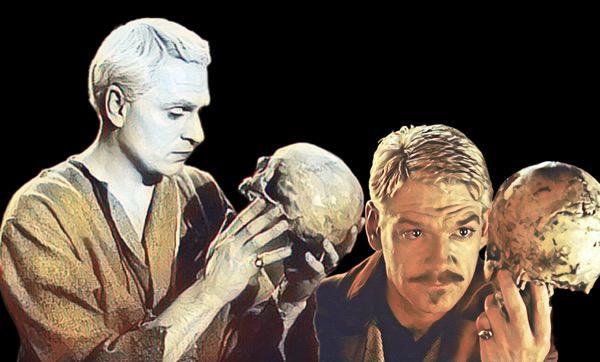
The most expansive version is Hamlet, directed by and starring Kenneth Branagh. By filming the complete text of the play, without cuts and without fear of duration or excess, Branagh transforms what could have been mere literary reverence into an aesthetic and political choice. His Hamlet is not simply a man tormented by doubt, but a prince embedded in a machinery of power made up of ritual, performance, espionage, and constant surveillance. Mirrors, endless corridors, and monumental spaces function as commentary, suggesting that the intimate drama is inseparable from a state already corrupted.
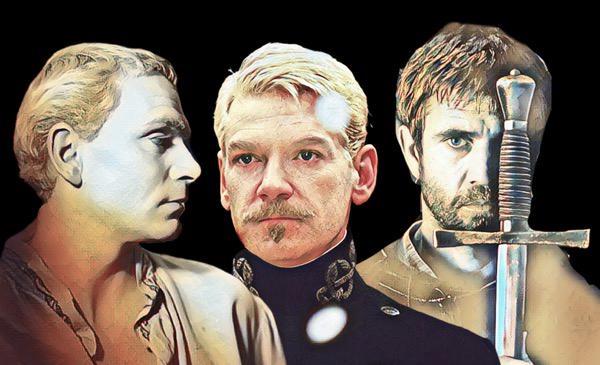
At the opposite end stands Hamlet by Laurence Olivier, the film that shaped the dominant reading of the play for decades. By announcing at the outset that this is the tragedy of a man incapable of deciding, Olivier shifts the narrative’s center inward, turning Denmark into an extension of Hamlet’s mind. Staircases, shadows, and vertical spaces construct a psychic labyrinth in which guilt, repressed desire, and hesitation become the primary focus.
The most explicitly political reading emerges in Hamlet by Grigori Kozintsev. In the Soviet adaptation, Hamlet ceases to be merely an individual in crisis and becomes a body in direct confrontation with power. Denmark is presented as a militarized territory, exposed to wind, surveillance, and silence. Doubt is not weakness, but consciousness, since action means breaking with an entire order.
Hamlet by Franco Zeffirelli, in turn, condenses the text and embraces a Hamlet of action. Played by Mel Gibson, this Hamlet is physical, impulsive, and less interested in soliloquies than in reaction. The accelerated rhythm translates the tragedy into a more accessible, almost epic language.
This core is complemented by Hamlet, which relocates Shakespeare’s text to contemporary corporate New York, with Ethan Hawke, transforming doubt into a symptom of alienation and perpetual postponement, and Hamlet with Nicol Williamson, which presents an unstable, bodily character that dismantles the excessively intellectualized image of the prince.
Before Hamlet, Amleth
If cinema has filmed Hamlet repeatedly, it has also returned to what Shakespeare transformed. Prince of Jutland, also known as Royal Deceit, adapts directly the narrative recorded by Saxo Grammaticus and follows Prince Amleth in medieval Jutland. Played by a young Christian Bale, this hero does not hesitate. Madness is a mask, revenge is duty, and action is inevitable.
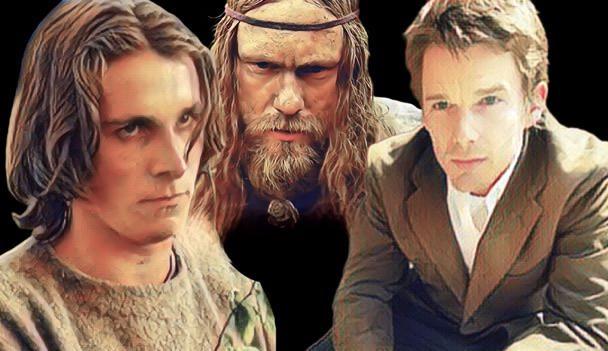
Decades later, The Northman by Robert Eggers returns to the same origin with ritualistic radicalism and physical violence. Here, the myth is restored to the body, to blood, and to fate. By contrast, the film makes Shakespeare’s gesture even clearer: Hamlet is born when revenge ceases to be sufficient, and thought begins to corrode action from within.
The Satellite Films
There is also a substantial group of films that do not adapt the play but are built upon its narrative architecture. The Lion King translates Hamlet into a coming-of-age myth and offers an affirmative resolution where Shakespeare leaves ambiguity. Ophelia repositions the narrative from the perspective of the silenced character. In The Bad Sleep Well, Akira Kurosawa transposes the tragic structure to postwar corporate Japan. Rosencrantz & Guildenstern Are Dead shifts focus to the margins of the story and turns Hamlet’s doubt into existential absurdity.
More recently, a modern adaptation set in London, directed by Aneil Karia and starring Riz Ahmed, reintroduces Hamlet into an urban space shaped by surveillance and social tension, where hesitation is no longer merely philosophical, but also political.
Where Hamnet Fits In
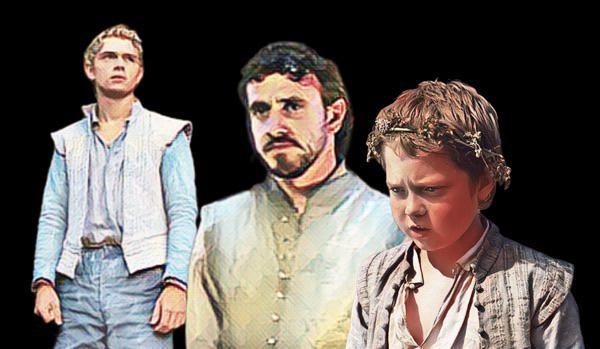
Hamnet enters this trajectory not as an adaptation of the play, but as an investigation into its emotional origin. By shifting the focus of tragedy to Shakespeare’s private grief, the film suggests that Hamlet may be less an abstract intellectual exercise and more an artistic elaboration of loss, transforming intimate pain into dramatic language.
Why Hamlet Never Disappears
Hamlet does not survive in audiovisual culture due to academic insistence, but because its dramatic structure remains functional. What changes is the status of doubt, sometimes psychological, sometimes political, sometimes systemic, sometimes emotional. Distinguishing between direct adaptations, filmed versions of the play, and satellite films does not impoverish the debate; it reveals that Shakespeare wrote not a closed text, but a narrative model capable of infiltrating almost any era, language, or format.
Perhaps that is why the question is never how many Hamlets exist, but why we continue to need them, even when we pretend we are talking about something else.
Descubra mais sobre
Assine para receber nossas notícias mais recentes por e-mail.
 miscelana.com