
Few literary characters resist adaptation as fiercely as Heathcliff. Not because he is complex in the classical sense, but because he refuses to offer moral comfort. Heathcliff does not shape his pain into something uplifting, does not learn from suffering, and does not seek redemption. He remains unsettling.


Over more than eight decades, film and television have repeatedly tried to frame him as a romantic hero, a tragic antihero, or a victim of his own past. The newest version, which promises to reignite fascination and curiosity around this enigmatic character, is directed by Emerald Fennell and stars Jacob Elordi as the vengeful outsider long framed by popular imagination as a “gypsy,” returning to one of the novel’s most controversial layers.
Each new interpretation says less about Emily Brontë and more about the historical, aesthetic, and ethical moment in which it was produced. Listing the many Heathcliffs is not merely an exercise in organizing performances, but a way of mapping how audiovisual culture, generation after generation, grapples with obsession, emotional violence, class, and desire.
1. Ralph Fiennes – 1992
The most complete Heathcliff ever brought to the screen. Fiennes understands the character as a corrosive force rather than a tragic lover in search of redemption. His performance sustains the novel’s central contradiction: pain does not humanize Heathcliff, it hardens him. His love for Catherine does not save him; it imprisons him. This is the version that comes closest to the emotional and moral violence imagined by Emily Brontë, without asking for easy empathy from the viewer.
2. Tom Hardy – 2009
Hardy delivers a physical, carnal, impulsive Heathcliff. The body is as central as rage. His character always seems on the verge of eruption, whether in desire or violence. The approach works especially well in the character’s youth, when passion and humiliation are still intertwined. At times, animality overtakes psychological nuance, but there is never an attempt to make Heathcliff comfortable or reassuring.
3. James Howson – 2011
The most radical and unsettling reading. Howson plays a racialized Heathcliff who is nearly silent and constantly observed as an intruder. There is no romanticization and no excessive psychologizing. This Heathcliff exists as an excluded body, marked by social violence. Less iconic, perhaps, but more faithful to the novel’s brutal subtext. A performance that divides audiences precisely because it refuses seduction.


4. Laurence Olivier – 1939
The Heathcliff who shaped the collective imagination. Olivier created the cinematic archetype of the character: melancholic, noble in suffering, romantically tragic. The problem is that this version softens everything cruel and disturbing in the original text. Essential as a historical landmark, limited as a moral reading.
5. Richard Burton – 1958
Intense, eloquent, theatrical. Burton portrays Heathcliff as a classical tragic hero, almost Shakespearean. There is vigor and presence, but also an excess of rhetoric. Resentment becomes speech, obsession turns into grandiloquence. More impressive for the voice than for the unease the character should provoke.
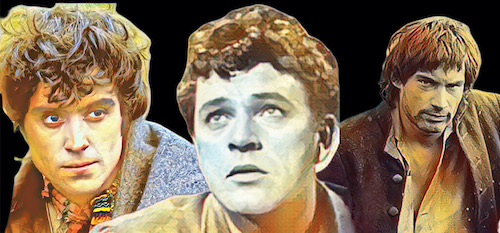
6. Timothy Dalton – 1970
Too proper for a character who demands loss of control. Dalton delivers an emotionally legible, respectable, almost elegant Heathcliff. He suffers, loves, and rages within safe boundaries, which contradicts the very essence of the novel. Functional, but ultimately harmless.
7. Jacob Elordi – 2026
Still unreleased, but already central to contemporary debate. Elordi’s casting, under Emerald Fennell’s direction, points to a young, physically imposing, potentially seductive Heathcliff, reopening the longstanding tension between romanticization and cruelty. Everything will depend on how the film handles this presence: whether it repeats the impulse to soften the character or explores the discomfort of desiring someone who should not be desirable. Before the premiere, Elordi occupies a space of critical expectation rather than definitive evaluation.
8. Ian McShane – 1967
Harsher, more bitter, and more haunted. This version is culturally decisive: it was the adaptation Kate Bush watched as a teenager, directly inspiring her to compose “Wuthering Heights.” A less romantic and more spectral Heathcliff, marked by raw emotional intensity.
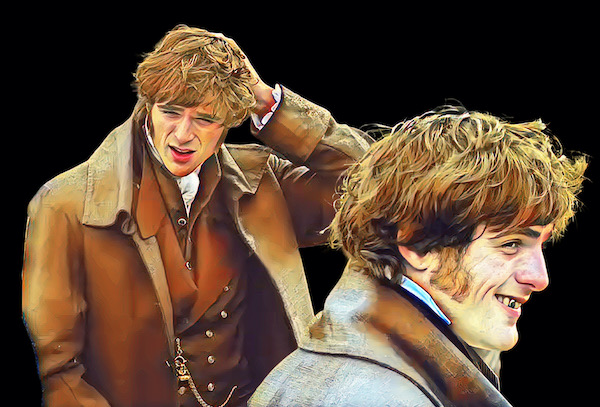
9. Ken Hutchison – 1978
Ken Hutchison’s performance marks a quiet but important turning point in the history of Heathcliff on British television. Less interested in romanticizing the character, Hutchison builds a Heathcliff who is abrasive, socially resentful, and emotionally truncated. There is none of Olivier’s tragic magnetism or Burton’s theatrical grandeur. What remains is an uncomfortable, almost brusque presence, constantly out of place in his surroundings.
10. Cliff Richard – 1997
In 1997, Cliff Richard played Heathcliff in a musical adaptation. The work focuses primarily on Heathcliff’s life, his obsessive quest to win Cathy, and his existence after her death. The music was composed by John Farrar, with lyrics by Tim Rice.
That same year, Cliff Richard released the film Heathcliff, which proved successful enough to be brought to the stage in Birmingham in 1998, consolidating the musical version as one of the most popular and accessible reinterpretations of the character outside the traditional film and television circuit.
Descubra mais sobre
Assine para receber nossas notícias mais recentes por e-mail.
 miscelana.com