
For centuries, or millennia, men have claimed they do not understand women. Entire books, films, television series, and jokes have been built around this supposed “female enigma”, always treated as something light, curious, and almost folkloric. And for those same centuries, women have learned to navigate this system however they could: negotiating silence, adapting behavior, reading the room, calculating risk, not by choice, but by survival.
The turning point of recent decades, with social media and technology radically reshaping our rules of interaction, exposure, and power, helped give the feminist struggle a collective voice. #MeToo predates this shift, but it was through a post on X, then Twitter, that the hashtag gained scale, momentum, and global impact. For the first time, millions of women said the same thing simultaneously. Literally all of them had experienced some form of harassment, abuse, or violence.
And still, it was not enough to convince men.
“Nagging”, “exaggeration”, “fabrication”, “misinterpretation”, “ulterior motives”. These are the words that surface almost automatically when a woman questions, reports, or simply recounts something that happened to her. The default reaction is not listening, but defense. Not empathy, but relativization. The system protects itself by reframing trauma as noise.
And at the center of all this stands Jeffrey Epstein.
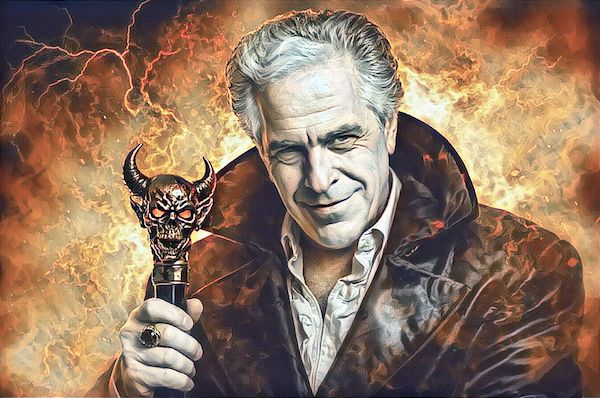
For a long time, Epstein could have remained a mystery of interest only to the American elite. A man with no clear origin, no explainable public career, no known intellectual or entrepreneurial achievements, yet with unlimited access to money, private jets, islands, politicians, business leaders, academics, royalty, and celebrities. He emerged in the 1980s as a teacher at an elite New York school despite lacking the credentials such a position would require. He then vanished from institutional radar and reappeared as a manager of billionaire fortunes, although he was never able to clearly explain who his clients were or how his wealth was generated.
His ascent is a practical lesson in how patriarchal power operates through side doors. Epstein did not need visibility. He needed usefulness. He connected money, influence, favors, and silence. He moved through environments where questions are not asked because answers would be inconvenient. His wealth was never rigorously audited. His access was never seriously challenged. His presence was accepted because it was functional.
The fall officially began in 2005, when allegations of sexual abuse involving underage girls surfaced in Florida. In 2008, Epstein reached a plea deal that is now widely regarded as one of the most scandalous legal agreements in U.S. history. It spared him from serious federal charges, resulted in a remarkably lenient sentence, and explicitly protected potential accomplices. The deal not only silenced victims but shielded powerful men who orbited around him.
This point matters. The system did not fail. It worked.
Epstein was arrested again in 2019 on federal charges of sex trafficking minors. For the first time, it seemed he might face a real trial. Weeks later, he was found dead in his cell. The official ruling was suicide, despite catastrophic surveillance failures, nonfunctioning cameras, and ignored protocols. His death did not close the case. It detonated it.
Because Epstein, dead, became more dangerous than Epstein alive.

Alongside his “associate” Harvey Weinstein, now convicted, Epstein represents something society long resisted acknowledging: sexual violence is not an individual aberration, but a structural mechanism. It does not persist without complicity. It does not repeat without tacit acceptance. It does not thrive without impunity.
The so-called Epstein Files, court records, depositions, flight logs, messages, and agreements that remained sealed for years, have begun to surface due to pressure from victims, investigative journalists, and judicial decisions recognizing the public interest in disclosure over the reputational protection of powerful figures. These documents did not suddenly appear. They were archived, shielded, and delayed for decades in the name of institutional stability.
The reason they are emerging now is not only legal. It is cultural. The world has shifted, enough that silence has become more costly than exposure.
What these revelations show is not shocking merely because of the names involved, but because of how seamlessly abuse appears woven into the daily operations of power. Politicians, business leaders, renowned academics, and public figures with “clean” reputations emerge connected to Epstein in various ways. Some are directly accused by victims. Others are cited as frequent guests, beneficiaries, or passive enablers. Many are still alive. Many have never been formally investigated. Many neither respond, deny, nor explain.
And this may be the most revealing fact of all.
Are there so many records because there was impunity, or was there impunity because this behavior was, at some level, acceptable within certain circles? The question remains open, but the documents point toward an uncomfortable answer. When girls were trafficked as part of a male prestige economy, the issue was never a lack of information. It was a lack of will.
Yes, there is political speculation around the case. Yes, there is selective instrumentalization of names. Yes, there are narrative battles attempting to reduce everything to partisan warfare or a single conspiracy. But these diversions do not erase the essential truth: what emerges is a faithful portrait of a patriarchal society functioning with precision.
And yes, women appear within this system. This does not invalidate the critique. It reveals another uncomfortable layer. In deeply asymmetrical structures, some women circulate, mediate, enable, or adapt. Not as proof of collective consent, but as evidence that patriarchy is not sustained by brute force alone. It is sustained by normalization, by rewards for adaptation, and by punishment for rupture.

What may happen next is limited. Epstein died without a trial. Many of those involved have aged, lost power, or are shielded by statutes of limitation. Full justice may never come. But something irreversible has already occurred: the system has lost total control of the narrative.
Epstein ceased to be merely a man. He became a mirror.
And the reflection he offers is precisely the one women have tried to show for decades, while being dismissed as hysterical, resentful, or inconvenient. It was not hysteria. It was not paranoia. It was not nagging.
Perhaps the question was never why men claim they do not understand women.
Perhaps the real question is why, even when they do understand, they choose not to believe.
Descubra mais sobre
Assine para receber nossas notícias mais recentes por e-mail.
 miscelana.com