
There is a subplot that runs through the entire mythology of Game of Thrones, echoes in the trauma of House of the Dragon, and gains particular depth in A Knight of the Seven Kingdoms, yet it largely went unnoticed by those who only know the television adaptations.
It concerns the existence of the Blackfyres and the conflict surrounding them, a bastard branch of House Targaryen whose ambition nearly imploded the dynasty from within. The series mentioned the name, hinted at the danger, left clues for attentive viewers, but only the initiated truly understood the historical weight that word carried within the Targaryen timeline.
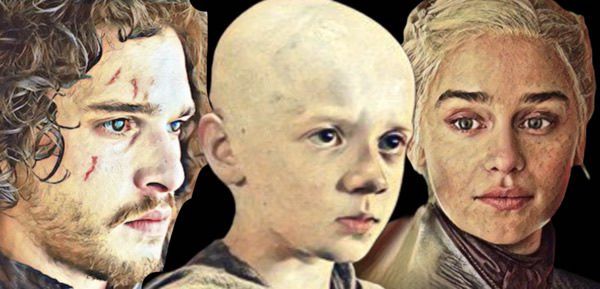
In objective terms, the Blackfyre Rebellion was a series of civil wars that began when Daemon Blackfyre, the legitimized bastard son of Aegon IV, claimed the Iron Throne against the rightful heir, Daeron II. The conflict nearly divided Westeros into two rival lineages and lasted for decades, with successive attempts to reinstate a Blackfyre to power.
For those who know only the TV versions of Game of Thrones and House of the Dragon, it may seem as though the dynasty’s great civil wars begin and end with the Dance of the Dragons, but what follows is just as decisive for Westeros’s fate. The Blackfyre Rebellions were not merely power struggles. There were conflicts over legitimacy, identity, blood purity, military tradition, and the very meaning of rule. It is within that unstable terrain that Egg grows up, the boy who would one day become King Aegon V in A Knight of the Seven Kingdoms.
What was the Blackfyre Rebellion?
To understand the Blackfyres, however, we must go further back, to the Dance of the Dragons itself, the first great fracture in the Targaryen succession. When Rhaenyra and Aegon II plunge Westeros into civil war, what is at stake is not only a woman’s right to inherit the throne but the structural stability of the dynasty. The war ends ambiguously. Politically, Rhaenyra is defeated, but biologically her line survives and, in a nearly ironic twist, ultimately absorbs that of the Greens.
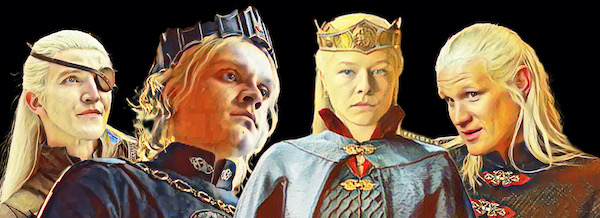
As we see in House of the Dragon, the heirs of Aegon II and Helaena are reduced to two children even before the brutal murder of Jaehaerys. In the book, there were three. Now it’s even more complicated for the series because the logic defended by the Hightowers rests on strictly male succession. This already means that even in victory, as Aegon II no longer has a surviving son, the crown does not stabilize. It simply shifts, passing to Aemond. And if Aemond also leaves no legitimate heirs, the crisis resets.
That is precisely what happens.
Aegon II dies without fathering new children. Aemond also dies without recognized heirs. What remains is Jaehaera, Aegon II’s surviving daughter. In an attempt to end the war and reunify the factions, she marries Aegon III, the son of Rhaenyra and Daemon. The blood of the Greens is folded into the line of the Blacks. The conflict ends not through absolute victory, but through dynastic fusion.
The problem is that Jaehaera dies young and leaves no descendants.
What remains is Aegon III, Rhaenyra’s son. The line that continues on the Iron Throne is hers. The war that began to prevent a woman from transmitting power to her children ultimately concludes with her descendants ruling Westeros.
Here is where the mechanism that is often ignored becomes essential to understanding the Blackfyre Rebellions.
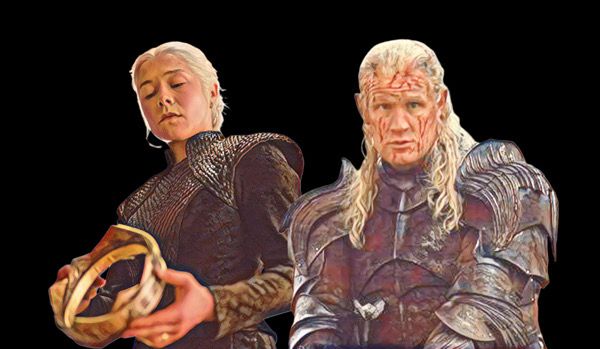
Aegon III has children. Two of them become kings, Daeron I and Baelor I. Both die without heirs. The direct line of the firstborn closes once more. The succession does not vanish, but shifts laterally within the family, passing to Viserys II, Aegon III’s brother.
That internal displacement is decisive in understanding the later legitimacy crisis. The dynasty had already been traumatized by civil war. Now it experiences another break in linear succession. Stability appears intact, but it is fragile. It is from Viserys II’s branch that Aegon IV, known as Aegon the Unworthy, is born.
Aegon IV rules irresponsibly and resentfully. On his deathbed, he legitimizes all of his bastard children. Among them is Daemon Waters, who becomes Daemon Blackfyre. A celebrated warrior and bearer of the ancestral sword Blackfyre, symbol of Targaryen kingship, he embodies for part of the nobility the image of the ideal monarch. The legitimate heir, however, is Daeron II, recognized son, diplomatic ruler, and architect of Dorne’s peaceful integration into the realm.
What emerges is not merely a personal rivalry but an ideological fracture. Some lords see in Daeron excessive conciliation and weakness. In Daemon, they see the promise of a return to a militarized, aristocratic past. When Daemon proclaims himself king, Westeros divides once more.
The First Blackfyre Rebellion culminates in the Battle of the Redgrass Field, a central event in the history of House Blackfyre, where Daemon is killed along with two of his sons. It is this battle that Egg recalls in his canto in The Knight of the Seven Kingdoms. The crown wins, but the division remains. It was the moment when the Targaryen dynasty came closest to fragmenting into two rival kingdoms, each claiming legitimacy over the Iron Throne.
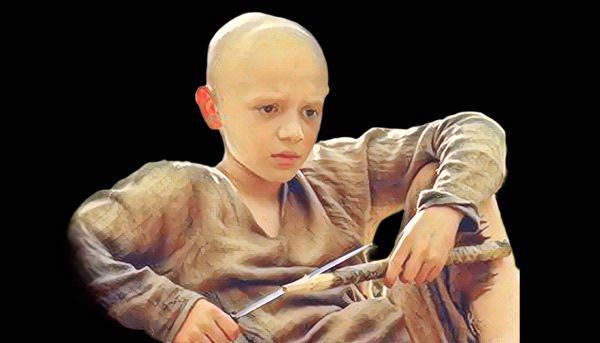
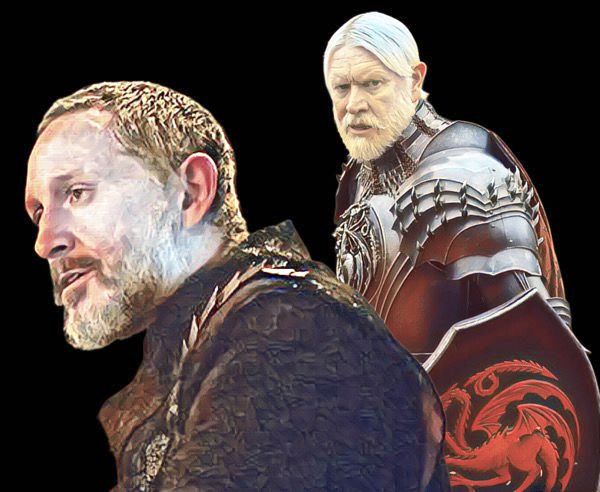
Aegor Rivers, known as Bittersteel, flees to Essos and founds the Golden Company, an organization created with the explicit goal of placing a Blackfyre upon the Iron Throne. The war ceases to be merely internal and becomes a long-term political project in exile. Decades later, new attempts arise. The Second Blackfyre Rebellion is smaller in scale and more disorganized, yet equally revealing within the broader Targaryen chronology.
How the Blackfyre Rebellion Influences Egg in A Knight of the Seven Kingdoms
It is at this point that A Knight of the Seven Kingdoms positions itself. Egg is still a boy, squire to Dunk, traveling through a realm that carries the fresh memory of the Blackfyre Rebellions. Every tourney is charged with political tension. Every noble may conceal ambiguous loyalties. The past has not been resolved. It has only been suspended.
Egg’s aversion to the Blackfyres is not youthful exaggeration. He understands that the conflict threatens not only his family but the structural stability of the realm. Growing alongside Dunk, witnessing the hardships of commoners and the inequalities embedded in Westerosi society, Egg develops a political vision distinct from the aristocratic traditions that sustained parts of the rebellion. For him, the Blackfyres represent not merely a dynastic rival, but the crystallization of a model of power rooted in force, pride, and nostalgia for a martial past.
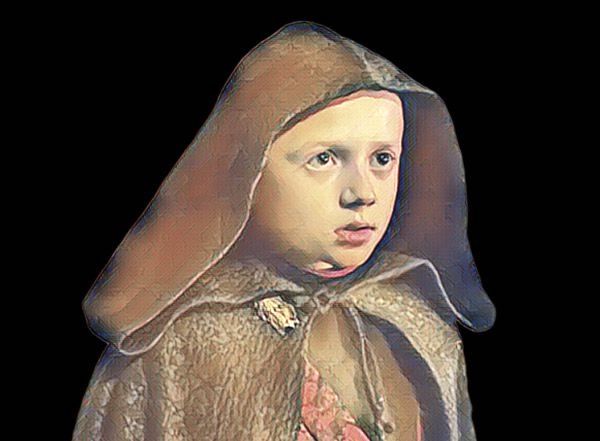
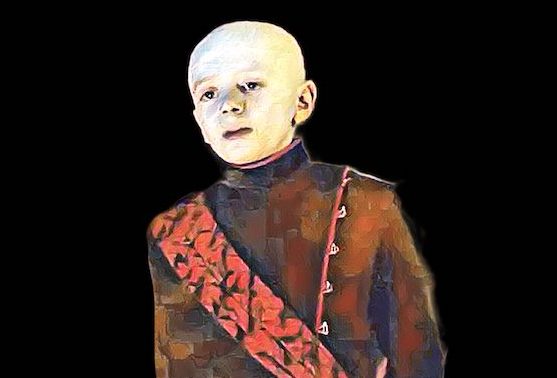
When he eventually becomes king as Aegon V, his reign can be read as a direct response to that historical trauma. He attempts reforms designed to benefit the smallfolk and restrain noble abuses, confronting the very structures that once fueled support for House Blackfyre. The conflict shifts from military to structural. It is no longer only about stopping a pretender, but about transforming the conditions that made the Blackfyre Rebellions possible.
The history of the Blackfyres does not arise in isolation. It is continuity. The Dance of the Dragons weakens the Targaryen succession. The childless deaths of Aegon III’s sons displace power within the dynasty. The irresponsibility of Aegon IV detonates that fragility into open war. A Knight of the Seven Kingdoms situates itself precisely in the interval between trauma and repetition, showing how the memory of civil war shapes an entire generation.
Understanding the Blackfyres is understanding why the Targaryen succession was never entirely stable, whether in A Knight of the Seven Kingdoms, House of the Dragon, or, decades later, in Game of Thrones.
Could the Blackfyre Rebellion appear in A Knight of the Seven Kingdoms?
Although the first season adapts The Hedge Knight, the trauma of the Blackfyre Rebellions already shapes the kingdom that Dunk and Egg traverse. And, if the series advances chronologically, the conflict could gain direct screen time.
Descubra mais sobre
Assine para receber nossas notícias mais recentes por e-mail.
 miscelana.com
2 comentários Adicione o seu