
A few years ago, cinema seemed to anticipate with almost uncomfortable precision a debate that now dominates awards seasons. In Tár, directed by Todd Field, we follow the downfall of Lydia Tár, a brilliant conductor whose reputation begins to unravel as accusations, rumors, old messages, and poorly explained power dynamics start circulating around her.
For much of the 2023 awards season, the film seemed destined to bring Cate Blanchett the third Oscar of her career. The actress won both the BAFTA and the Critics’ Choice and was widely considered the frontrunner. However, when the Academy finally voted, the award for Best Actress went to Michelle Yeoh for Everything Everywhere All at Once. Not because of any scandal involving Blanchett, but largely because Yeoh’s campaign rode the wave of the film’s enormous success that year.
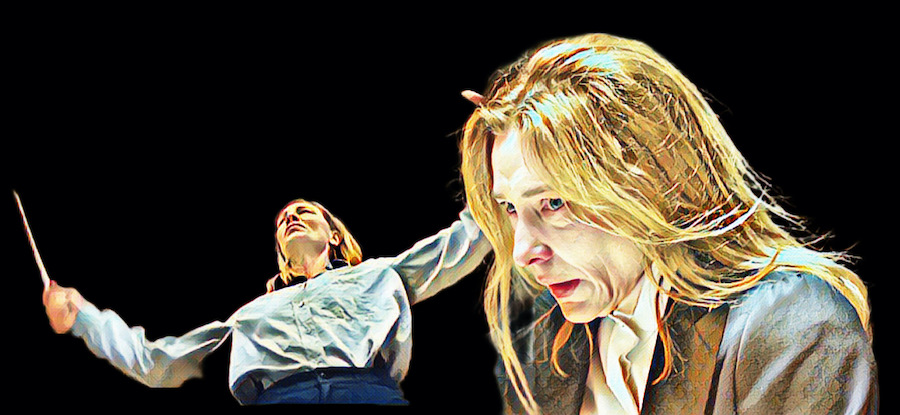

Still, more than a portrait of the world of classical music, Tár became a deeply unsettling reflection on reputation, power, and public narrative. The film examines with almost clinical precision how accusations, grievances, half-truths, and strategies of exposure can blend together until they form something larger than any single fact. Lydia Tár’s fall does not happen because of one defining scandal, but through a sequence of episodes that gradually erode the carefully constructed image of an artist who believed she had complete control over her own narrative.
It is difficult not to think of that story when observing the recent discussions surrounding Timothée Chalamet during the current awards season. The debate around the actor does not involve a scandal comparable to the most turbulent episodes in Hollywood history. Instead, what emerges is something more subtle and increasingly characteristic of the social media era: the way public perception of a candidate can shift quickly, altering the tone of a race that once seemed relatively settled.
This question has followed the Oscars for far longer than many realize. To what extent does the prize celebrate only the talent that appears on screen, and to what extent does it reflect the narrative that forms around an artist in the final weeks of campaigning?

The Academy has always been presented as the place where cinema celebrates its greatest artistic achievements. The most striking performance, the most powerful film, the work that best captures the spirit of a particular year. Yet any attentive observer of the award’s history knows that this narrative is only partially true. In many seasons, the Oscar ends up being decided far from the screen, when reputations, interviews, public controversies, and campaign missteps begin to influence the atmosphere of the vote.
One of the earliest clear examples of this dynamic dates back to the scandal involving Ingrid Bergman and director Roberto Rossellini in the late 1940s. When their relationship became public, Bergman was still married to another man and quickly became the target of an intense moral backlash in the United States. The controversy even reached the political sphere when the actress was denounced in a speech on the floor of the U.S. Senate, where she was described as a symbol of moral decay in cinema.
The impact on her career was immediate. Bergman virtually disappeared from Hollywood for several years and worked primarily in Europe. Although she eventually returned and later won additional Oscars, the episode remains one of the earliest and most striking examples of how the personal life of a star could dramatically alter her relationship with the industry.

Decades later, the mechanism changed in form but not in essence. Instead of moral scandals capable of pushing artists out of Hollywood for years, new crises began unfolding within the awards season itself, reshaping the narrative of a race in real time.
One of the most frequently cited cases involves Eddie Murphy. In 2007, his performance in Dreamgirls was widely praised, and he was considered the frontrunner for Best Supporting Actor. However, during the awards campaign itself, Murphy released the comedy Norbit. The film was harshly criticized and quickly became the dominant topic of conversation in Hollywood. The contrast between the acclaimed drama and the poorly received comedy altered the tone of the race. In the end, the Oscar went to Alan Arkin for Little Miss Sunshine.
Something similar happened with Mickey Rourke. After winning the Golden Globe and the BAFTA for The Wrestler, he arrived at the Oscars as the favorite. However, turbulent interviews and controversial remarks during the campaign began to create discomfort within the industry. The race shifted direction, and the award ultimately went to Sean Penn for Milk.


Another frequently cited episode involves Russell Crowe. After winning the Oscar for Gladiator, he returned as a strong contender for A Beautiful Mind. During the awards season, however, a verbal confrontation in a hotel following the BAFTAs circulated widely in entertainment media, and many observers believe it affected the tone of the voting. The Oscar eventually went to Denzel Washington for Training Day.
In more recent years, the dynamic has become even more volatile as social media began amplifying debates that once circulated mostly within the industry.
The nomination of Andrea Riseborough for To Leslie in 2023 became a clear example of this new reality. The actress secured a surprising nomination after an intense campaign led by fellow actors on social media, including Gwyneth Paltrow. As a result, a narrative quickly emerged suggesting that her nomination had “taken” the slot many expected to go to Viola Davis or Danielle Deadwyler. Soon after the nomination was announced, accusations of aggressive lobbying and possible violations of Academy campaign rules surfaced, prompting the institution to open an investigation. Nothing improper was ultimately found, but the controversy effectively eliminated any real chance that she would be seriously considered for the final prize.


A different but equally revealing situation involved Karla Sofía Gascón during the campaign for Emilia Pérez. The initial enthusiasm surrounding the actress was shaken when older social media posts began circulating widely, shifting the tone of the public conversation during the awards season. Her response failed to strike the tone of contrition many expected, and she was essentially sidelined at events so as not to affect the chances of her fellow nominees or even the film itself.
Taken together, these episodes reveal something that Tár captured with almost prophetic clarity. The reputation of an artist rarely collapses because of a single event. It weakens gradually, as different narratives begin competing for the same public space.


The Oscars continue to be presented as the ultimate celebration of cinematic talent. In practice, however, they also reflect reputations, perceptions, and stories that develop far beyond the screen.
And that is precisely why, in many races, the award ends up being decided not only by what artists did in front of the camera, but by the narrative that comes to define who they are at that particular moment.
Descubra mais sobre
Assine para receber nossas notícias mais recentes por e-mail.
 miscelana.com