
The roar of an engine, the silence that precedes a jump scare, or the echo of an empty hallway. Audiences often feel the impact of these choices without quite realizing where it comes from. It is in this invisible territory — where technique and emotion meet — that the Academy Award for Best Sound operates.
One could argue that as cinema has changed — and with it the way we consume stories — the Best Sound category has become one of the most significant awards at the Oscars. In an era of increasingly immersive audiovisual experiences, sound design is a fundamental part of storytelling. Yet the award continues to be treated as a “technical” category, often overlooked in the central conversations of awards season.
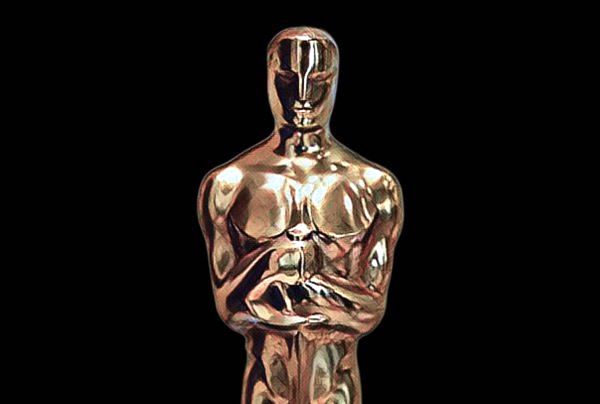
Since 2021, the Academy has simplified the structure of the prize. For decades, there were two separate categories: Sound Editing and Sound Mixing. The first recognized the creation and selection of sound effects, while the second honored the final balance between all the audio elements in a film. The reform merged these fields into a single award, Best Sound, which now recognizes the entire sound process.
In practice, this statuette celebrates an extremely complex process. A film’s sound begins with recording during production, passes through the recreation of noises in the studio — the so-called foley, responsible for reproducing footsteps, clothing movements, or objects — includes the creation of digital effects, and culminates in the final mix, when dialogue, score, and effects are balanced to form a coherent auditory experience.
It is precisely this process that transforms sound into such a powerful narrative tool. Audiences often feel its impact without necessarily identifying the reason. The roar of an engine, the silence that precedes a scare, or the echo of an empty corridor are dramatic choices as important as a performance or a camera movement.
The list of nominees for the 2026 Oscars demonstrates the growing centrality of this sonic dimension across various types of filmmaking. Among the contenders are F1, Frankenstein, One Battle After Another, Sinners, and Sirât, five films that explore sound in very different ways.
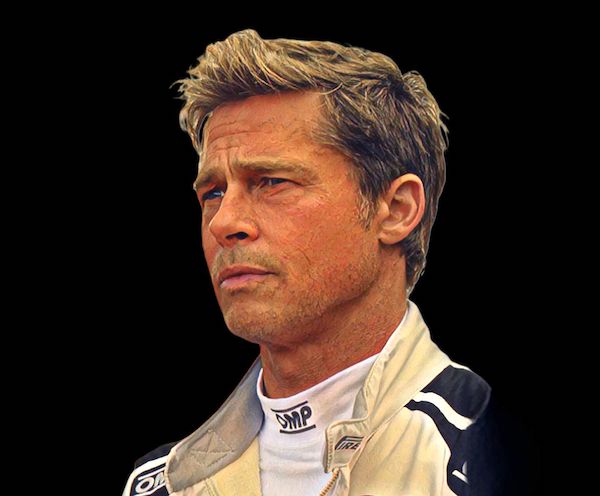
Looking at this list of finalists, it becomes clear that films most dependent on sound tend to have an advantage. That is the case with F1, a production set in the world of Formula One. Films about speed and machines have always performed strongly in this category because they require highly elaborate sound design. The sound of a racing car, for instance, rarely corresponds only to what was captured on set. It is usually reconstructed in layers, combining real recordings, digital manipulation,n and precise mixing to convey power and the sensation of speed. This kind of sonic engineering often impresses Academy voters.

Close behind is Sinners, a thriller directed by Ryan Coogler that has accumulated a significant number of nominations this season. Unlike F1, whose strength lies in the physical impact of sound, the film builds its atmosphere through tension, silence, and more psychological sound environments. In this case, the sound work functions almost as an extension of suspense, amplifying the sense of threat that runs through the narrative.
Another important competitor is One Battle After Another, a film that combines epic scale with human drama and whose sonic construction depends on both grand sequences and more intimate moments. This kind of balance often appeals to Academy voters, who frequently reward works capable of combining technical impact with narrative sophistication.
The other two nominees, Frankenstein and Sirât, appear in predictions as possible surprises. The former relies on the atmospheric potential of a classic horror story, a genre that traditionally values the expressive use of sound to create suspense and unease. Sirât, meanwhile, stands out for a more sensory and experimental approach, exploring soundscapes that help build the film’s universe.
If there is a historical trend in the category, it is relatively clear. The Oscar often favors productions in which sound is immediately perceptible as spectacle. Action, war, science fiction, or racing films frequently have an advantage. Even so, the Academy occasionally rewards more atmospheric works when sound design becomes essential to the film’s identity.
More than a technical award, Best Sound ultimately reveals how cinema is, above all, a sensory experience. Much of what we feel in a dark theater does not come only from the image projected on the screen, but from the sonic universe surrounding it. It is precisely this invisible architecture — built by engineers, designers, and mixers- that the Oscar seeks to recognize when it hands out this statuette.
Among this year’s five nominees, one detail helps explain how the Academy tends to think about this category. The Sound Oscar is rarely awarded to a single professional. In practice, it honors entire teams who work together for months — sometimes years — developing a sonic identity for the film. And when one looks at the names nominated in 2026, it becomes clear that the race mixes already-awarded veterans with new talent.

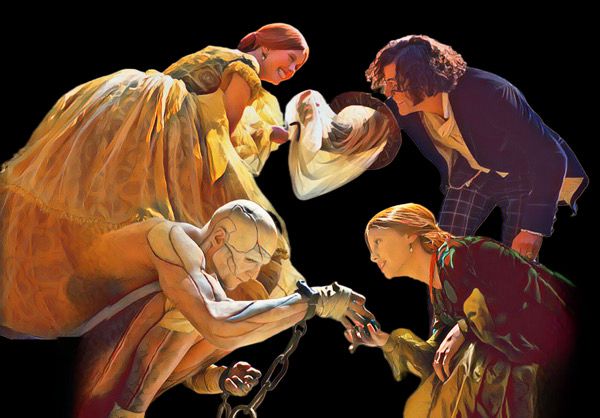
Perhaps the most striking case is Frankenstein, directed by Guillermo del Toro. The film arrives at the awards with a team that includes no fewer than four Oscar winners: Greg Chapman, Nathan Robitaille, Nelson Ferreira, and Christian Cooke. All of them were part of the team responsible for the sound of Dune, winner of the category in 2023. This kind of “reunion” of the Dune team helps explain why many awards analysts see Frankenstein as a technically formidable contender. The film’s sound work focuses on creating a physical atmosphere for the creature and the gothic world imagined by del Toro.
Another powerful candidate is F1, directed by Joseph Kosinski, which dives into the world of Formula One. Here,e the challenge is different: transforming speed into a sensory experience. The nominated team includes experienced names such as Gary A. Rizzo, a two-time Oscar winner for Inception and Dunkirk, and Gwendolyn Yates Whittle, who also won for Inception. The rest of the team — Gareth John, Al Nels, and Juan Peralta — contributes to work that attempts to recreate the intensity of the races, rebuilding engines, circuits, and crowds with an almost documentary level of precision.
In Sinners, sound takes on a more atmospheric role. The team includes two Oscar winners: Benjamin Burtt, honored for WALL-E and a true legend of modern sound design, and Steve Boeddeker, who won for All Is Lost. Alongside them are Chris Welcker, Felipe Pacheco,o and Brandon Proctor. The film combines historical realism with more stylized elements, creating a sonic landscape that blends silence, tension, and moments of powerful dramatic impact.
One Battle After Another enters the category with a team composed of José Antonio García, Christopher Scarabos, io, and Tony Villaflor. None of them has yet won an Oscar, but all have well-established careers in American cinema. The sound work here is more discreet, focused on building narrative tension in a political thriller that relies more on atmosphere than on technical spectacle.
Finally, Sirât represents the most international side of the category. The film is credited to Amanda Villavieja, Laia Casanovas, and Yasmina Praderas, three professionals who have not yet won the Oscar but have been praised on the festival circuit for the film’s sensory and minimalist sound design. Instead of large effects or explosive moments, the sound in Sirât relies on silence, text,, u e and space. The nomination of Sirât also carries a symbolic detail: it is a sound team composed entirely of women in an area of the industry historically dominated by men, where female victories remain rare.

If recent history serves as a guide, the Sound Oscar usually favors films in which sound becomes a form of physical spectacle. In recent years, the Academy has rewarded productions in which audiences can literally feel the sound in the theater — roaring engines, airplanes slicing through the air, or monumental soundscapes that dominate the film’s sensory experience.
In this sense, F1 seems to fit perfectly into this recent tradition of the award. Films about speed and machines have always had an advantage in the category precisely because they require extremely complex sound design capable of transforming movement into acoustic impact.
Even so, the presence of experienced teams in competitors such as Frankenstein and Sinners shows that the race may not be as predictable as it seems. In the end, the Best Sound category continues to reveal something essential about cinema: often what we feel most intensely in a dark theater does not come only from the image projected on the screen, but from the sonic universe that surrounds it. It is this invisible architecture — built by engineers, designers, and mixers — that the Oscar seeks to recognize when it awards this statuette.
Descubra mais sobre
Assine para receber nossas notícias mais recentes por e-mail.
 miscelana.com