
Arthur Shelby always occupied a place no other character in Peaky Blinders could replace. As the older brother, he should have been the natural leader, but the war brought him back, incapable of sustaining that role. What remained was a man shaped by deep trauma, violent impulses, and a constant need for direction, one he found in Tommy. This inversion, in which the younger brother becomes the mind, and the eldest turns into an unstable force, defines not only the family dynamic but the very structure of the group.
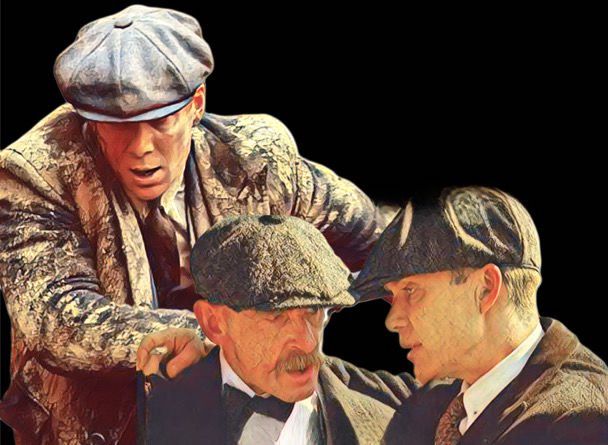
From the first season, Arthur is portrayed as someone who carries the war more visibly. While Tommy organizes the world around him through strategy and silence, Arthur exposes the fractures. He drinks, loses control, and swings between guilt and brutality. And yet, he is also where the series places something rarely seen in others: genuine remorse. Arthur feels the weight of what he does. He does not rationalize violence. He suffers through it.
Across the seasons, his trajectory is marked by attempts at redemption that never fully succeed, but never disappear either. His relationship with Linda emerges precisely in that space. She represents containment, moral reconstruction, and a possible exit. For a moment, Arthur seems to believe he can abandon the Shelby logic and live under a different code, one that is stricter, more religious, more predictable. That attempt, however, collides with the reality of the world he inhabits and, above all, with the impossibility of completely breaking away from Tommy.
Their relationship was never about power rivalry, but about emotional dependence. Arthur needs Tommy to function, even if that slowly destroys him. Tommy needs Arthur to maintain some connection to what remains of his humanity, even if that destabilizes him. It is a bond built on absolute loyalty, but also on a kind of mutual entrapment.
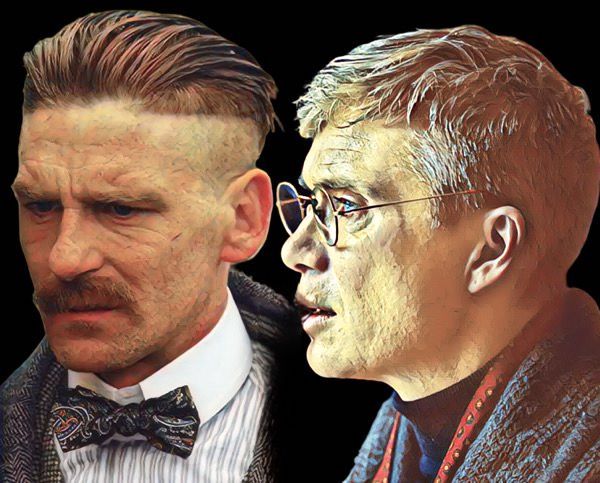
By the sixth season, Arthur is no longer simply unstable. He is in ruins. Drug use intensifies, violence becomes more erratic, and his presence carries a melancholic, almost spectral weight. And yet, he remains by Tommy’s side until the end. There is no rupture. No betrayal. Nothing that prepares the ground for a confrontation between them. What exists is exhaustion, pain, and a continuity that does not resolve itself, but does not break either.
Linda, by then, had already stepped away. Their relationship deteriorates as Arthur repeatedly fails to stay away from violence. She briefly returns during one of his moments of vulnerability, but there is no lasting reconciliation. Her departure is not dramatic in a conventional sense. It is, instead, an acknowledgment of limits. She understands she cannot save him, and that staying would mean being consumed by the same cycle.
This is precisely why the film’s treatment of Arthur feels so dissonant. The decision to state that he died, and more than that, that he was killed by Tommy, finds no support in what the series built over six seasons. This is not simply a shocking turn. It is a reversal of logic. Tommy killing Michael is coherent within the narrative arc. Michael represents a direct, calculated, strategic threat. He is an adversary within the family.
Arthur never occupied that role. Not once.
Turning him into a victim of Tommy requires redefining who Tommy is, not just as a leader but as a character. Throughout the series, Tommy crosses many lines, but there is one that the narrative never suggests he would cross: eliminating Arthur. Because doing so would not be an act of power. It would be a complete internal collapse.
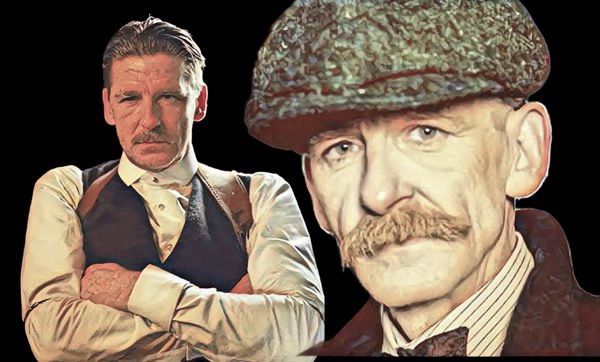
The film seems to respond less to the story than to the actor’s absence. And that absence has a concrete explanation. Paul Anderson has faced, in recent years, personal and health issues that directly impacted his availability for the project. There have been public reports involving legal matters and difficulties that led the production to significantly reduce his participation.
The actor himself, in recent interviews and statements, has not indicated any creative dissatisfaction with the character or the series. On the contrary, he has consistently described Arthur as one of the most intense experiences of his career. His absence was not the result of a narrative decision, but of external circumstances.
This is what makes the film’s choice even more questionable. Instead of finding a resolution that respected the character’s trajectory, it opts for an outcome that fills an absence with immediate impact, at the cost of narrative coherence.
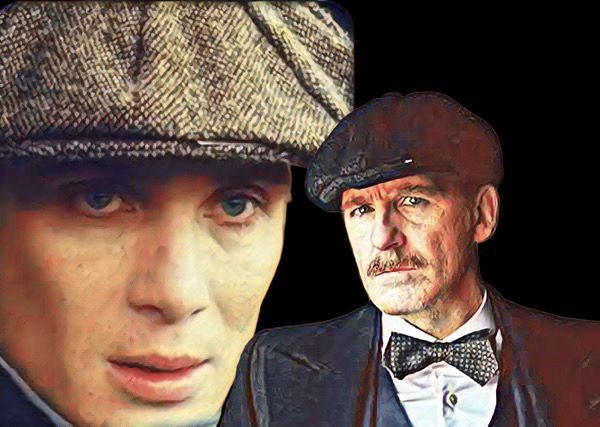
There is also a detail that reinforces this sense of rupture. Linda, who was central to Arthur’s attempt at reconstruction, simply disappears from the equation in the film. Her absence is not explained, not developed, not even meaningfully acknowledged. This not only weakens Arthur’s fate but also erases one of the few narrative threads that offered him a possible alternative.
What remains, in the end, is not just Arthur’s absence, but the feeling that his story was rewritten without the same care the series devoted to him. And perhaps that is why the reaction feels so immediate. Because more than any other character, Arthur Shelby was always the most exposed, the most vulnerable, and the most human part of that world. And treating him as expendable is not just a narrative choice. It is a distortion of what Peaky Blinders has always been.
Descubra mais sobre
Assine para receber nossas notícias mais recentes por e-mail.
 miscelana.com