
The episode involving soccer player Jorginho’s stepdaughter and Chappell Roan’s team in Brazil began in a banal way and ended as an uncomfortable portrait of our time. During a hotel breakfast, the young girl was reportedly approached harshly by security simply for looking at the singer. She left in tears, embarrassed, and carrying something harder to repair than the immediate shock: the fracture of an admiration. Jorginho reacted publicly, with the authority of someone who knows this space from the inside, and voiced a discomfort that goes far beyond that specific moment.
This struck a nerve with me because it isn’t new. Because, in different ways, I have seen this kind of rupture happen before. And because I have also experienced the other side, when the encounter between fan and idol produces exactly the opposite.
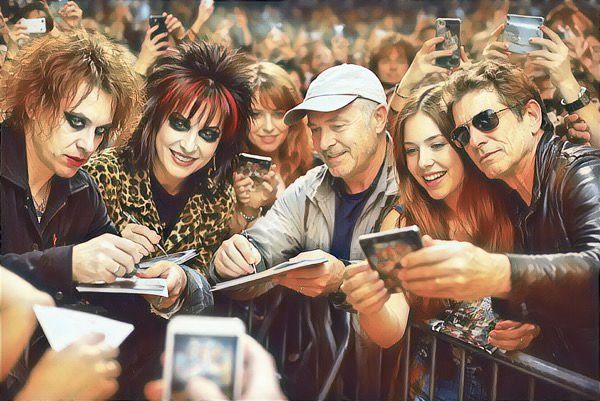
I was 15 when I went to São Paulo to see Siouxsie and the Banshees. Before the show, I ran into the band at a shopping mall. I asked for an autograph, and they not only gave it, but they also asked about me, laughed, and were kind. Hours later, outside, they recognized me from inside a car and waved, saying they would see us later. That memory stayed with me not because of the performance on stage, but because of how I was treated off it.
Shortly after, my sister experienced something very similar to what is now being discussed. When she met Phil Collins, also at 15, she asked for an autograph. He seemed willing to give it, but his security guard reacted aggressively and disproportionately. What stayed with us was not only the approach but the fact that Collins watched it happen without intervening. Since then, listening to his music has never felt the same.
Years later, in New York, I witnessed another scene that never left me. A man, visibly emotional, told Lou Reed that he loved his music. He didn’t ask for a photo or anything else. The response was dry, distant, and almost hostile: “Good for you”, Reed replied and turned away. A simple thank you would have taken the same amount of time and changed everything. That man is probably still carrying that moment. I know I am.
These experiences quietly shaped the way I approach these encounters. When I had the chance to be introduced to Robert Smith, from The Cure, even with backstage access, I chose not to approach him. A security guard had already blocked the way, and that was enough for me not to risk the relationship I had built over the years as a fan. Smith walked past me, close enough for a simple gesture, but I chose to do nothing. I kept the warmth of the smile he gave me without needing anything more. From the security guard, what remained was resentment.


I could list countless examples like these, but I have also seen the other side. I have worked with extremely famous people who, even under constant pressure, made a point of acknowledging those who approached them, even if only for a few seconds. There wasn’t always time, but there was care. There wasn’t always energy, but there was respect.
Fame creates an unequal relationship in which admiration is often interpreted as unrestricted access. For the fan, that encounter is unique. For the artist, it is just one among many. This mismatch of expectations has intensified with social media. It is no longer enough to live in the moment. It has to be recorded, shared, and turned into public validation. The artist is no longer just someone admired, but someone perceived as available.
This is not sustainable. There is exhaustion, there are limits, and there is the right not to be accessible all the time. At the same time, there is an implicit contract in this relationship. As unfair as it may be, it exists. A single second of attention can become a lasting memory. The absence of it can have the opposite effect.
I have stayed in hotels where artists were staying, shared elevators, and crossed paths in moments without any mediation. In all of these situations, I chose restraint. At most, a brief thank you. The connection exists, but the uncertainty of the response made me cautious.
That is why the episode involving Jorginho’s stepdaughter is so unsettling. At just 11 years old, she did not invade space, did not demand anything, did not cross boundaries. She did what any child would do upon recognizing someone they admire. The response she received was disproportionate. And being the daughter and stepdaughter of public figures, she understands this dynamic better than most.
I understand Jorginho’s reaction because he lives this as well. I have seen players unable to get through a meal in peace, fans demanding attention, and rivals feeling entitled to insult them. The way we behave socially has changed. What used to be filtered is now expressed without mediation.
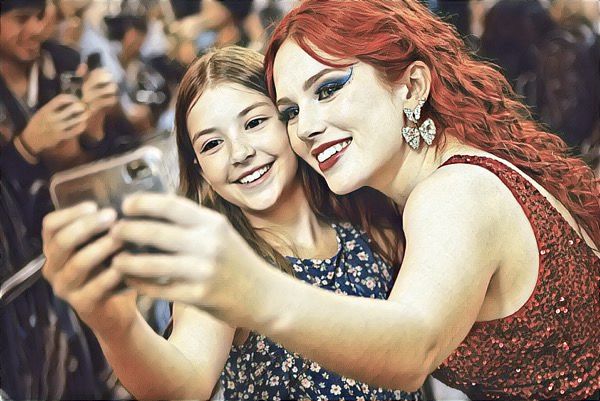
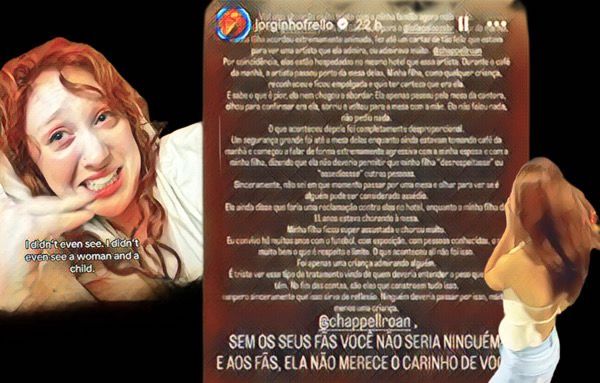
As for Chappell Roan, the apology was not enough for me. Not because an artist should control everything, but because there is room to guide those around them. It is not always possible to prevent situations like this, but it is possible to set clearer boundaries on how they should be handled. And more than that, the response should acknowledge the weight of what that girl experienced. There is no way to erase tears and public humiliation with a protocol statement.
In the end, the relationship between fans and idols remains a delicate territory. And every encounter, no matter how small, carries the potential to define how that story will be remembered. In this case, it did not have a happy ending.
What makes this episode linger is not just what happened, but the absence of a boundary that once seemed possible. There was a time when distance itself functioned as protection — when not being available was, in itself, a way of defining the relationship between a public figure and the world around them. Greta Garbo built her entire presence on that distance. You can read it here.
As for Chappell, this kind of experience helps explain why so many artists have begun to impose increasingly clear boundaries in their relationship with the public.
But these limits don’t exist only in what is said. They become even more visible backstage, where access is carefully controlled and often restricted by rules the audience can hardly imagine. Read it here.
Descubra mais sobre
Assine para receber nossas notícias mais recentes por e-mail.
 miscelana.com
1 comentário Adicione o seu