
If there is a legend in Hollywood that time has not erased, that legend is Greta Garbo. The Sphinx, “Garbo,” the famous “leave me alone”… her beauty, talent, and, above all, authenticity helped build the myth. She may have lived through the 1930s and 1940s, but even today, Garbo feels modern. And mysterious. A new biography about her personal life, filled with affairs involving both men and women, is set to reignite curiosity around her. Garbo, by Robert Gottlieb — who previously wrote an excellent account of George Balanchine — focuses on the actress’s romantic relationships.
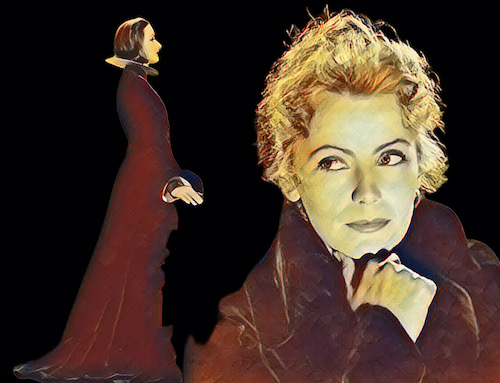
Born in Stockholm as Greta Lovisa Gustafsson, Garbo came from a poor family. Solitary and shy from an early age, she discovered a passion for the stage very young. Her father died when she was just 14, a victim of the Spanish flu pandemic. She began working as a model and, in 1920, made her film debut in a small role. Her beauty was already unmistakable and quickly drew the attention of prominent directors. Garbo entered the Royal Dramatic Theatre’s acting school in Sweden and went straight from there into leading roles in film. Director Mauritz Stiller was instrumental in introducing her to Louis B. Mayer, bringing her to a rising Hollywood.
Without speaking a word of English — which was irrelevant in the silent era — Garbo moved to the United States in 1925. Irving Thalberg filmed a screen test and was impressed, beginning the process of transforming Greta into Garbo: adjusting her appearance, placing her on a strict diet, and teaching her English. Her image was crafted as exotic and sophisticated, a seductive figure she did not particularly like, but accepted. Within a year, she had become the studio’s biggest star.
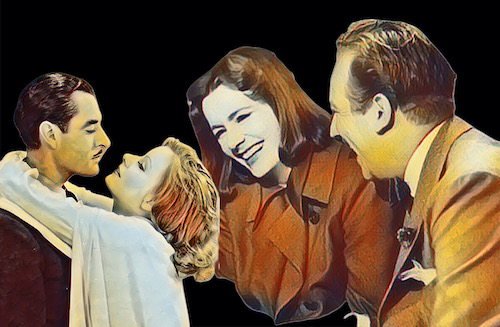
In just eight films, Garbo became a global sensation. During the silent era, she starred alongside John Gilbert in three films, and their off-screen romance captured public attention. Sensual and daring, she defied social conventions by living with her partner without marriage — a scandal of considerable proportions at the time.
More than just beautiful, Garbo was recognized as a serious actress. As her status grew, so did her reputation for being difficult, with demands that included restricting access to her on set. With the arrival of sound in cinema, there were concerns that her strong accent might hinder her career, but the opposite happened: it added depth to her screen presence. Anna Christie, she earned an Academy Award nomination. In a later version of the film, she shocked audiences by dressing as a man and kissing a woman on screen.
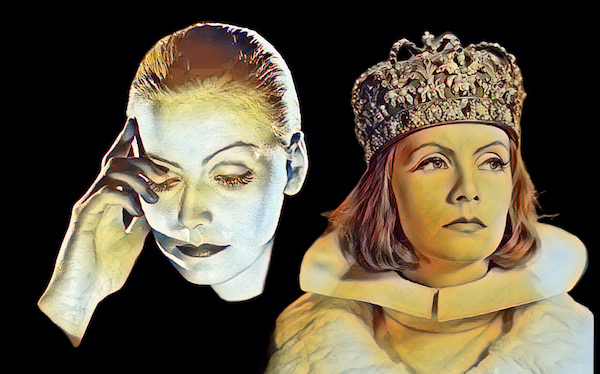
During the filming of Camille (La Dame aux Camélias), Irving Thalberg died at the age of 37, leaving Garbo devastated. That same year, she had also lost John Gilbert, and these personal losses, combined with a decline at the box office, deeply affected her. She received another Oscar nomination and would always cite Camille as one of her favorite films. In Ninotchka, she made her comedic debut — “Garbo laughs!” — but even singing and dancing in Two-Faced Woman, her popularity had begun to fade. She chose to retire at just 36.
Garbo briefly considered returning to the cinema, but it never materialized. She turned down Sunset Boulevard and moved to New York, seeking a life away from the cameras. She became associated with the phrase “I want to be alone,” although what she reportedly meant was closer to “I want to be left alone.”
The truth is that, as a queer woman forced to hide her personal life, Garbo grew tired of Hollywood and of constant attention. She died in 1990 at the age of 84, from complications related to breast cancer. Privately, she was often described as distant or even unfriendly — whether out of shyness or conviction. She avoided parties, refused autographs, and rarely gave interviews. In one, in 1928, she admitted: “Ever since I can remember, I have wanted to be alone. I hate crowds. I don’t like many people.”
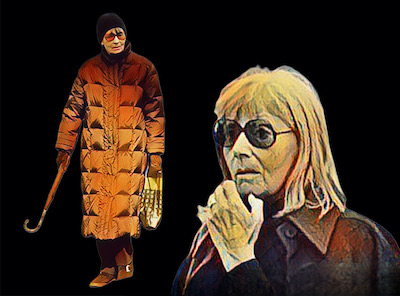
This attitude fueled her image as the Sphinx, a mysterious woman — but also made her one of the most pursued and famous figures of the twentieth century, something she deeply disliked. Her oversized sunglasses became a signature. The striking photographs by Cecil Beaton, her former lover, highlighted her beauty and magnetism. Despite her relationships with women, she was also involved with men.
An art collector, with works that included paintings by Pierre-Auguste Renoir and Wassily Kandinsky, she left her fortune to a niece upon her death, in her apartment on East 52nd Street in New York.
The new book emphasizes the strength of Garbo’s personality — someone who never fully conformed to expectations. Privacy was what she valued most, even as friends revealed fragments of her life over time. Gottlieb describes her relationships with both men and women, and how her famous rivalry with Marlene Dietrich may have stemmed from a romantic fallout between them. According to the author, her list of lovers was extensive, including Orson Welles, Tallulah Bankhead, Mercedes de Acosta, Josephine Baker, Louise Brooks, and even Billie Holiday.
Descubra mais sobre
Assine para receber nossas notícias mais recentes por e-mail.


1 comentário Adicione o seu