
We are about to meet Deborah Vance again for the last time. For me, having already felt that her story had reached its natural conclusion some time ago, there is a particular kind of anticipation in returning to someone so unruly, magnetic, and deeply unsettling. She’s coming back on April 9th, on HBO Max.
From the very beginning, Hacks built something rare. Not just a sharp comedy, but a character study anchored by a performance that quickly became indispensable. Deborah was never simple, and perhaps that is precisely why she works so well. She exists in a difficult balance between vulnerability and hardness, between strategic intelligence and impulses that undermine exactly what she is trying to protect.
It is within that unstable equilibrium that the series found its identity.
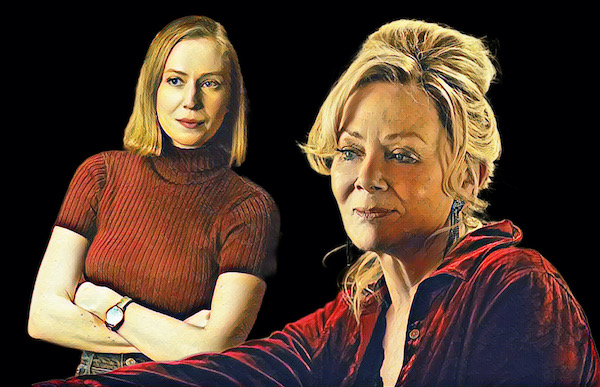
When precision begins to repeat itself
In its early seasons, there was real movement. The relationship with Ava was not merely a generational clash, but a process of mutual exposure. Every step forward came at a cost, and that gave the narrative a sense of genuine risk.
Over time, however, that structure began to repeat itself in slightly altered forms. Conflicts return, rearranged, positions shift, but the central mechanism remains intact. The series is still elegant, well-written, and sustained by precise performances. Yet there is a subtle but important difference between deepening a dynamic and orbiting it.
That distinction is what shadows the arrival of the final season.
The starting point, and what it reveals
The new season opens with a public mistake announcing Deborah’s death. At first glance, it reads as irony. But there is something sharper beneath it. It exposes, almost brutally, a system always ready to turn active figures into finished ones.
The return to Las Vegas, in this context, is not a comforting gesture of nostalgia. It is a repositioning. A return to the space where Deborah once held control, now reframed by the need to reassert relevance in an environment that no longer responds in the same way.
This is not about starting over. It is about redefining where she stands.
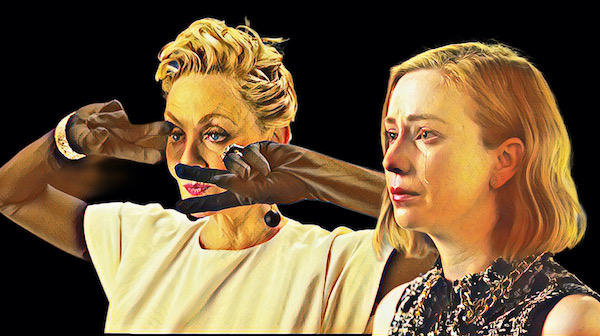
The relationship that sustains — and limits — the series
The partnership with Ava remains the most compelling axis of the show. Not only because of their contrasting perspectives, but also because it establishes an ethical boundary. Ava is not just a collaborator: she is a witness to Deborah’s choices, including those Deborah would rather not confront.
The problem is that this relationship has, over time, settled into a pattern that feels increasingly familiar. Proximity, rupture, reconciliation. Each stage is carefully constructed, but rarely pushed to a point of irreversible change.
And that is precisely what the final season must confront.
Between resistance and replication
There is a central ambiguity in Deborah Vance. She is often framed as someone who challenges the system, and she does. But she is also someone who has learned to operate within it, and at times, to replicate it.
This tension has never been a flaw. It has always been her strength. What is at stake now is what the series chooses to do with it in its conclusion.
Because this is no longer about claiming space. It is about defining what that space means — and what compromises it requires.
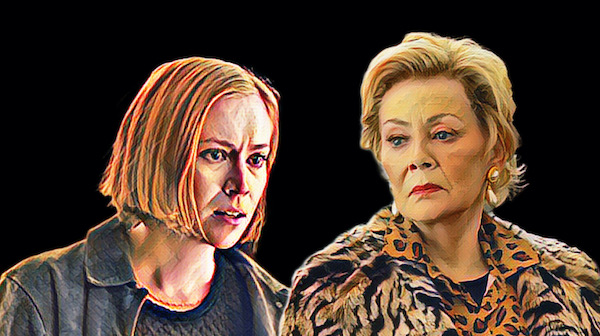
What still needs to happen
As it approaches its ending, Hacks does not need to prove that it still works. Its consistency is already established.
What remains is something else: the possibility of breaking free from the cycle that has sustained it for so long and allowing its contradictions to reach a real consequence. Not just dramatic, but structural.
Perhaps that is what makes this return so compelling, because it’s not as much about what Deborah Vance can still achieve, but what she may finally be forced to face.
Descubra mais sobre
Assine para receber nossas notícias mais recentes por e-mail.
 miscelana.com