
If the first two seasons of Hacks were about construction, what follows is about what happens when that construction begins to be tested by its own limits.
By the time the series reaches its third and fourth seasons, it no longer needs to prove its strength. The recognition is there, the characters are fully established, and the relationship between Deborah Vance and Ava Daniels has shifted from premise to foundation. And that is precisely where the movement changes.
What once felt like discovery becomes maintenance.
And maintenance, in Hacks, has never been simple.
Because success does not resolve the tensions the series built from the start. It reorganizes them on another level. The space Deborah has claimed — especially as she moves closer to the world of late-night television — turns the conflict into something more visible, more institutional, and at the same time harder to avoid.
Her relationship with Ava follows that shift. What once operated as confrontation now carries consequence. What could once be managed through distance now demands choice.
And it is at this point that the series begins to reveal something more uncomfortable.
Not everything that works continues to move forward.
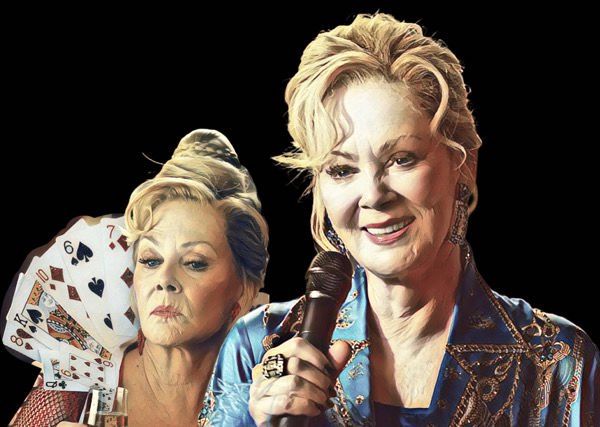
Season 3: Success, control, and the limits of the relationship
If the second season ends with a necessary rupture, the third begins in the space that rupture leaves behind.
Deborah and Ava move forward separately, but never entirely apart. There is an attempt at reorganization, as if distance might resolve what proximity had made inevitable. Deborah moves closer to broader recognition, driven by the success of her special. Ava, meanwhile, tries to establish herself in an environment that, for the first time, does not depend directly on Deborah’s presence.
But that separation does not hold for long.
Their reunion feels almost casual, yet quickly reveals that nothing has truly been resolved. What returns is not a fresh start, but an interrupted continuity. There is a shift in tone, an attempt at a more balanced coexistence, but what actually emerges is a reconfiguration of the same underlying forces.
The major shift this season is contextual.
For the first time, Deborah is not simply trying to survive in the industry. She is competing for a position that represents institutional recognition: hosting a late-night talk show. This is no longer about relevance within the comedy circuit, but about occupying a space historically denied to women.
That shift changes the axis of the narrative.
What was once an internal conflict — between identity, material, and relationship — becomes structural. Deborah now operates within an environment where every decision is calculated, every gesture observed, and every mistake potentially definitive. The drive for control, always present, intensifies.
And it is precisely here that Ava reclaims a central role.
Returning as Deborah’s creative partner, she not only contributes to the material but reintroduces a kind of instability Deborah tries to avoid. Ava represents risk, not just professionally, but symbolically. She is a constant reminder that absolute control is impossible.
Their relationship takes on a new shape. Less impulsive, more strategic. There are moments of genuine alignment, when the work flows, and the partnership seems to find equilibrium. But those moments are always interrupted by decisions that reveal a hierarchy that cannot be ignored.
The preparation for the talk show makes this especially clear.

Deborah must prove she can sustain that space, and that requires more than talent. It demands negotiation, compromise, and calculation. Ava, on the other hand, insists on a more authorial vision, less willing to conform to the expectations of the format. Their conflict moves beyond the personal and begins to reflect two fundamentally different understandings of what it means to “make it.”
And, as before, it does not resolve.
When Deborah finally achieves what she has been pursuing, her decision not to place Ava in a leadership role is not framed as a momentary failure. It is entirely consistent with everything she has built up to that point. Deborah chooses safety. She minimizes risk. Once again, she preserves control, even if it means compromising the most significant relationship in her recent life.
For Ava, this is not a surprise. It is confirmation.
Their confrontation is no longer about recognition or space. It becomes something harder to name: the realization that, for Deborah, ambition continues to outweigh any personal bond. And for Ava, remaining in that dynamic now requires a level of concession she is no longer willing to make.
Her response is radical.
By resorting to blackmail to claim her place, Ava crosses a line she had previously resisted. This is no longer a strategy. It is a definitive break from the relationship as it existed before. What once contained ambiguity is replaced by imposition.
And still, the series does not resolve this tension.
What the third season makes clear is that Deborah and Ava cannot fully function together — but they also cannot separate. The bond between them is no longer merely creative. It is structural.
And that is precisely what makes it increasingly difficult to sustain.
There is no comfortable resolution. There is achievement, rupture, repositioning. But above all, there is the sense that everything built up to this point has reached a stage where it can no longer continue in the same way.
The next season does not begin from zero.
It begins from this impasse.

Season 4: Proximity, strain, and the repetition of conflict
The fourth season of Hacks does not begin with a fresh start. It begins with a standoff.
After the rupture triggered by Ava’s blackmail, there is no longer space for comfortable ambiguity between her and Deborah. Everything that was once implied is now spoken, and once spoken, it becomes harder to ignore. The bond remains, but now shaped by a clear awareness of its limits.
And still, they remain together.
The new setting — the talk show — should represent arrival. Stability, recognition, power. But as the series insists on showing, what appears to be a breakthrough is actually another form of pressure. The institutional environment does not resolve the conflict. It amplifies it.
From the outset, it is clear that Deborah and Ava operate from incompatible visions of what this space should be.
Deborah thinks in terms of reach, continuity, and a broad audience that must be maintained. Ava insists on identity, on risk, on a voice that resists being diluted to fit the format. The conflict is not new, but it now operates at a level where it directly affects the functioning of the show.
And this is where the season reveals its most compelling — and most problematic — movement.
Increased proximity does not resolve their conflict. It wears it down.
There are moments when the partnership appears to reorganize itself. Small concessions, shifts in direction, decisions made in the name of keeping the show running. But these moments never hold for long. What returns, repeatedly, is the same structure: proximity, collision, recalibration.
The difference is that now, the cost is higher.
The backstage environment — with its generational tensions, ratings pressures, and corporate decisions — mirrors what Deborah has always been, and what Ava fears becoming. The series is sharp in showing that these tensions are not exceptions. They are the rule. Success does not simplify. It complicates.
And yet, there is hesitation.
Whenever the narrative approaches deeper structural conflicts — the mechanics of the industry, power dynamics, the relationships between women within that system — it pulls back. Instead of fully exploring those fractures, it repositions its protagonists into a workable, if fragile, balance.
This becomes particularly evident in how power is used.
Deborah’s indirect role in Winnie’s dismissal does not stem from urgency, but convenience. It reveals how fully she has absorbed the logic she once had to resist. And yet, the consequences of that action are never fully explored. The conflict is absorbed rather than confronted.
The same pattern appears in her relationship with Ava.
There are moments of rupture that feel definitive, direct confrontations, public exposure, decisions that seem to put everything at risk. But shortly after, there is a return. Not fully resolved, but functional enough to keep the system running.
And this is where the sense of repetition settles in.
Not as a lack of quality. The season remains sharp, well-acted, and often uncomfortably precise in its reading of the industry. But what once felt like evolution begins to feel like variation.
By the end, when Deborah publicly breaks with the system by walking away from the air show, there is a glimpse of something different. A gesture not mediated by calculation. A moment that puts not only her career at risk, but the entire logic that had sustained it.
But even that gesture does not fully resolve.
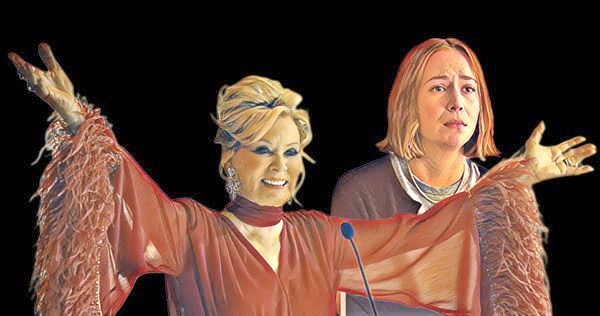
The contractual restrictions that follow, the displacement from the traditional circuit, the attempt to reinvent herself elsewhere — all of it returns Deborah to a familiar position. Outside, but still within. In rupture, but still orbiting the same system.
Her relationship with Ava follows that same trajectory.
They remain connected, but increasingly unstable. What binds them is no longer just work or affection. It is something more difficult to sever, precisely because it no longer depends on conscious choice.
And perhaps that is what ultimately defines the fourth season.
Not the conflict itself.
But the growing sense that it can no longer continue repeating in the same way, even if the series, so far, has not found another way to resolve it.
Descubra mais sobre
Assine para receber nossas notícias mais recentes por e-mail.
 miscelana.com