
There is something deeply revealing about the return of The Devil Wears Prada nearly twenty years after its release. This is not simply about revisiting iconic characters or leaning on the comfort of nostalgia. What is at stake now is far more complex because the world that once sustained that narrative no longer exists in the same way. Fashion has changed, media has changed, and the very idea of editorial authority has been dismantled and rebuilt countless times. Returning to this universe requires more than reunion. It requires justification.
This is precisely where the sequel finds its starting point.
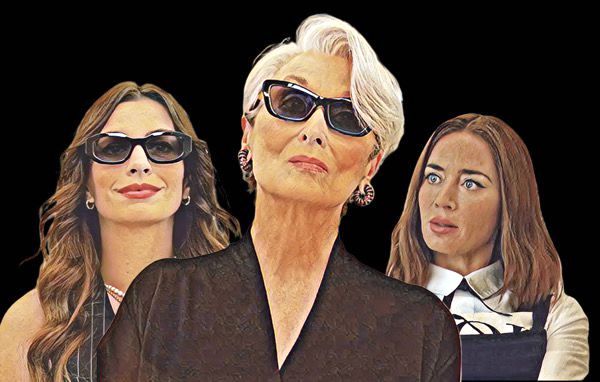
The new story places Andy Sachs back inside Runway at a moment when the magazine is struggling to remain relevant under the leadership of Miranda Priestly. What once stood as a symbol of absolute power must now negotiate space within a fragmented landscape, where influence is no longer defined solely by covers and editorials, but by algorithms, speed, and new modes of consumption. Andy’s return carries an undeniable emotional weight for those who followed her journey, yet it also functions as an attempt to rebalance a world that has lost its center.
Miranda, in turn, is no longer simply the untouchable figure who dominated every room she entered. She becomes someone forced to confront a kind of fragility that the first film never allowed to surface. This is not about weakness, but about displacement. The power is still there, but the context in which it operates has shifted. That shift alone is enough to redefine the dynamic between the characters.
Emily Charlton’s presence, now leading a luxury brand, expands this movement even further. By leaving behind her role as an assistant and stepping into a strategic position within the industry, she no longer orbits Miranda but stands as a force in her own right. The reunion of these three women is not merely emotional. It is structural, because each of them now represents a different position within a system that has been reshaped over the past two decades.
The return of the original cast acts as a gesture of continuity that reassures audiences, while the addition of names such as Kenneth Branagh, Lucy Liu, and Simone Ashley signals that the story does not intend to rely solely on the past. There is a clear effort to expand this universe, to introduce new tensions, and to align the narrative with a more contemporary landscape in which the fashion industry intersects with broader spheres of power and influence.
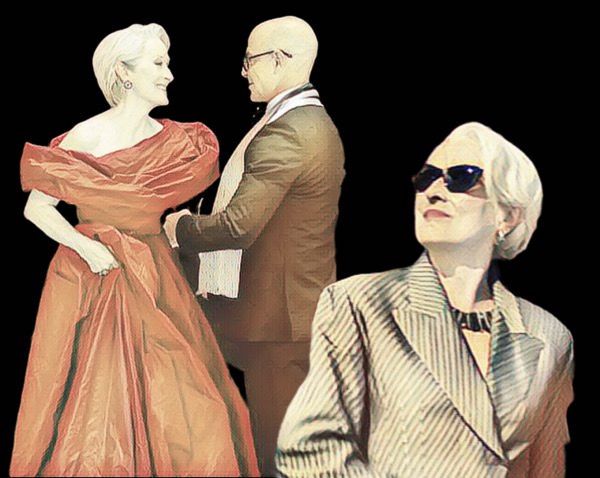
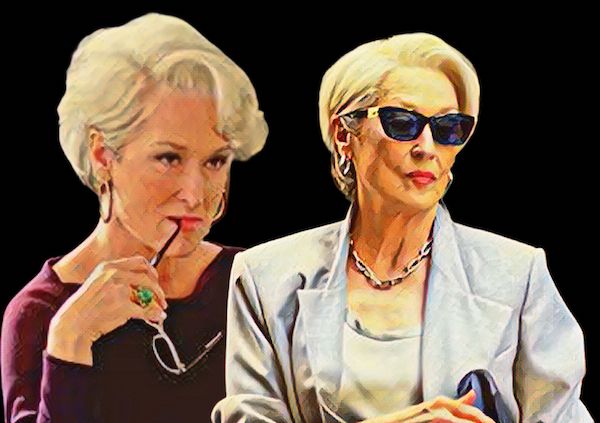
Behind the scenes, the return of the original creative team reinforces this sense of carefully constructed continuity. Directed by David Frankel and written by Aline Brosh McKenna, the film builds on characters created by Lauren Weisberger while deliberately choosing not to adapt the author’s second novel. This decision is significant because it allows the sequel to engage directly with the present, free from the constraints of a previously established storyline.
Choosing to tell an original story opens space for the film to move beyond pure nostalgia and attempt to create something that resonates now. And perhaps that is its greatest challenge. It is not enough to revisit Miranda, Andy, and Emily. The film must understand what these characters represent in a world where prestige has been diluted, where the relationship between work and identity has become increasingly unstable, and where the very meaning of success has been redefined.
Set to premiere in Brazil on April 30, 2026, the film arrives surrounded by an anticipation that extends beyond the story itself. There is an almost inevitable curiosity in seeing how a narrative so closely tied to a specific moment in pop culture can reposition itself without losing what once made it relevant. And it may be precisely this tension between past and present that transforms The Devil Wears Prada 2 into something more than a sequel. Not because it needs to prove that it still works, but because it must answer a more difficult question the original never had to face. What happens when the world finally catches up with what once seemed untouchable?
Descubra mais sobre
Assine para receber nossas notícias mais recentes por e-mail.
 miscelana.com
1 comentário Adicione o seu